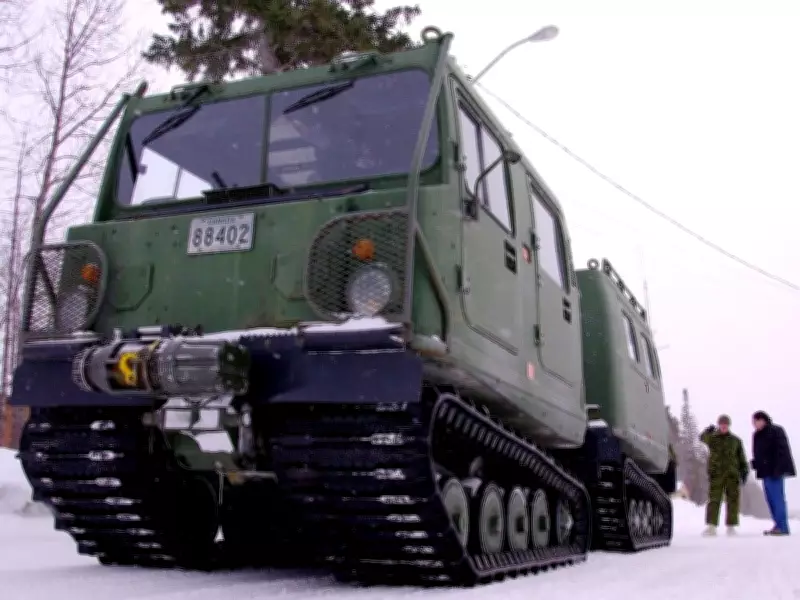
Canadian Military's Arctic Vehicle Budget Skyrockets to $1 Billion
The Department of National Defence has confirmed a dramatic escalation in the budget estimate for acquiring new Arctic vehicles, with the upper range jumping from $249 million to a staggering $1 billion in less than a year. This revelation comes as the Canadian Army prepares to replace its aging fleet of BV-206 tracked vehicles through the Domestic Arctic Mobility Enhancement project.
Budget Increase Confirmed
Defence industry representatives were initially informed in April 2025 that the project to purchase approximately 170 vehicles would cost between $100 million and $249 million. However, recent updates on a Department of National Defence website now list the budget range as $500 million to $1 billion, a figure that DND spokesperson Cheryl Forrest has since confirmed to the Ottawa Citizen.
"Schedule and budget estimates for this project have been refined and continue to be adjusted as detailed planning is finalized," Forrest explained via email. She noted that the earlier figures were based on preliminary cost assumptions and emphasized that "the Defence Team is committed to proper stewardship of taxpayer dollars and seeks to generate the most effective capability at the best value for Canada."

Procurement Timeline and Details
The significant budget increase coincides with Prime Minister Mark Carney's commitment to substantially boost defence spending over the coming decade. Neither DND nor the Canadian Army has provided a detailed breakdown of the proposed budget, leaving questions about the specific factors driving the quadrupling of cost estimates.
According to DND spokesman Nick Drescher Brown, the DAME project has been identified as a high priority and will be managed by the newly established Defence Investment Agency. The procurement timeline remains somewhat fluid, with conflicting information about when a request for proposals will be issued:
- Defence industry representatives were told in April 2025 that bidding would open in 2027
- Military officers stated in a September 2025 publication that requests would come in 2026, with a contract following in 2027
Drescher Brown confirmed that initial operating capability for the new vehicles is currently planned for 2030-2031, with full operational capability expected by 2031-2032. Forrest added that the Canadian Forces hopes to accelerate delivery of the DAME project, though specific details about the procurement schedule remain undisclosed.
Replacing Aging Arctic Fleet
The DAME project aims to replace the Canadian Army's aging fleet of BV-206 tracked vehicles, which were originally purchased from a Swedish company in the 1980s and remain in service despite their advanced age. These vehicles are crucial for Arctic operations, providing mobility in challenging northern environments where conventional vehicles struggle.
The budget escalation raises important questions about defence procurement processes and cost management, particularly as Canada seeks to enhance its Arctic capabilities amid growing strategic interest in the region. The confirmation of the $1 billion upper estimate represents one of the most significant defence budget adjustments in recent memory, highlighting both the complexity of Arctic vehicle procurement and the substantial investment required to maintain Canada's northern operational capabilities.