Air Force One Returns to Base Following Electrical Issue, President Trump Transfers to Backup Aircraft
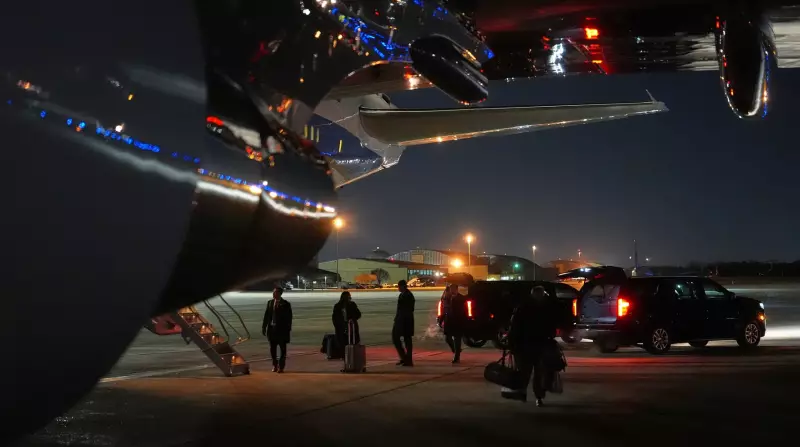
In an unexpected turn of events on Tuesday evening, President Donald Trump's official aircraft, Air Force One, was forced to return to Joint Base Andrews approximately one hour after departing for Switzerland. The decision to turn back was made out of an abundance of caution after the crew identified what White House press secretary Karoline Leavitt described as "a minor electrical issue" shortly after takeoff.
In-Flight Incident and Immediate Response
According to reports from journalists aboard the aircraft, the lights in the press cabin flickered and went out briefly following departure. While no immediate explanation was provided to passengers at that moment, reporters were informed about thirty minutes into the flight that the plane would be returning to its point of origin. This swift decision underscores the rigorous safety protocols governing presidential travel, where even minor technical concerns trigger precautionary measures.
Upon landing back at the Maryland military base, President Trump seamlessly transitioned to an alternative aircraft—an Air Force C-32, which is a modified Boeing 757 typically utilized for domestic trips to smaller airports. Shortly after midnight, he resumed his journey to attend the prestigious World Economic Forum in Davos, ensuring his diplomatic schedule remained largely uninterrupted.

Historical Context and Fleet Modernization Challenges
This incident brings renewed attention to the aging Air Force One fleet. The two current aircraft serving in this capacity have been operational for nearly four decades, highlighting the ongoing need for modernization. Boeing has been tasked with developing replacements, but the program has encountered significant delays, complicating efforts to update these critical assets.
The presidential planes are not ordinary aircraft; they are extensively modified with advanced survivability features designed to protect the commander-in-chief during various contingencies. These enhancements include:
- Radiation shielding for nuclear threat scenarios
- Advanced antimissile technology
- Sophisticated communications systems enabling global command and control
These capabilities ensure the president can maintain contact with military forces and issue orders from virtually anywhere in the world, even during emergencies.
Recent Additions and Comparative Incidents
In a related development, last year saw the ruling family of Qatar gift a luxury Boeing 747-8 jumbo jet to be incorporated into the Air Force One fleet. This donation faced considerable scrutiny and is currently undergoing retrofitting to meet stringent U.S. security standards. In a lighthearted moment during the Tuesday night episode, Press Secretary Leavitt quipped to reporters that the Qatari jet was sounding "much better" under the circumstances.
This is not an isolated incident involving U.S. government aircraft. In February of last year, an Air Force plane transporting Secretary of State Marco Rubio to Germany had to return to Washington due to a mechanical problem. Similarly, in October, a military aircraft carrying Defense Secretary Pete Hegseth executed an emergency landing in the United Kingdom after a crack was discovered in the windshield.
These events collectively underscore the operational challenges and safety imperatives associated with maintaining specialized government aviation fleets. They also highlight the continuous balancing act between utilizing proven, older equipment and integrating newer technologies while ensuring uncompromised security and reliability for high-profile officials.