Cuba has received the bodies of 32 of its military officers who were killed during a controversial United States military operation in Venezuela earlier this month. The repatriation comes amid a tense atmosphere in Havana, where the flag flies at half-mast in memory of the fallen, and as American threats in the region continue to loom large.
A Fatal Operation in Caracas
The incident that led to the deaths occurred on January 3, 2026, in Caracas, Venezuela. U.S. forces conducted a strike during an operation targeting the capture of Venezuelan President Nicolas Maduro. The Cuban government confirmed that the 32 individuals were officers serving in an advisory capacity within Venezuela. The precise circumstances of their engagement with U.S. forces remain a point of international contention and investigation.
Mourning and Memorials in Havana
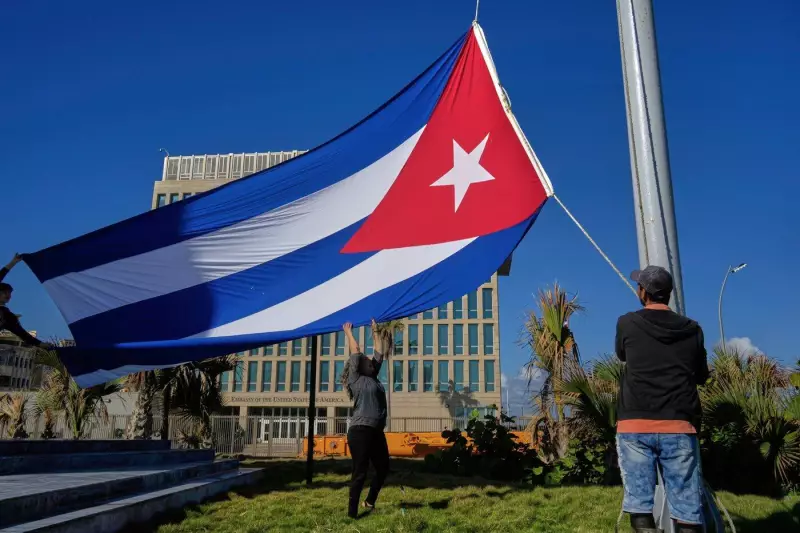
In the Cuban capital, the national grief is palpable. As seen in an Associated Press photograph from Monday, January 5, 2026, workers lowered the Cuban flag to half-mast at the prominent Anti-Imperialist Tribune located near the U.S. embassy. This site has long been a stage for political demonstrations and now serves as a solemn memorial for the officers who lost their lives. The public display underscores the national significance of the event and the government's framing of the losses as a result of foreign aggression.

The repatriation of the 32 bodies marks a somber chapter in the ongoing geopolitical strife involving Cuba, Venezuela, and the United States. Cuban state media has portrayed the officers as heroes and victims of an unwarranted attack, further straining the historically difficult relations with Washington.
An Enduring Atmosphere of Threat
Despite the completion of the repatriation process, officials in Havana report that a sense of imminent threat from the United States persists. The U.S. government has not fully detailed the scope or long-term objectives of its military activities in Venezuela following the operation against Maduro. This ambiguity fuels anxiety in Cuba, which has been under a stringent U.S. economic embargo for decades and views any American military activity in the region with extreme suspicion.
Analysts suggest that this event could lead to a significant escalation in diplomatic rhetoric and potentially more concrete actions from both sides. The incident has rallied nationalist sentiment within Cuba and may influence its foreign policy and domestic military posture in the coming months. The international community watches closely, concerned about further destabilization in the Caribbean and Latin America.