Federal Appeals Court Upholds Texas Law Mandating Ten Commandments in Public School Classrooms
A federal appeals court delivered a significant victory to conservative advocates on Tuesday by upholding Texas's controversial law that requires every public school classroom in the state to display the Ten Commandments from the Christian Bible. This ruling, which has been brewing in right-wing circles for years and gained momentum under Donald Trump's influence, blurs the longstanding line between church and state and challenges decades of legal precedent.
Legal and Constitutional Challenges
The establishment clause of the First Amendment explicitly prohibits the government from sponsoring any religion. In 1980, the Supreme Court ruled that public schools could not be forced to display the Ten Commandments, deeming it a violation of this clause. However, the Fifth Circuit Court of Appeals' recent decision has sparked outrage among civil rights and religious freedom organizations.
"The First Amendment safeguards the separation of church and state, and the freedom of families to choose how, when and if to provide their children with religious instruction," said a joint statement from groups that sued Texas over the law. "This decision tramples those rights."

Legal experts have strongly criticized the ruling. Seth Chandler, a law professor at the University of Houston, remarked, "What used to be considered a wall of separation between church and state has turned into a small speed bump." Ira Lupu, a constitutional law professor at George Washington University, added, "I think it's a terrible decision. They're just trying to erase Supreme Court precedent."
Arguments from Proponents and Opponents
Proponents of the Texas law argue that the Ten Commandments are foundational to U.S. history and do not violate the establishment clause. The Fifth Circuit supported this view, stating in its opinion that the mandate does not infringe on parental rights to dictate religious beliefs, as "No child is made to recite the Commandments, believe them, or affirm their divine origin."
However, opponents counter that the display is far from passive. Lupu emphasized, "But it's on the wall in every class, every day, from kindergarten until graduation. It will be constant and pervasive." Michael Helfand, a professor at Pepperdine University School of Law, noted, "The historical record provides evidence that when government acts to manipulate the religious preferences of its citizens, it violates the establishment clause. And requiring the Ten Commandments in every public school classroom should have been interpreted as an attempt to do just that."
Background and Broader Implications
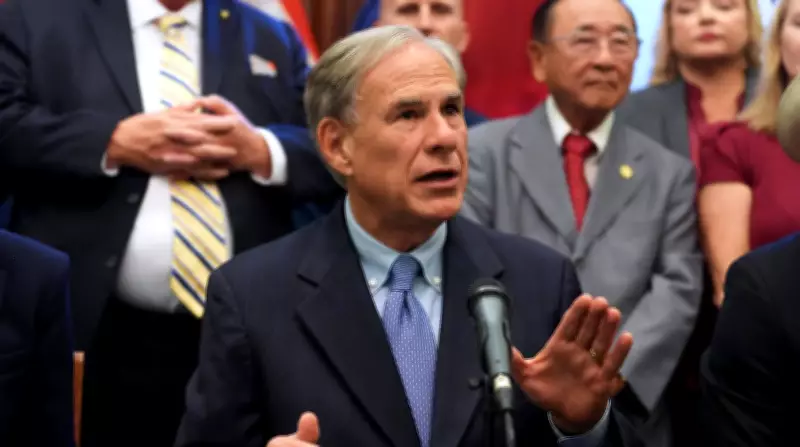
Republican Governor Greg Abbott signed the bill into law in June, leading to immediate lawsuits from legal organizations and parents of diverse religious backgrounds. While the law was placed on hold in some districts, others have been forced to comply, with Republican Attorney General Ken Paxton suing non-compliant school districts.
The legal battle is far from over. Organizations like the ACLU of Texas plan to bring the case to the Supreme Court. Lupu warned, "There's some dangers there. If the Supreme Court takes it and they lose, now it's a nationwide ruling." This issue extends beyond Texas, with states like Louisiana, Arkansas, Oklahoma, and Ohio introducing or advancing similar bills in recent years.
Supreme Court Context and Future Outlook
The Supreme Court has recently addressed religious beliefs in education, such as in a case where it sided with parents in Maryland over LGBTQ+ themed books, citing religious views. However, if the high court takes up the Ten Commandments case and rules against objecting parents, it could create a contradiction, suggesting a shift toward allowing Christianity in schools rather than protecting religious liberty.
Lupu concluded, "You can't opt out of a rule that requires a poster in every single classroom. Maybe there is going to be way more room for religion in public school than there's been since the 1960s." This ruling sets the stage for a pivotal national debate on the role of religion in public education.