

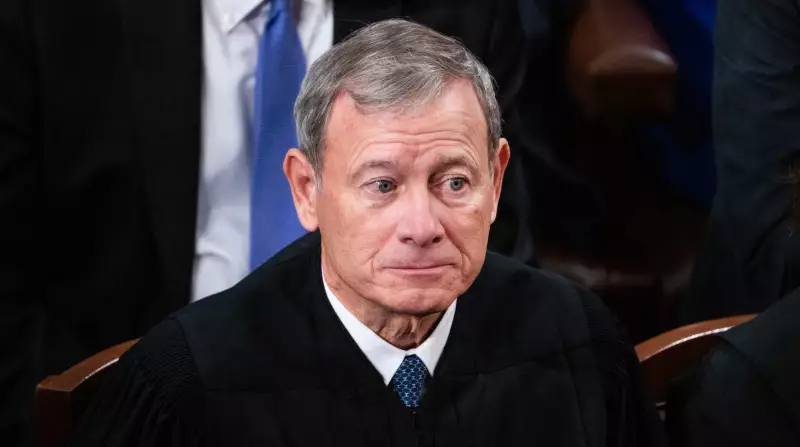
In a powerful annual message, U.S. Supreme Court Chief Justice John Roberts declared the nation's founding documents remain a sturdy and unshaken pillar for the country. His statement, issued on Wednesday, arrives after a tumultuous period for the American judicial system and with several landmark rulings pending before the high court.
A Message of Resilience and History
Roberts asserted that the Constitution and Declaration of Independence are "firm and unshaken," directly referencing a century-old quote from President Calvin Coolidge. "True then; true now," Roberts wrote in his detailed letter to the federal judiciary.
The communication follows a year where legal experts and Democratic politicians voiced concerns about a potential constitutional crisis. These fears were amplified as supporters of Republican President Donald Trump contested court decisions that hindered parts of his expansive conservative agenda.

Judicial Independence Under Scrutiny
The Chief Justice himself intervened in March, delivering a rare public rebuke. This came after President Trump called for the impeachment of a federal judge who ruled against his administration in a case concerning the deportation of Venezuelan migrants accused of gang ties.
Roberts's letter delved into American legal history, citing an early 19th-century case that established the critical principle that Congress must not remove judges over politically contentious rulings. He urged all judges to uphold their oaths faithfully.
"Continue to decide the cases before us according to our oath, doing equal right to the poor and to the rich, and performing all of our duties faithfully and impartially under the Constitution and laws of the United States," Roberts implored.
A Year of Legal Wins and Challenges for Trump
While the Trump administration faced significant setbacks in lower courts, it secured approximately two dozen favourable rulings on the Supreme Court's emergency docket. The court's conservative majority permitted several key administration policies to proceed, including:
- Banning transgender individuals from military service.
- Reallocating billions in congressionally approved federal funds.
- Advancing aggressive immigration enforcement measures.
- Dismissing Senate-confirmed leaders of independent federal agencies.
However, the court also delivered defeats to the administration, such as blocking Trump's push to deploy the National Guard to U.S. cities.
The Supreme Court faces monumental issues in 2026, including legal arguments over the administration's effort to end birthright citizenship and a ruling on whether the president can unilaterally impose widespread tariffs.
Roberts's letter, which opened with a historical note on Thomas Paine's "Common Sense" and closed with Coolidge's call to find solace in founding documents "amid all the welter of partisan politics," made few direct references to these upcoming battles, focusing instead on enduring constitutional principles.






