

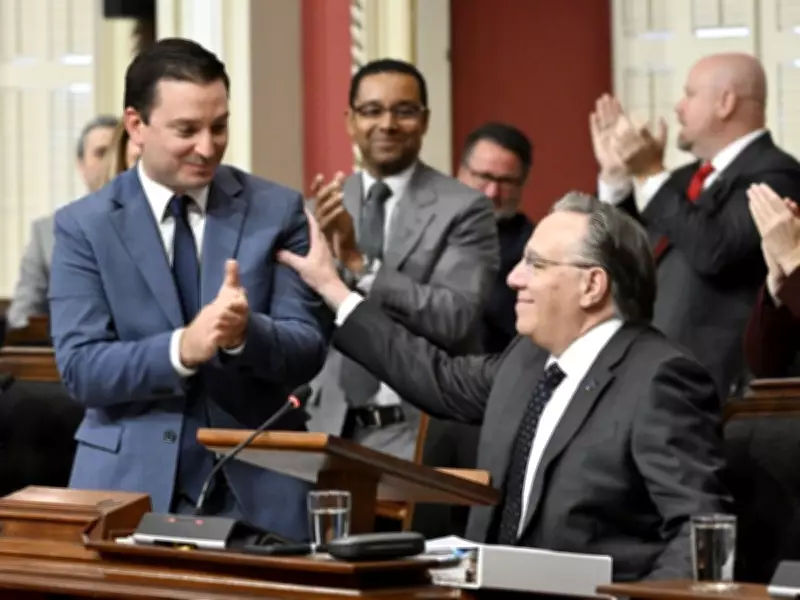
Quebec Justice Minister Rejects Paternalism Claims Over Constitution Proposal
Justice Minister Simon Jolin-Barrette has firmly denied accusations of paternalism regarding his handling of Bill 1, the controversial legislation that would establish a written constitution for Quebec. The minister's response comes amid growing criticism from various organizations and political figures who argue the process lacks transparency and could dangerously concentrate governmental authority.
Consultation Process Defended Amid Criticism
During a press conference in Quebec City, Jolin-Barrette emphasized that his approach is anything but paternalistic. "On the contrary, that's why we're holding one of the biggest consultations in recent years," he stated, referencing the parliamentary committee hearings where more than 200 groups are scheduled to appear. "We have a bill—a text is on the table—and people are coming to express their opinion on the project."
The minister was responding directly to questions about whether he was ignoring substantive criticism of the proposed constitution. His defense highlights what he characterizes as an extensive democratic consultation process, though detractors maintain the initial drafting occurred behind closed doors without public input.

Broad Opposition and Specific Concerns
The proposed constitution has generated significant opposition across multiple sectors of Quebec society. While supported by groups advocating for French language protection and secularism, the plan faces criticism from:
- Women's organizations concerned about abortion rights language
- Quebec's professional order of lawyers
- Former political figures from multiple parties
- Democratic reform advocates
Particular controversy surrounds the inclusion of abortion rights in the draft document. Several groups have warned that the specific mention could paradoxically provide anti-abortion organizations with legal avenues to challenge women's reproductive freedoms. Jolin-Barrette has acknowledged these concerns while maintaining his position that the constitution would actually strengthen abortion protections.
"I think we should not wait... before adding additional tools to protect this important right," the minister asserted, though he noted he would reflect on the specific wording concerns raised by critics.
Political Tensions and Leadership Dynamics
The constitutional debate has exposed tensions within the governing Coalition Avenir Québec party. Christine Fréchette, considered a leading candidate to eventually succeed Premier François Legault, recently suggested that "elements" of the proposed constitution could be "reoriented" or "redirected."
Jolin-Barrette responded with a firm assertion of his authority over the legislation: "I will decide what will be adjusted in the bill or not... I remain sovereign within the framework of the constitution bill." When pressed about whether this comment targeted Fréchette specifically, the minister declined to answer directly, instead emphasizing that "The premier entrusted me with this file" and that all cabinet members had approved the project.
Historical Context and Democratic Legitimacy Questions
Former Parti Québécois minister Jean-Pierre Charbonneau, now leading Mouvement démocratie nouvelle, delivered particularly sharp criticism during committee hearings. "You do not have the political legitimacy to do what you are doing right now," he told Jolin-Barrette, arguing that Quebec should draft a new constitution only after comprehensive public consultation.
Charbonneau highlighted what he sees as a fundamental contradiction in the government's approach: "You cannot deliver a nationalist discourse and then not involve the nation in the process." He noted that Quebec has never endorsed the Canadian Constitution, which was patriated without provincial consent, making the current closed-door approach particularly problematic.
When asked by Liberal MNA André Albert Morin whether the CAQ was essentially imposing a constitution on Quebecers, Charbonneau responded unequivocally: "Yes, I would go so far as to say that—the government is imposing a constitution on Quebecers."

Premier's Vision and Constitutional Significance
Premier François Legault has framed the proposed constitution as a historic document that would affirm "the constitutional existence of the Quebec nation" and "become the law of all laws." This vision positions the constitution as both a symbolic assertion of Quebec's distinct identity and a practical framework for governance.
However, the debate continues to center on process rather than substance, with critics arguing that the means of creating such a foundational document must match its significance. As consultations proceed through parliamentary committee hearings, the tension between ministerial authority and democratic participation remains unresolved, setting the stage for continued political confrontation over Quebec's constitutional future.





