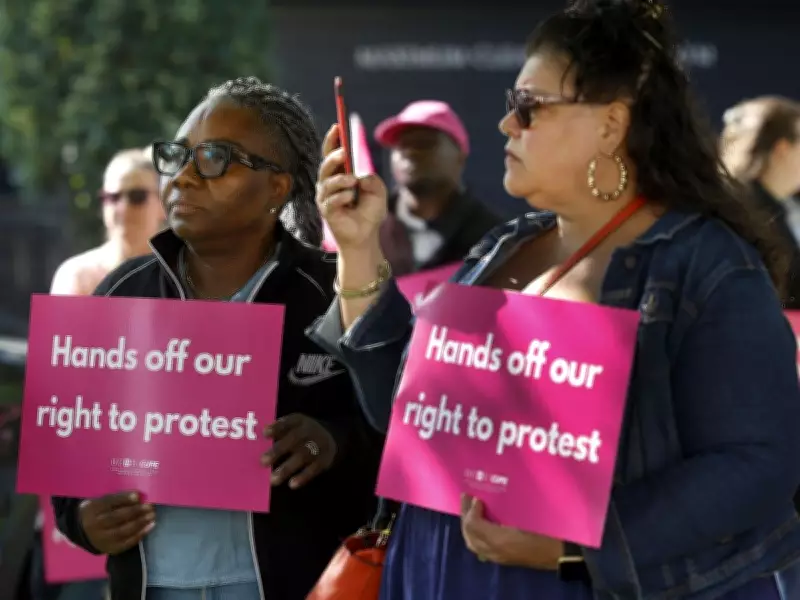
Ottawa city councillors marked the 44th anniversary of the Charter of Rights and Freedoms by engaging in a marathon debate over the constitutionality of the city's controversial "bubble" bylaw proposal. The joint committee meeting, which lasted nearly seven hours, featured passionate arguments from dozens of participants representing diverse perspectives on this contentious issue.
Proposed Bylaw Details and Safety Objectives
The proposed legislation aims to establish "safe access zones" by restricting protests within 50 meters of walkways, doorways, and driveways leading to schools, hospitals, long-term care facilities, and community health centers. Supporters argue these measures are necessary to protect vulnerable individuals accessing essential services from harassment and intimidation during potentially volatile demonstrations.
Constitutional Concerns and Legal Challenges
Constitutional lawyer Paul Champ, who successfully obtained a court injunction against truck horn blaring during the 2022 convoy protests, raised significant concerns about the bylaw's scope. He identified one section as particularly problematic, describing it as containing "flagrantly unconstitutional aspects" due to its overly broad definition of what constitutes a demonstration.

Champ emphasized that other Canadian cities have implemented similar bylaws with much narrower applications, typically addressing specific instances of protest-induced violence rather than creating blanket restrictions. He cited Vancouver's approach to protecting abortion clinic patients from physical restraint and harassment as an example of appropriately targeted legislation.
"Feeling uncomfortable when you see someone waving a flag or marching or saying certain things you disagree with, that's not grounds to stop a protest and certainly doesn't justify a bylaw like this," Champ asserted during the proceedings.Council Amendments and Voting Outcomes
Knoxdale-Merivale Councillor Sean Devine proposed a significant amendment that would have limited the bylaw's application to prohibiting "conduct that interferes with access" rather than implementing a "categorical prohibition on demonstrations." Devine warned of potential "unintended consequences" from the broader approach.
Despite his efforts, the committee overwhelmingly rejected this amendment by a vote of 15-2, with only Devine and Gloucester-Southgate Councillor Jessica Bradley supporting the more restrictive language. This decisive vote indicates strong council support for the original, more comprehensive bylaw framework.
Community Perspectives and Competing Priorities
The debate highlighted the complex balancing act between protecting Charter rights and addressing legitimate safety concerns. Councillors grappled with how to reconcile these competing priorities while considering the bylaw's potential impacts on fundamental freedoms.
Religious Community Concerns
Richard Robertson of B'Nai Brith Canada presented compelling testimony about rising antisemitism, noting that Jewish institutions in Ottawa have recently been targets of "caustic protests." He emphasized the vulnerability of religious facilities, referencing incidents where Jewish houses of worship in Ontario have been targeted with gunfire.
"The right of Ottawa's residents to access vulnerable infrastructure must be protected," Robertson argued. "The right of every resident to enter and make use of such infrastructure must not be treated as secondary to the rights of nefarious actors to engage in nuisance protests."Labor and Advocacy Perspectives
Labor union representatives joined faith leaders, advocates, and legal experts in expressing their concerns during the extensive committee meeting. The gathering at the Emergency Preparedness and Protective Services and Public Works and Infrastructure joint committee became a forum for examining how the municipality should navigate the intersection of public safety and constitutional protections.
The debate also touched on whether existing federal hate crimes legislation might render the bubble bylaw unnecessary, though this perspective found limited support among committee members. The discussion revealed deep divisions about how best to protect both physical safety and fundamental freedoms in an increasingly polarized social climate.

Historical Context and Future Implications
The timing of this debate on the Charter's anniversary added symbolic weight to the proceedings, reminding participants of the foundational document they were interpreting. The proposed bylaw represents Ottawa's attempt to address growing concerns about protest activities near sensitive locations while navigating complex constitutional boundaries.
As the committee moves forward with the bylaw development process, the city faces the challenging task of crafting legislation that can withstand potential legal challenges while effectively addressing community safety concerns. The nearly seven-hour hearing demonstrated both the complexity of the issue and the strong feelings it evokes across Ottawa's diverse communities.