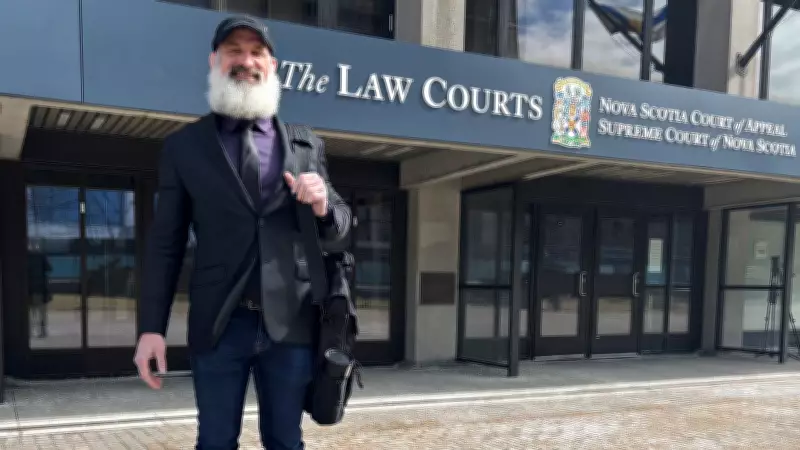
In a landmark decision that has sparked widespread discussion, a Nova Scotia man who contested a provincial woods ban is declaring a major triumph for civil liberties. Jeffy Evely, the individual at the center of the legal challenge, stood before the Nova Scotia Supreme Court, where a recent ruling has effectively overturned the controversial restriction on access to wooded areas.
A Personal Stand Against Government Restrictions
Jeffy Evely, whose case garnered significant attention across the region, argued that the woods ban imposed by authorities infringed upon fundamental rights and freedoms guaranteed to Canadian citizens. The ban, which limited public entry into certain forested zones, was initially implemented under environmental and safety pretexts. However, Evely and his legal team contended that such measures were overly broad and unjustly curtailed personal liberties.
Court's Decision: A Win for Civil Liberties
The Nova Scotia Supreme Court's ruling, delivered after thorough deliberation, sided with Evely's arguments. The court found that while environmental protection is a legitimate government interest, the specific ban in question was not proportionate and unnecessarily restricted individuals' rights. This judgment has been hailed by advocates as a critical reinforcement of the balance between regulatory measures and personal freedoms.

"This ruling is not just about accessing woods; it's about upholding the principles of freedom that define our society," Evely stated in a post-court interview. "I took this stand because I believe in the right to enjoy our natural spaces without undue government interference."
Broader Implications for Nova Scotia and Beyond
The case has set a precedent that could influence similar regulations in other provinces. Legal experts suggest that the ruling may prompt governments to reassess environmental policies to ensure they do not overstep constitutional boundaries. In Nova Scotia, where outdoor activities are integral to the local culture, the decision is particularly resonant.
Environmental groups have expressed mixed reactions, acknowledging the need for conservation but cautioning against policies that might be perceived as draconian. Meanwhile, civil liberty organizations are celebrating the outcome as a victory for individual rights in an era of increasing government oversight.
Community Response and Future Outlook
Public response in Nova Scotia has been largely supportive of Evely's stance, with many residents viewing the woods ban as an unnecessary encroachment on their way of life. The ruling is expected to lead to revised guidelines that better balance ecological concerns with public access.
As the dust settles, Jeffy Evely's case serves as a reminder of the ongoing dialogue between governance and freedom. With this court decision, Nova Scotians can look forward to a more nuanced approach to environmental regulations, one that respects both the land and the liberties of those who cherish it.