

Official Languages Watchdog's Valentine's Post Ignites Online Debate
Canada's Official Languages Commissioner has found itself at the center of an unexpected linguistic controversy this Valentine's Day season. The federal government's bilingualism watchdog posted what appeared to be a lighthearted Valentine's card on social media, but the French translation has sparked widespread discussion across Canadian internet communities.
The Controversial Valentine's Message
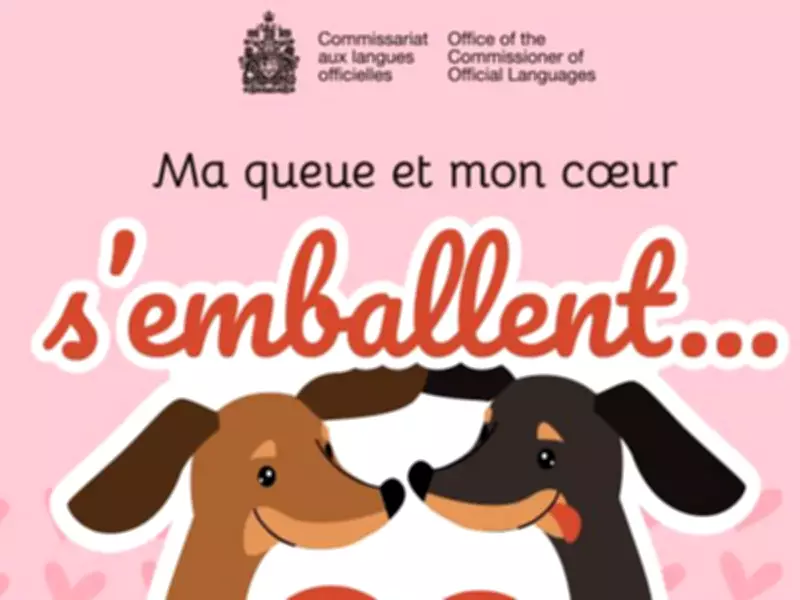
The English version of the card featured a charming message: "My tail starts wagging and my heart is all aflutter... when you practise your second official language!" The accompanying graphic showed two dogs gazing lovingly at each other with their tails intertwined around a heart shape.
However, the French translation took an unexpected turn. The phrase "Ma queue et mon cœur s'emballent..." which literally translates to "my tail and my heart get excited when..." contains a linguistic pitfall that Francophone internet users immediately recognized. The term "ma queue" in French carries a common slang meaning that refers to male genitalia.

Internet Reaction and Translation Questions
The online response was swift and divided. Some social media users saw the post as a clever, intentional joke from an office promoting language learning, while others questioned the translation quality and approval process.
"Pretty sure that if I say that to a colleague on Valentine's Day, I'll find myself in front of HR," wrote one Facebook commenter in French, highlighting the potentially inappropriate nature of the unintended double meaning.
Another poster joked, "It's time to hire a translator at the Commissioner's office," reflecting concerns about the linguistic oversight.
Professional Communications Community Weighs In
The controversy reached professional communications circles, with experts expressing both amusement and concern. Communications consultant and sports journalist Arcadio Marcuzzi posted on LinkedIn in French, questioning whether any Francophone staff members had reviewed the content before publication.
Quebec-based communications specialist Louis Aucoin commented, "I'm... speechless. I don't know if I should admire the audacity or be concerned about the approval process."
Common Practice with Uncommon Results
While organizations frequently use Valentine's Day as an opportunity to post humorous cards promoting their causes, this particular instance from a federal government office responsible for language oversight has generated unusual attention. The Office of the Commissioner of Official Languages, which normally focuses on ensuring compliance with Canada's Official Languages Act, found itself in an unexpected spotlight.
The central question remains unanswered: was this a deliberately playful use of double-entendre, or an unfortunate translation oversight? The commissioner's office has not provided immediate comment on the controversy, leaving internet users to continue debating the intent behind the Valentine's message.
This incident highlights the complexities of bilingual communication in Canada, where subtle linguistic nuances can create unexpected interpretations, even for offices dedicated to language promotion and protection.






