

The Erosion of Property Rights in Canada: A Constitutional Analysis
Canadian governments are increasingly failing in what 17th-century philosopher John Locke identified as the fundamental purpose of the state: protecting citizens' property. According to Locke's 1690 writings, "The great and chief end ... of Mens ... putting themselves under Government, is the Preservation of their Property." This foundational principle appears to be weakening across Canada, with recent developments highlighting systemic vulnerabilities in property protection.
Recent Court Ruling Sparks Homeowner Concerns
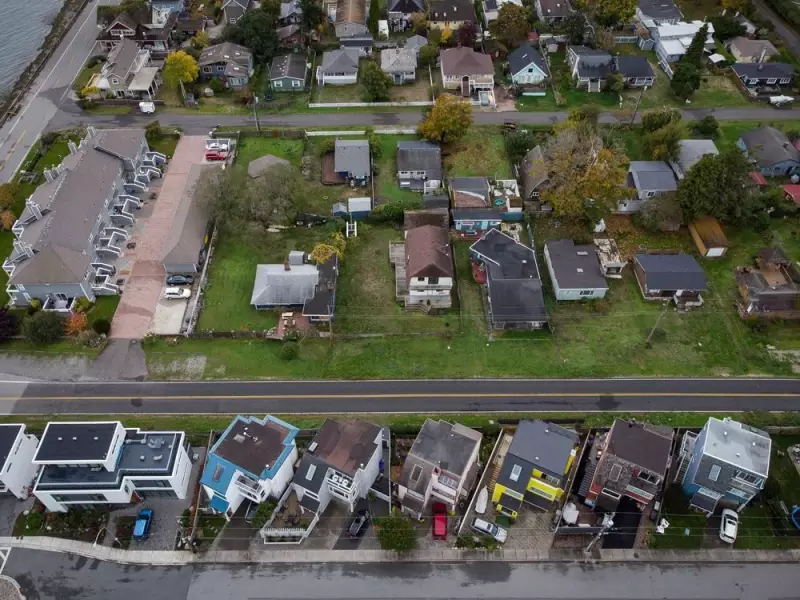
A recent court decision in Richmond, British Columbia, has dramatically illustrated the precarious state of property rights in Canada. The ruling declared aboriginal title as a "senior and prior interest" to fee simple tenure, creating significant uncertainty for local homeowners. This development prompted even the Wall Street Journal to question whether property rights still exist in British Columbia, reflecting international concern about Canada's approach to property protection.
This case represents merely the latest and most visible example of a broader trend affecting property rights across the country. As governments increasingly embrace communitarian and social-democratic principles, individual control over land and possessions faces steady erosion. The situation reveals fundamental questions about how Canada balances collective interests with individual property protections.

Constitutional Omission Creates International Outlier Status
The root of Canada's property rights vulnerability lies in the Canadian Charter of Rights and Freedoms itself. Unlike most liberal democracies that explicitly guarantee property ownership rights and protection against unlawful seizure, Canada's Charter remains conspicuously silent on this fundamental issue. Constitutional lawyer Dwight Newman of the University of Saskatchewan notes that "it certainly makes us an outlier" among developed nations.
Among the 38 OECD member countries, only Canada and New Zealand lack explicit constitutional protection for property rights. This represents a relatively recent development in Canadian legal history. In 1960, Prime Minister John Diefenbaker's Bill of Rights included federal legislation protecting "the right of the individual to life, liberty, security of the person and enjoyment of property, and the right not to be deprived thereof except by due process of law." This explicit protection disappeared with the advent of the Charter in 1982.
Historical Context: How Property Rights Were Overlooked
During the Charter debates, property rights failed to become a priority issue. According to Newman's analysis, "The political focus of the day was on equality rather than liberty." Several provincial premiers expressed concerns that constitutional safeguards for property rights would limit their ability to implement statist policies. Examples included Prince Edward Island's restrictions on land purchases by non-residents and Saskatchewan's resource sector nationalization efforts.
Although Prime Minister Pierre Trudeau generally supported including property rights in the Charter, he ultimately sacrificed this protection to ensure the broader document's passage. Historical accounts reveal that a series of minor incidents further undermined property rights inclusion. Saskatchewan Premier Allan Blakeney was reportedly wavering in his objections during crucial 1981 negotiations, but communication breakdowns—including a missed phone call when Trudeau's car had a flat tire—apparently hardened Blakeney's position against property rights protection.
The consequences of this constitutional omission continue to reverberate through Canadian society. Without explicit constitutional protection, property rights remain vulnerable to shifting political priorities and judicial interpretations. This creates uncertainty for homeowners, investors, and anyone with significant property holdings in Canada.

As governments at various levels continue to expand their regulatory reach, the absence of constitutional property rights protection leaves Canadian citizens in a uniquely vulnerable position compared to their counterparts in other developed democracies. The situation raises important questions about how Canada can balance necessary government regulation with fundamental property protections that form the bedrock of economic security and personal freedom.





