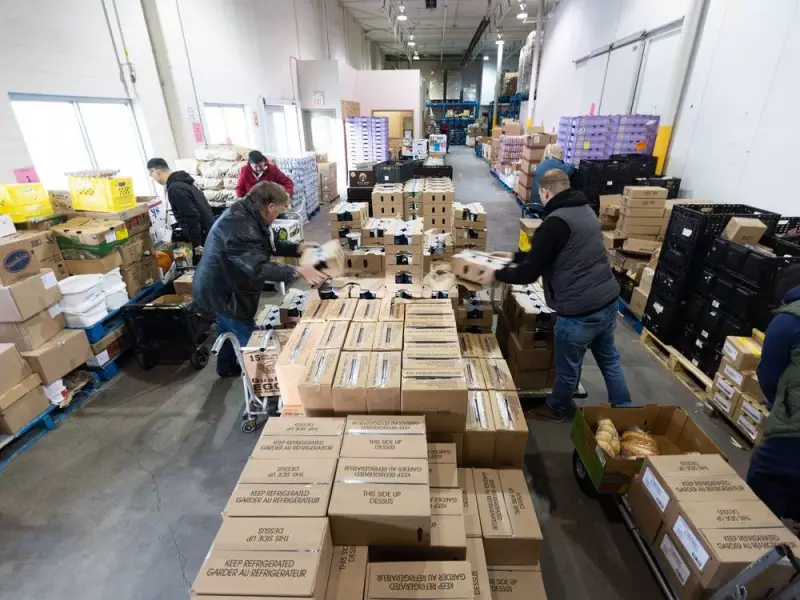
In the face of soaring living costs, hunger in Calgary has reached alarming new levels, pushing local charities to their limits. Sundae Nordin, the executive director of the Community Kitchen Program Calgary (CKPC), reports her organization served an additional 63,000 people in the past year alone, a stark indicator of a deepening crisis.
A Crisis Touching All Walks of Life
"There is just so much more need," states Nordin, highlighting that the profile of those seeking help has broadened dramatically. The organization is now seeing a significant rise in university students, seniors on fixed incomes, and working individuals and families who simply cannot keep up with escalating expenses. "Housing has gone up, food costs have gone up, and wages have not," she explains, pinpointing the core economic pressures driving the surge.
The statistics are sobering. In 2023, CKPC cited data showing one in eight Alberta families experienced food insecurity. By 2025, that figure has worsened to one in four families, a dramatic increase that mirrors the organization's own operational strain. This is reflected in a 63 per cent weekly increase in Good Food Box distributions, a program offering affordable, healthy groceries.

Expanding Services to Meet Unprecedented Demand
Founded over 30 years ago by the late Marilyn Gunn to empower mothers through budget-friendly cooking skills, CKPC has evolved into a multi-faceted hunger relief organization. Its flagship Calgary’s Cooking program continues, but its reach has expanded to include critical new initiatives.
To adapt, CKPC has established food distribution depots at post-secondary institutions across the city and relies heavily on programs like Spinz-a-Round, which redistributes fresh produce and bread to other agencies, and Souper Stars, which teaches nutrition to children. Despite these efforts, the gap between need and resources continues to widen.
The Relentless Pursuit of Solutions
"Our heads are down and we are working," says Nordin of her dedicated team of 12 full-time and five part-time staff, supported by an army of roughly 3,400 volunteers. However, the challenge is monumental. The organization is in constant pursuit of new partnerships, food donations, monetary gifts, and more volunteers to sustain its vital operations.
The situation in Calgary underscores a national issue, where charitable food systems are becoming an essential, yet increasingly strained, social safety net. As Nordin and her team work tirelessly on the front lines, their call for community support grows ever more urgent in the fight against hunger.