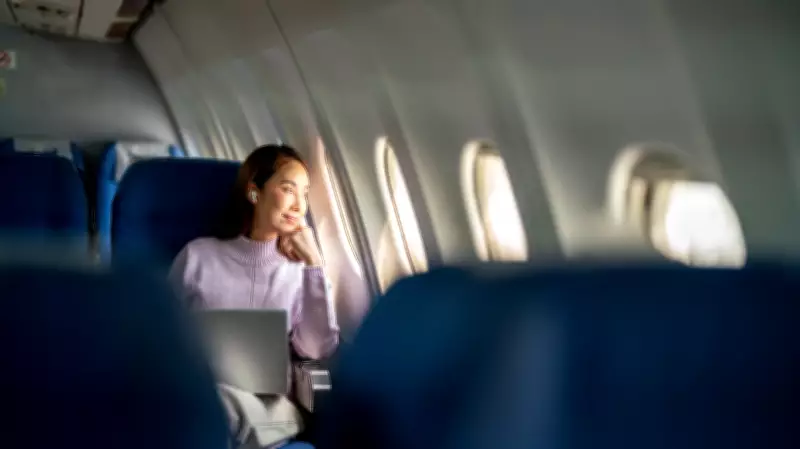
The Hidden Psychology Behind Your Plane Seat Choice
As I settled into my 17-hour flight from Australia to the United States, I glanced at the vacant seat between my wife and me with satisfaction. While other passengers might have considered this empty middle seat a fortunate accident, they didn't realize it was the result of deliberate strategy. This empty space represented the culmination of my meticulous seat selection obsession, a ritual that begins the moment I book any flight.
The Rituals of Seat Selection
My personal process involves checking legroom measurements, reading detailed seat reviews, and carefully studying the airline's seat map to predict which seats will likely remain unoccupied. I follow specific rules: always selecting an aisle seat on the right side of the aircraft, and on wide-body planes with a 3-3-3 configuration, choosing a seat in the middle section. Even after securing my preferred spot, I continue monitoring the "Manage My Booking" page in the days leading up to departure, debating whether to switch from 11D to 12D as other seats fill.
I'm far from alone in this behavior. Many travelers develop their own unique seat selection rituals. Some insist on sitting on the same side of the plane every flight, while others will only accept odd-numbered rows. A significant number refresh seat maps obsessively, fixated on factors like bathroom proximity or meal service order.

What Your Seat Choice Reveals About You
Performance psychology specialist Sam Wones explains that these behaviors run deeper than simple preference. "These rituals reflect a fundamental need for control in environments where individuals feel they lack it," he notes. "Ritualistic actions like seat-map checking can significantly reduce anxiety about the unknown aspects of air travel." When everything about flying feels chaotic and unpredictable, securing a specific seat sends a reassuring signal to your nervous system that something remains manageable.
These rituals can become remarkably specific. Georgia Hopkins, a freelance travel writer, exclusively sits in odd-numbered rows, with 11A as her ideal choice, followed by 13A or 15A if necessary. Rows 12 or 14 simply don't exist in her travel world. "I can't do even numbers. If not 11, I have to sit in an odd-numbered row," she explains. Hopkins also insists on a window seat as far forward as possible, ensuring earlier boarding, faster exiting, and being served first.
For Amanda Kendle, the ritual centers around row 25. She remains so committed to this specific row that she refuses to change seats even when better options become available. Her preference has nothing to do with extra legroom or proximity to exits, but rather stems from it being her lucky number. "Some part of my anxious flyer mentality tells me if I change my seat, the plane will crash and my original seat would have been safer," she reveals. When traveling with her teenage daughter who prefers window seats, Kendle still claims row 25, simply taking the middle seat instead of her usual aisle.
The Power Dynamics of Seat Selection
Chris Lipp, a social psychologist at Tulane University who studies power dynamics, suggests these rituals expose how confident we feel in public spaces. "People who feel more powerful are less sensitive to sitting next to someone," Lipp explains. "They're comfortable with less interpersonal space, less worried about others encroaching on their territory, and less vigilant because they don't feel threatened by others."
The dreaded middle seat, which most travelers actively avoid, illustrates this power dynamic perfectly. Lipp notes that powerful individuals can tolerate the middle seat more easily. They will claim both armrests without hesitation, exuding a confidence that likely extends beyond the aircraft cabin. In contrast, anxious travelers either guard their armrest like a border wall or avoid it completely to prevent any physical contact.

Efficiency, Control, and Personality
Seat location also reflects travelers' approach to control and efficiency, according to Wones. Front-of-plane passengers typically want to disembark quickly and avoid feeling trapped, valuing efficiency and a faster overall process. Back-of-plane flyers operate differently. They're generally more relaxed about waiting, less concerned with being first off the aircraft, and often actively avoid the chaos of the front rows. Neither preference is inherently better, but they reflect different tolerances for waiting and different approaches to the travel experience.
Beyond the front-versus-back decision, the window-or-aisle choice reveals personality traits. Wones suggests that introverts naturally gravitate toward window seats for privacy and control over their immediate environment, while extroverts typically prefer aisle seats for greater mobility and easier interaction with other passengers and crew.
Lisa Burns, founder of The Travel Photography Club, understands this dynamic intimately. During a flight from Tokyo to Helsinki over the Arctic Circle, she found herself in an aisle seat with the window passenger asleep and the shutter closed. "All I could imagine were icebergs and glaciers below," she recalls. "I had to practice deep breathing because it took so much self-control not to lean across and look out the window." For a travel photographer, being trapped on the aisle meant missing exactly what she needed to see and document.
The Practical Side of Preferences
My own preference for aisle seats has less to do with social interaction and more about autonomy. I value being able to move whenever I want without performing an awkward gymnastics routine to climb over sleeping passengers or receiving disapproving looks when I'm up and down multiple times during a flight. On long journeys, this freedom becomes particularly important. Perhaps this makes me someone who needs to feel in charge of something, even if it's just bathroom access. Or maybe I simply drink too much water.
My right-side preference has a practical foundation. Analysis of Air Canada and American Airlines seat data reveals that passengers disproportionately choose the left side of aircraft, which statistically means the right side offers better odds of an empty seat beside me.
Wones explains that once you unconsciously favor one side, your brain becomes locked into that pattern. "Some people unconsciously favor one side due to how their brain processes spatial awareness or comfort," he notes. "Maybe it felt slightly better once, or you had a particularly good flight on that side. The specific reason doesn't matter. Once the pattern exists, you stick with it, even when both sides are essentially identical. It becomes less about logic and more about what feels right."
Strategic Planners Versus Acceptors
If you're reading this thinking, "Who actually obsesses over seats?" that reaction itself reveals something about your personality, according to Wones. Strategic planners tend to be highly conscientious individuals who prefer control over their environment. Acceptors, in contrast, demonstrate greater adaptability, typically experiencing lower anxiety levels and displaying higher tolerance for uncertainty.
When my wife catches me refreshing the seat map days before a flight, she thinks I'm being ridiculous. She's probably right. But when we're 17 hours into an economy flight with an empty seat comfortably separating us, ridiculous transforms into genius. These seat selection rituals, while sometimes appearing irrational, serve important psychological functions for travelers navigating the uncertainties of modern air travel.