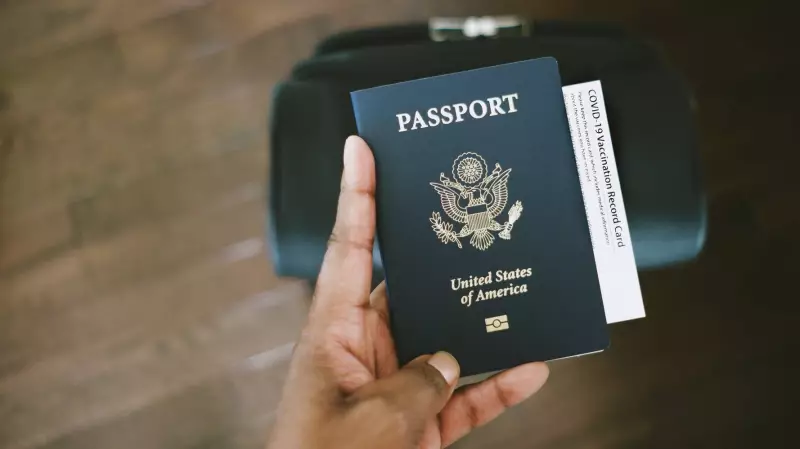
That stern, unsmiling face staring back from your passport is no accident. While it might not be your most flattering portrait, there are critical technological and security reasons behind the requirement for a neutral expression. If you've ever wondered why you can't flash a grin like in other photos, the answer lies in the algorithms that now guard international borders.
The Technology Behind the Neutral Face
Contrary to popular belief, the United States does not officially ban smiling outright. A State Department spokesperson clarified that the rule requires "a neutral facial expression with both eyes open and mouth closed." This means a subtle, closed-mouth smile might pass, but showing your teeth will not. The core reason is the global adoption of facial recognition software at airports and border controls.
"The main reason for banning smiling is the introduction of facial recognition software at airports and other border control checkpoints," explained Karolina Turowska, a biometric photography expert at Passport-Photo.Online. While humans can easily recognize a person through different expressions, machines need consistency. These algorithms measure precise distances between facial features—like the space between pupils, the nose, and the mouth. A wide smile alters these proportions, making it harder for the system to match your live face to your passport photo.

A Universal Rule for Global Security
This is not just an American guideline. Avoiding smiling in passport photos is a nearly universal rule for most countries, as noted by Turowska. The standards are influenced by the International Civil Aviation Organization (ICAO), which sets global practices for travel documents. Countries may interpret "neutral" slightly differently; for example, France reportedly does not allow even a slight upturn at the corners of the mouth.
The shift to stricter photo rules coincided with technological advances. Katy Nastro, a travel expert with Going, noted that the U.S. and other countries updated their facial expression rules around 2004. "Because computers are limited in specific facial recognition capabilities, a neutral expression was deemed the gold standard," she said. This represents a significant change from early passport photos, which, as Madison Blancaflor of The Points Guy points out, had few regulations and sometimes featured people playing instruments or wearing hats.
Consequences of a Smiling Photo
Ignoring the neutral expression rule is the fastest way to delay your passport application. "The most common reason for a passport processing delay is improper photos," Nastro emphasized. If you submit a photo with a broad, toothy smile, the passport agency will put your application on hold and request a new one. You will receive a letter or email with instructions, and if you fail to provide a compliant photo by the deadline, your application could be rejected entirely.
The rules extend beyond smiling. Eyeglasses are generally forbidden unless required for medical reasons (which needs a doctor's note). Hats or head coverings are only permitted for religious reasons and also require a signed statement. As Turowska added, applicants must also avoid tightening their mouths, frowning, or crinkling their face. The one notable exception is for young children, for whom maintaining a neutral face is challenging. A smile is often accepted for kids, provided all facial features remain clearly visible.
For Canadian travellers, the lesson is clear: when it's time for a new passport photo, think neutral. Save your beaming smile for the vacation photos you'll take after you've cleared biometric security, powered by that perfectly un-smiling portrait.