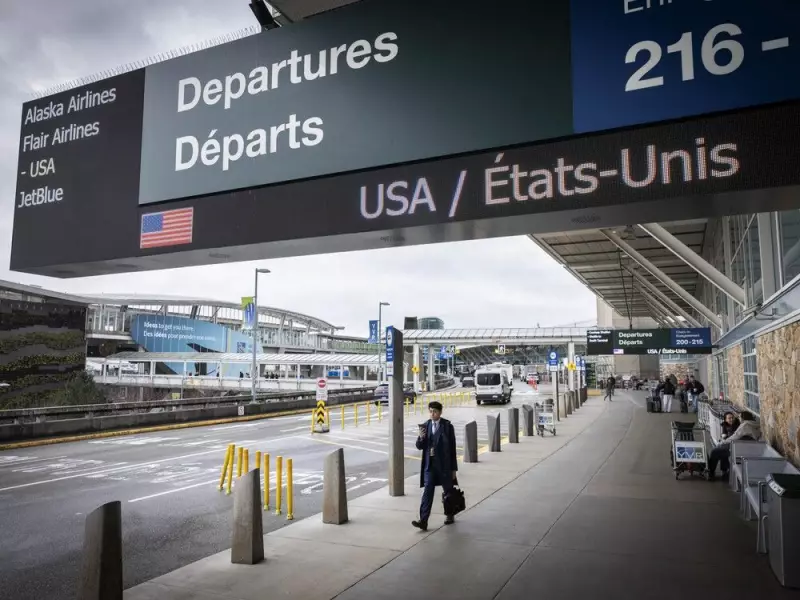
New data from Statistics Canada paints a stark picture for cross-border aviation, revealing that the number of passengers flying from Vancouver to the United States declined for ten consecutive months throughout the previous year. The trend highlights a significant shift in travel preferences among British Columbians, with agents pointing to growing consumer anxiety as a primary driver.
A Steep Decline in November
The most pronounced drop occurred in November 2025, the latest month for which figures are available. During that month, approximately 230,000 people boarded U.S.-bound flights from Vancouver International Airport (YVR). This figure represents a nearly 11 per cent decrease compared to passenger volumes in November 2024. The contrast is sharp when compared to other international destinations, which saw an increase of over 12 per cent in travellers departing from Vancouver during the same period.
"People are worried," said Nitin Gaba, director of operations at Vancouver-based Gaba Travel. "They read the news, but they also hear a lot of rumours." Gaba explained that clients are increasingly reluctant to deal with potential stress at the border or spend their vacations concerned that "something might happen." This apprehension is redirecting travel plans that were once routine.

Real-World Impact: Cancelled Groups and Lost Deposits
The statistical decline is reflected in tangible losses for the travel industry. Gaba provided a concrete example: a 25- to 30-person cruise group booked over a year ago for a Caribbean voyage in March 2026 decided to cancel entirely because the trip required flying into Miami. Each member forfeited their deposit to avoid the flight.
Michael Scott-Iversen, owner of the Hagan’s Travel and Cruises office in North Vancouver, faced a similar challenge. Last summer, half of a 25-person tour group scheduled for Santa Fe, New Mexico, cancelled their reservations, each walking away from an $800 deposit. Despite having a waitlist, Scott-Iversen could not fill all the spots, ultimately losing several thousand dollars on the trip after managing to fill only about two-thirds of the spaces.
"People who would have normally been like, 'Hey, let’s go to Disneyland' or Hawaii are looking at alternative options," Gaba observed, summarizing the changed mindset.
A National Trend and Shifting Destinations
The downturn is not isolated to Vancouver. Across Canada, U.S.-bound flights were down 13.5 per cent in November 2025 year-over-year. Major airports led the decline:
- Toronto: Down 13.7%
- Montreal: Down 13.2%
- Calgary: Down 12.5%
These four airports collectively handle 90 per cent of all Canadian air traffic to the United States.
In response, travel agencies are steering clients toward other destinations. Gaba noted that winter travellers are now opting for Mexico and the Caribbean, while summer trips are pivoting to Europe. Domestic travel within Canada also saw an unexpected surge last summer. Notably, niche U.S. travel like bachelor parties and destination weddings has "completely dried up," according to Gaba.
The sustained decline underscores a broader hesitation among Canadian travellers, transforming long-standing travel patterns and forcing the industry to adapt to new consumer priorities focused on perceived safety and reduced hassle.