Travel Industry Faces Major Crisis as Middle East Conflict Escalates
Global travel shares experienced a sharp decline on Monday as intensifying conflict between the United States, Israel, and Iran created widespread aviation disruptions, forced the closure of critical Middle Eastern transportation hubs, and triggered a significant surge in oil prices. Industry analysts are warning that these disruptions could persist for weeks, creating the most substantial challenge for aviation since the COVID-19 pandemic.
Key Airports Shut Down, Stranding Passengers
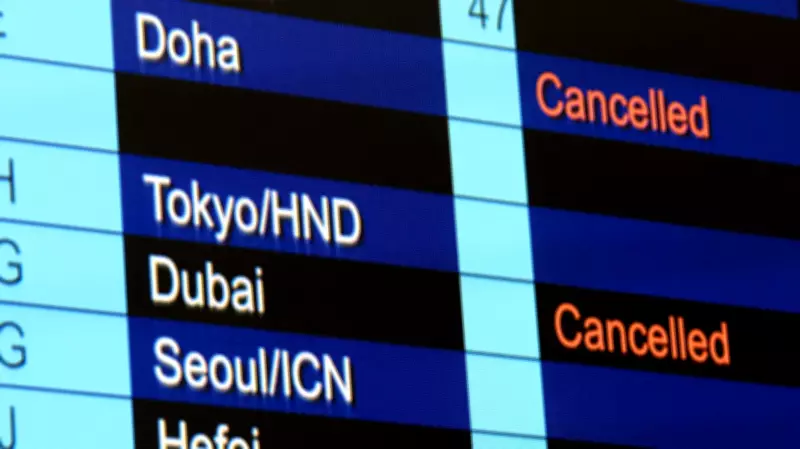
Dubai, recognized as the world's busiest international airport, and Doha remained closed for a third consecutive day, leaving tens of thousands of passengers stranded across the globe. The situation worsened as Jordan became the latest nation in the region to partially close its airspace on Monday. This cascading closure of airspace has created a logistical nightmare for airlines, with aircraft and crews scattered in incorrect locations worldwide.
Paul Charles, head of travel consultancy PC Agency, described the scenario as a "nightmare" for the industry, with carriers having no clear timeline for when vast sections of Middle Eastern airspace might reopen. The conflict expansion saw Israel bombard Lebanon following rocket fire from Hezbollah, several American warplanes crash in Kuwait, and Iran launch missile attacks across the region.

Financial Markets React Sharply
The financial impact was immediate and severe. European travel giant TUI saw its shares drop by 8.5%, while Lufthansa declined 6.5% and British Airways-owner IAG fell 4.8%. Hotelier Accor and cruise company Carnival also recorded substantial losses. In pre-market trading, U.S. airline shares dropped approximately 5%, reflecting broad market concern.
Oil prices jumped 7% to reach their highest levels in months as Iran and Israel escalated attacks, raising immediate concerns about increased fuel costs for airlines already facing significant operational challenges. B Riley Securities noted in an analyst report that "an active war zone, along with the resulting flight disruptions due to closure of airspace and airports, is likely to curb travel appetite in the region."
Analysts Identify Vulnerable Carriers
Financial institutions including J.P. Morgan, Goodbody, and Citi highlighted Wizz Air as the European carrier most exposed to the crisis due to its substantial operations in Israel. Analysts pointed to three primary pressure points for airlines:
- Rising fuel costs despite hedging strategies
- Massive cancellation expenses
- Significant rerouting costs for diverted flights
Middle Eastern carriers continued canceling flights on Monday, with Flydubai suspending all operations to and from Dubai until Tuesday afternoon. Asian airline stocks also suffered, with Japan's ANA Holdings, Air China, China Southern Airlines, China Eastern Airlines, Malaysia's AirAsia X, and Taiwan's China Airlines and EVA Airways all falling at least 4%.
Global Flight Cancellations and Rerouting
Cathay Pacific canceled all flights to the Middle East, including services to Dubai and Riyadh, while waiving rebooking fees for affected passengers. Singapore Airlines canceled Dubai flights through March 7, and Japan Airlines suspended its Tokyo-Doha route.
Data provider VariFlight reported that mainland Chinese airlines had canceled 26.5% of flights to and from the Middle East from March 2 to March 8, indicating "sharp near-term disruption" while adopting a wait-and-see approach regarding potential longer-term schedule adjustments.
Singapore-based independent aviation analyst Brendan Sobie noted that Indian carriers faced particular vulnerability due to their heavy Middle Eastern schedules serving migrant workers and an existing ban on using Pakistan's airspace for flights to and from Europe. Air India responded by canceling numerous international routes.
Passenger Chaos and Personal Stories
The ripple effects created chaos for travelers worldwide. Dubai International Airport served 92 million passengers in 2024, making it the world's busiest international hub according to Airports Council International, with Doha ranking tenth globally.

Virgin Australia, which leases aircraft operated by partner Qatar Airways for Doha routes, canceled eight flights on Monday while offering free booking changes. Lufthansa canceled passenger flights in and out of the UAE but attempted to fly an empty Airbus jet from Dubai to Munich to reposition equipment.
Passengers in Sydney reported scrambling to rearrange travel with minimal information. Sixteen-year-old Ascanio Giorgetti and his mother Alessandra from Italy discovered their Milan-bound flight via Doha had been canceled, forcing them to secure an alternative route home through Los Angeles on another airline at significant personal expense.
"We have no information at all, no answer on the phone from Qatar Airways," Alessandra Giorgetti stated, noting their original tickets had cost 4,000 euros. Meanwhile, 78-year-old travelers Jenni and Doug Stewart experienced multiple disruptions during their journey from Sydney to Scotland via Doha, describing chaotic scenes with hundreds of passengers seeking even minimal information about their travel plans.
The aviation industry now faces an uncertain period as geopolitical tensions continue to disrupt global travel networks, with no immediate resolution in sight for the closed airspaces and grounded flights affecting millions of passengers worldwide.