Parma: Italy's Underrated Culinary Capital and the Home of Parmigiano Reggiano
With a surname like Bologna, it comes as little surprise that I belong to the vast community of Italian Americans who cherish journeys to "Il Bel Paese." Italy stands as my most frequented international destination outside the United States, and I have been privileged to explore eight of its twenty diverse regions. While delectable cuisine abounds throughout Italy, I recently ventured into an area that deserves a prominent spot on any cheese enthusiast's travel bucket list: the province and city of Parma.
The Reign of Parmigiano Reggiano
As one might infer, Parma—alongside its neighbor Reggio Emilia—lends its name to the revered hard cheese known as Parmigiano Reggiano. This celebrated "king of cheeses" can legally bear that designation only when produced within these two provinces, plus Modena, Mantova, and Bologna. The Parmigiano Reggiano Consortium strictly enforces these geographical and production standards.
Parmigiano Reggiano is currently enjoying a significant cultural moment, capturing global attention both in media and on dining tables. In November, news emerged that United Talent Agency had signed the Parmigiano Reggiano Consortium to strategically place the cheese in films and television shows, aiming to elevate awareness of authentic products. This development followed a September announcement of a strategic partnership with the New York Jets football team, featuring stadium concessions, video content, and promotional activities.

During the 2024 Paris Olympics, the cheese gained further spotlight as fans of Italian gymnast Giorgia Villa uncovered her prior sponsorship with the consortium, complete with striking images of the athlete alongside massive cheese wheels. With the upcoming Milan-Cortina Olympics on the horizon, additional cheese-centric sponsorships appear highly plausible, given the host nation and the consortium's proactive public relations efforts.
A Journey to the Source
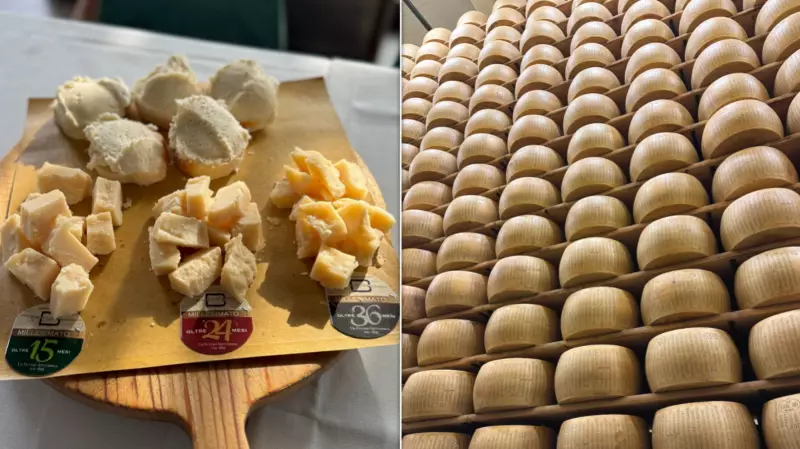
My visit to Parma included an enlightening stop at Azienda Agricola Bertinelli, a family-owned dairy that offers Parmigiano Reggiano tastings and educational tours. These experiences detail the meticulous, highly regulated production process behind this iconic cheese. In today's protein-focused culture, Parmigiano Reggiano receives extra acclaim for its naturally high protein content. Italian researchers have published studies underscoring the health benefits of consuming authentic Parmigiano Reggiano.
Social media platforms are flooded with captivating videos showcasing mouthwatering pasta dishes prepared in hollowed-out Parmigiano Reggiano wheels at restaurants and in home kitchens. The popular "Italian brainrot" trend even featured a "Parmigiano" character, highlighting the cheese's cultural resonance. Despite its world-famous culinary exports, Parma remains somewhat under the radar compared to Italy's more frequented destinations like Florence, Rome, and Venice. Yet, as I discovered, the city offers abundant attractions beyond its dairy delights.
What To Eat In Parma
Accessing Parma is straightforward. A drive from Milan takes under two hours, and train connections are available from numerous Italian cities, including Milan, Bologna, Florence, and Venice. The train station is a short, pleasant walk to the city center, and the entire urban area is highly walkable.
As the first Italian locale to earn UNESCO's "City of Gastronomy" designation, Parma boasts an exceptional dining scene. I enjoyed multi-course meals at Cortex and Croce di Malta, sampled wine and snacks at Tra L’uss e L’asa and Tabarro, and savored sandwiches at Pepen and Bel Grano Focaccia. Local recommendations also included Osteria del 36, Ombre Rosse, Ristorante Cocchi, Trattoria Corrieri, and Trattoria del Tribunale.
Cured meats and torta fritta—a puffy fried dough—are local staples. In the broader Parma province, I dined at Trattoria Antichi Sapori, Al Vedel, and Trattoria Ai Due Platani. Authentic Parmigiano Reggiano is crafted using only three ingredients: raw cow's milk, salt, and rennet. Each wheel ages for a minimum of twelve months, with most market varieties aged between twenty-four and thirty-six months.

Beyond cheese, Parma's rich culinary heritage features the iconic Prosciutto di Parma and the highly prized Culatello di Zibello, often called the "king of salumi." This rare cured meat ages in a pig's bladder and is typically served with torta fritta. Local restaurants commonly offer tortelli d’erbetta (pasta stuffed with cheese and greens), anolini in brodo (beef-filled pasta in broth), and caval pist, a delicacy of minced horse meat.
Other Highlights Of A Parma Trip
Although my visit naturally emphasized gastronomy, I also explored Parma's historical and cultural offerings between meals. The Palazzo della Pilotta complex hosts several notable museums and sites, including the National Gallery of Parma, the National Archaeological Museum, and the Bodoni Museum. The Palatina Library is particularly breathtaking, as is the wooden Farnese Theater, one of Europe's largest baroque theaters.
Across the street, the Glauco Lombardi Museum presents a unique collection of personal items related to Marie Louise, Duchess of Parma and Napoleon's second wife. Following this visit, I indulged in a miniature "Duchess of Parma" cake at the nearby San Biagio cafe. The impressive Parma Cathedral and its adjacent octagonal baptistery are also essential stops, along with the Correggio frescoes in the former Monastery of San Paolo.
I relished leisurely strolls through Piazza Giuseppe Garibaldi and Parco Ducale in the afternoons, embracing a "slow travel" philosophy to genuinely absorb the city's atmosphere. Visitors can extend their journey to other parts of Emilia-Romagna or plan easy half-day excursions. I visited Acetaia di Giorgio, a small balsamic vinegar producer in Modena, and lunched at the Michelin-starred Osteria del Viandante in Reggio Emilia. Many travelers also incorporate visits to the Ferrari and Lamborghini museums.
At a time when overtourism challenges destinations like Florence, Rome, Venice, and the Amalfi Coast, travelers seeking a relaxed and authentic Italian experience should consider adding Parma to their itineraries. For those with constrained travel budgets, savoring genuine Parmigiano Reggiano at home can provide a delightful taste of this remarkable region in the interim.