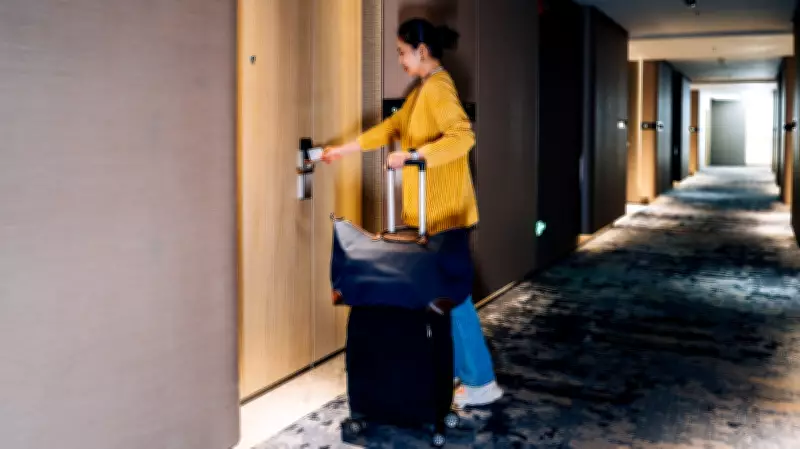
The Unseen Burden: Hotel Staff Detail How Common Guest Actions Create Operational Challenges
Most travelers arrive at hotels believing their conduct falls within reasonable bounds. They conscientiously reuse towels, neatly arrange their trash, and assume that policies possess flexibility given their financial investment in the accommodation. However, from the perspective of front desk agents and housekeeping teams, these seemingly minor decisions accumulate rapidly, creating significant operational friction.
"From my professional observation, problematic guest conduct has become increasingly prevalent in recent times, often stemming from travelers arriving at properties already fatigued or frustrated," explained Leslie K. Harris, marketing director and purchasing agent at Double Eagle Hotel & Casino in Cripple Creek, Colorado. "The cumulative stressors of modern travel—including lengthy queues, unexpected itinerary alterations, flight delays, cancellations, and the general anxiety of trip planning—all contribute to heightened tension. In such a state, even a minor delay at reception or a simple misunderstanding can precipitate displays of discourtesy."
While many of these behaviors might appear innocuous in isolation, hotel professionals report they consistently cause disruptions and complications during daily operations. Below are several frequently cited examples, with staff surnames abbreviated to protect privacy.

Presuming Others Can Check In On Your Behalf
"This scenario occurs during every single shift without fail," stated Maria K., a front desk supervisor at a major downtown Chicago hotel. "Individuals approach the counter declaring, 'My spouse is parking the vehicle' or 'My companion is en route,' and fully expect us to relinquish room keys."
Hotels maintain strict protocols requiring matching identification and credit cards for security purposes. Shared surnames, text message confirmations, or verbal assurances do not satisfy these requirements. "We are not intentionally creating obstacles," Maria clarified. "We are adhering to established regulations designed to safeguard guest security. If your name appears on the reservation, you must be physically present at the desk."
Introducing Emotional Support Animals Without Prior Verification
Emotional support animals do not possess the same legal standing as professionally trained service animals, meaning hotels retain the right to apply standard pet fees for ESAs. "When guests attempt to conflate their emotional support animal with a service animal, it places our team in an extremely awkward position," noted Darren L., a front office manager at a Puerto Rico resort. "This practice also inadvertently complicates matters for legitimate guests who genuinely depend on certified service animals for daily assistance."
Conducting Loud Speakerphone Conversations in Shared Lobbies
"The volume of intimate conversations we inadvertently overhear daily would astonish most people," remarked Aisha P., a front desk agent at a New York boutique hotel. "We become privy to relationship dissolutions, employment interviews, familial conflicts—the entire spectrum."
Hotel lobbies function as communal areas where excessive noise from speakerphone calls disrupts both other patrons and working staff. "We are attempting to facilitate check-in procedures while simultaneously listening to someone debate dinner arrangements via speakerphone," Aisha added. "Modern solutions like headphones exist. Simply stepping outside remains another viable option."
Damaging Towels with Stubborn Stains
"Saturated, stained towels represent the perpetual frustration of my professional life," confessed Luis M., a housekeeping supervisor at a Nashville business hotel. "They become excessively heavy, drip moisture across floors, and frequently sustain irreversible damage."
Towels contaminated with cosmetics, hair coloring, or cleaning agents often necessitate additional laundering cycles or require complete disposal. "Guests believe they are merely leaving behind a damp towel," Luis explained. "In reality, they are creating supplementary labor and sometimes rendering linens unsalvageable."

Leaving Ambiguous Trash Arrangements in Rooms
"If an item is not placed within the designated waste receptacle, we cannot automatically assume it constitutes trash," emphasized Jenna R., a housekeeper with eight years of industry experience. "Our training explicitly instructs us to avoid discarding potential guest belongings."
Neatly stacked wrappers, bottles, or food containers often remain untouched because staff cannot risk disposing of valuable possessions. "Guests subsequently complain that their room received insufficient cleaning," Jenna continued. "However, if an arrangement appears intentional, we deliberately leave it undisturbed."
Maintaining 'Do Not Disturb' Signs While Requesting Services
"A Do Not Disturb indicator is not a gentle suggestion—it represents a legal restriction," asserted Paul T., an operations manager. "Its presence means we are prohibited from entering that specific room."
Guests occasionally contact the front desk seeking fresh towels or waste removal while the sign remains displayed on their door. "We cannot simultaneously honor both requests," Paul clarified. "If you desire housekeeping services, the sign must be removed beforehand."
Requesting Room Access from Housekeeping Personnel
"This situation places housekeepers in a profoundly difficult position," said Nina G., a housekeeping manager. "They are never authorized to grant anyone access to a guest room under any circumstances."
This regulation exists for paramount security reasons, yet guests frequently make such requests regardless. "Individuals explain, 'I left my key inside' or 'I am pressed for time,'" Nina noted. "However, if my staff violate this protocol, they risk immediate termination. The front desk represents the sole permissible channel for room access."
Abandoning Partially Filled Coffee Cups on Various Surfaces
"We discover coffee cups positioned across virtually every conceivable surface," reported Julie S., a housekeeper at a large convention hotel. "Nightstands, work desks, bathroom counters, windowsills—nowhere is immune."
Spilled coffee can permanently stain furniture and bedding, while dairy or sugar residues introduce additional sanitation concerns requiring thorough cleaning.
Stripping Bed Linens Before Departure
"Guests believe they are providing assistance, and we genuinely appreciate the considerate intention," acknowledged Carlos V., a housekeeping trainer. "However, this practice actually decelerates our workflow."
Stripping beds tangles pillow protectors and duvet covers while complicating the inspection process for stains or damage. "We operate according to an optimized system," Carlos elaborated. "Our procedures function most efficiently when beds remain in their original state upon our arrival."
Disputing Checkout Times Over Marginal Delays
"This occurs with surprising regularity," observed Megan D., a front desk manager at a high-volume San Francisco hotel. "Individuals will literally debate the matter down to individual seconds."
Housekeeping schedules are structured around defined time blocks rather than precise stopwatch measurements. "If you are visibly unprepared for departure, the fundamental timeline remains unchanged," Megan concluded. "Our objective involves preparing accommodations for incoming guests, not arbitrarily rushing individuals without valid cause."