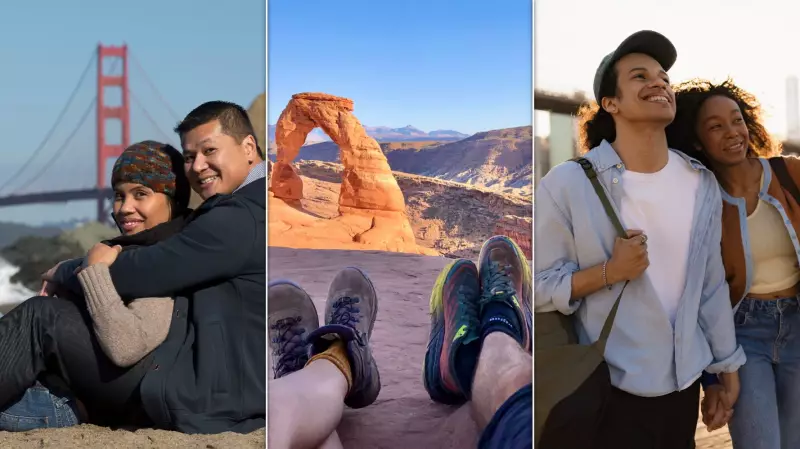
Is your location sabotaging your love life? A new report suggests where you live in the United States can significantly impact your chances of finding a meaningful connection. The study, from Gen Z-focused platform Hidden, created a Dating Difficulty Index to rank all 50 states based on how challenging they are for singles.
The Dating Difficulty Index: How States Rank
Researchers analyzed six key factors affecting dating in each state: the single population percentage, the average cost of a date, the availability of bars and restaurants per 100,000 people, documented online interest in dating apps and tips, and per capita spending on dating apps. Each state received a score between 0 and 100, with higher numbers indicating a more difficult dating scene.
Utah emerged as the most difficult state in the nation for singles, with a top score of 98.89 on the index. The data reveals a single population of 44.7%, an average date cost of $121, and relatively low numbers of bars (4 per 100K) and restaurants (101 per 100K). Interestingly, per capita spending on dating apps in Utah is just $0.33, while dating-related searches are at 2,138 per 100,000 people.

The other nine states rounding out the top ten most difficult places to date are Washington (90.89), Maine (87.8), Idaho (87.06), Alabama (86.41), Tennessee (85.25), Texas (83.77), Hawaii (81.68), Virginia (81.1), and New Jersey (80.29).
On the opposite end of the spectrum, Rhode Island scored a perfect zero, indicating the least difficult dating environment. It was followed by South Dakota (21.83), Louisiana (28.38), New York (30.94), North Dakota (32.65), Oregon (33.69), Illinois (34.18), Montana (36.52), Delaware (38.23), and Vermont (41.82).
Why Dating Has Become More Complicated
Drew Renna, head of brand and creators at Hidden, contextualized the findings, noting that dating has grown more complex overall. "People are spending more time alone and less time in social places," Renna said. "The barriers keep piling up, there are higher costs for going out and people seem generally busier than ever to actually date."
The report highlights significant financial pressures. Psychotherapist Duygu Balan, who is licensed in New York and California, observes this trend among Gen Z clients in her practice. "I see many delaying dating because they feel they must reach financial stability first. Success and financial security become prerequisites for connection, as if they need to earn the right to date," Balan explained.
This economic anxiety can manifest in dating behaviours. "Economic instability can heighten anxiety, irritability, and shame, which often shows up as avoidance, lower tolerance for stress, short temper, or shutting down emotionally on dates," Balan added. The classic "dinner and a movie" ideal can make singles feel ineligible if they can't afford it, eroding confidence.
Beyond Geography: Social Dynamics at Play
Balan notes that the index data might confirm some expectations about different environments, but location is only part of the story. In large cities with vast dating pools, options are plentiful but so are dating fatigue, burnout, and a "ghosting culture." This can foster a mindset that someone better is always one swipe away, hindering commitment.
Conversely, smaller communities may offer a limited dating pool, creating urgency and pressure to pair off quickly. Social dynamics are also crucial. "Unspoken scripts about what relationships should look like and greater social pressure to follow traditional values can discourage exploration and emotional risk-taking," Balan said. This can make some states less welcoming for queer, non-monogamous, or otherwise non-traditional daters.
Environments that are open-minded and diverse can foster self-awareness, healthy communication, and emotional vulnerability—traits that lead to more secure dating experiences.

How to Overcome Your Location's Dating Challenges
Your postal code doesn't have to dictate your romantic destiny. Balan recommends stepping back from dating apps to seek connections in real-life communities built around shared interests. "Expand circles beyond dating apps and join communities where people show who they are through shared activity, including volunteer groups, creative spaces, sports, activism, or faith-based programs if aligned," she advised.
It also helps to refocus your criteria from superficial "types" to core compatibility factors like emotional readiness, shared worldview, and communication skills. Working on self-knowledge is paramount. "Knowing yourself, understanding your patterns, and healing the ones that get in the way of connection often matters more than location," Balan stated.
The most successful daters are not necessarily in the 'best' locations. According to Balan, they are those who approach dating with self-awareness, realistic expectations, and an ability to tolerate imperfection and uncertainty.