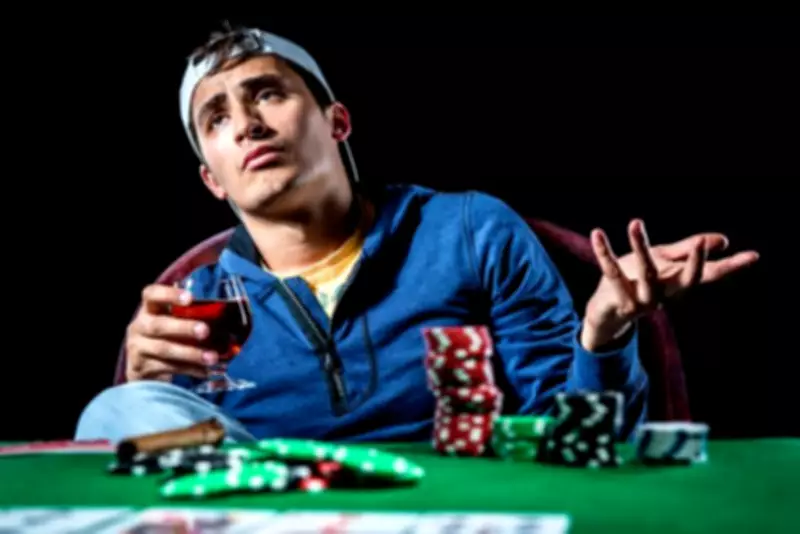
In the high-stakes world of dating, recognizing when someone is bluffing about their intentions or feelings can be as challenging as spotting a poker player's hidden hand. According to Steve Blay, founder of Advanced Poker Training, the parallels between poker and dating are striking, with body language serving as a crucial indicator of honesty and interest.
The Poker-Dating Connection: Reading Subtle Cues
Blay emphasizes that posture is one of the most reliable "tells" in both contexts. "If there's one 'tell' that usually can be trusted, both in poker and in dating, it's posture ... people always are uncomfortable when they're bluffing, because bluffing is lying," Blay explains. When individuals are being deceptive, they may exhibit signs such as talking excessively, overexplaining their circumstances, or avoiding direct eye contact.
Reflecting on personal experience, Simone Paget, author of the article, recalls dating a man who later turned out to be engaged. Despite his convincing demeanor, subtle cues like looking away when discussing his "ex" partner—who was actually his current fiancée—might have revealed the truth earlier.

What Body Language Reveals About Interest and Honesty
Paying attention to a date's body language can help assess their level of engagement. As Blay notes in an interview with Casino.org, genuine interest is often shown through relaxed and open posture. "If someone is actually interested in you, they're leaning forward. Their posture is loose and relaxed. If you've ever been talking to someone and they're leaning back, their arms are crossed, and look very rigid, clearly someone is not having a very good time."
However, Blay cautions that body language alone isn't a foolproof lie detector. Many cues associated with deception, such as nervousness or avoiding eye contact, can also stem from first-date jitters or neurodivergent traits. For instance, some neurodivergent individuals may struggle with eye contact, so misinterpreting this as dishonesty could lead to unfair judgments.
Prioritizing Interaction Over Interrogation
To navigate these complexities, Blay advises daters to focus on interaction rather than interrogation. "Talk to people a lot ... the more you talk to someone, the more they're going to give everything away," he says. Whether revealing positive green flags or concerning red ones, prolonged conversation allows instincts to surface and help discern the truth. "When someone is faking it, they can only hold it in so long until they break. Eventually, your instincts are going to help you figure out what the truth is."
Blay also highlights the importance of trusting one's gut feelings. In Paget's case, she realized that a nagging sense something was amiss with her date should have been heeded sooner, rather than relying solely on observable "tells." Our bodies often sense dishonesty or danger before our minds fully process it, making intuition a valuable tool in dating.
Avoiding Overthinking: Lessons from Poker
When it comes to personal behavior on dates, Blay warns against overthinking, a lesson he learned from poker. He describes "Fancy Play Syndrome" (FPS), where players attempt overly complex tricks to deceive opponents unnecessarily. Similarly, in dating, trying too hard to impress or analyze can backfire. "Both in poker and in dating, the single best poker lesson is don't try too hard. Just be yourself, and the cards fall the way they should," Blay advises.
Ultimately, while body language cues can provide insights, they should be balanced with intuition and open communication. As scary as it may seem, trusting your gut and knowing when to walk away—even when the signs aren't obvious—is key. And for those with significant secrets, like hidden partners, Blay's poker analogy holds: it's best to fold and avoid deceiving others in the dating community.