Anyone who has ever grown zucchini knows plenty of jokes about how this crop grows in abundance. But to get a bumper crop of veggies in your patch, you need sun, water, and good soil. For the plant's blooms to turn into something edible, we also need a little help from our friends. Enter: The squash bee.
As we celebrate World Bee Day on May 20, it is the perfect opportunity to thank these unsung heroes who pollinate all manner of squashes — including summer squash, like zucchini — and other members of the cucumber family, such as pumpkins and melons.
The Role of Specialist Bees
These powerful pollination specialists are just that — specialist bees, meaning they only pollinate one type of flower. About 25% of the hundreds of bee species in Canada are specialists. Ryan Godfrey, Botanist in Residence at WWF Canada, explains that these specialist bees are drawn to all different types of plants within this nutritious veggie family. Having different varieties will help convince the bees to set up shop in your yard to pollinate your squash and gourd plants.

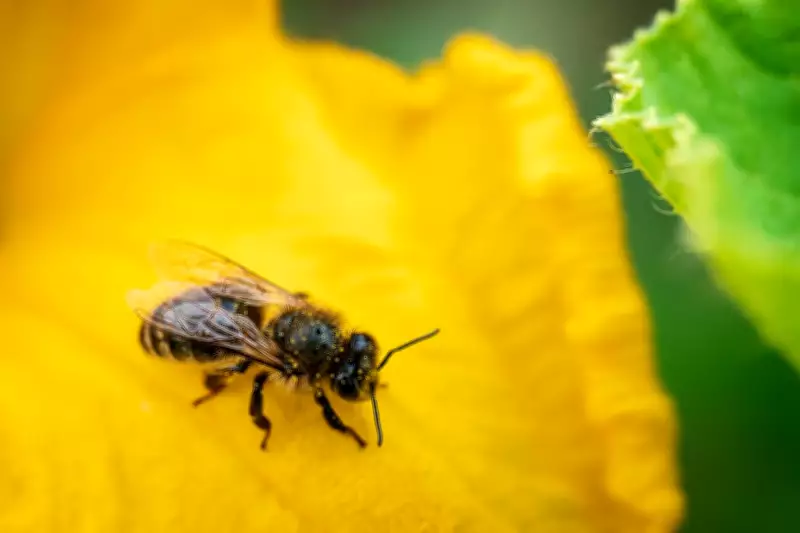
“They have very similar looking flowers. They’re usually yellow, sometimes orange or white, gramophone shaped flowers. They open up into a big trumpet horn,” Godfrey said. “Most plants have male and female parts on the same flower: So the pollen and the female receptive part of the stigma are right next to each other, so pollination can just be sort of jiggling the flower around. But the squash family have separate male and female flowers.” This is where bees come in, to ensure the pollen reaches the female flowers in order to produce something we can eat.
Identifying Male and Female Flowers
Curious which flowers on your zucchini or squash plant are male or female? “When you look at the flower, remember I said there’s that trumpet shape, usually the yellow thing, if you follow that on the outside down to the narrow part, you will either see a small version of whether it’s a melon or a cucumber or a pumpkin, a little tiny green bulge there, which would be a female flower, or you’ll see nothing at all, that will be a male flower,” Godfrey said.
Squash Bees: Ground-Nesting Helpers
As solitary, ground-nesting bees, squash bees tend to live right in your garden patch along with their food source. Director of Pollinator Partnership Canada, Victoria Wojcik, says the bees typically do not stray too far from the garden where their food lives. “They’ll find some food, the plant they’re looking for, and they’ll get a nest going there. They’re really only going to go 200 metres, maybe 300 from where their nest is to look for more food.” Not that the bees cannot go further afield, but as Wojcik explains, “It’s just the math of the fuel economy of it all: If they’re flying more than 300 metres, they’re using more energy than they’re getting from the food they’re collecting.”
If the bees are setting up shop in backyard gardens, it is of benefit to gardeners to provide them a nice home. During the growing season, females build nests in the ground, so Wojcik recommends making sure the soil around the squash plants is ideal for nesting. “Don’t mulch around your crops. Don’t go in there and toss up the soil once they’re growing. Just leave it be, because that soil is where those bees are going to dig its nest and it’s going to live there.”
While female bees are digging elaborate tunnels underground and tending to their babies, male bees do not get to live in the nest. Godfrey says in the morning, you can look for the male squash bees inside the blooms, “They actually sleep inside the flowers all curled up.” Avoiding spraying pesticides on your plants is imperative, as runoff into the soil will harm your squash bees.
Attracting Squash Bees
Squash bees tend to stick to areas that have plentiful food sources, so growing a bunch of fruits and veggies from the squash family can help. “Generally, abundance is the answer here,” Godfrey explains. “If there is a big enough patch, they absolutely will come.” If your yard is not quite big enough, however, bees will happily ignore your fence, so sharing seeds or plants with neighbours helps, too.

Harvest Season and Winter Hibernation
In the fall, when there are no more squash flowers to pollinate, your friendly veggie patch assistants will head underground for the winter. “At the end of the growing season … that series of squash bees will stay in a hibernation kind of, frozen stage in the pupa stage. As the temperature slows, the metabolic functions slow down. It can handle the freezing, and then when the temperature rises again in the spring, the metabolic processes start again, and then out comes a new bee,” explains Wojcik. To keep that area nice and toasty for your bee pals, in the fall, “You don’t want to go nuts turning over the soil and digging up your garden.” Raking some leaves into the garden bed is also helpful.
Take a look when visiting the farmers markets in late fall, and stop to inspect some of those decorative gourds. As well as being pollinator powerhouses, squash bees are also accidental artists. Godfrey says squash bees are open pollinators who do not discriminate which squash plants they visit. Mixing and matching makes them the culprits behind “Those weird, warty Halloween or Thanksgiving gourds. The ones that are all over the place and no two of them look the same, all different colors and shapes and textures. That is the result of open pollination.”
And when you visit the pumpkin patch in October, or enjoy a delicious butternut squash at Thanksgiving, do not forget to give thanks to the little bees who helped get it onto your plate.