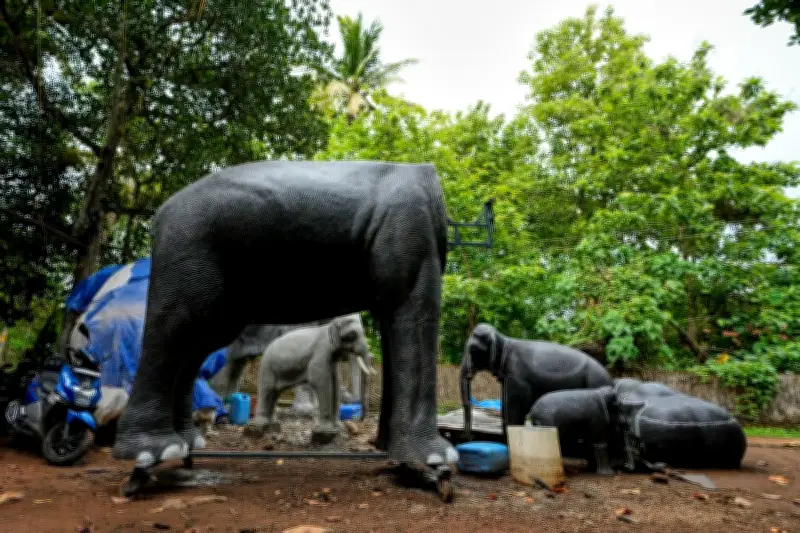
An unfinished robotic elephant stands alongside others at a backyard workshop in Chalakudy, in the southern Indian state of Kerala, as seen in a photo taken on May 22, 2026. These mechanical pachyderms are drawing crowds and controversy in some of India's Hindu temples, where they are being introduced as a substitute for live elephants.
What Happened
Several temples in Kerala have begun using life-sized robotic elephants in religious ceremonies, replacing the traditional use of live elephants. The robots, crafted from materials such as rubber and metal, can move their trunks, flap their ears, and even spray water, mimicking the behavior of real elephants. According to the Associated Press, the initiative aims to address concerns about animal welfare and the stress faced by captive elephants during festivals and rituals.
Details of the Innovation
The robotic elephants are built by a workshop in Chalakudy, Kerala, and are designed to be used in processions and temple rituals. Each robot costs approximately 500,000 rupees (about $6,000) and is powered by batteries. The creators claim the robots can operate for up to six hours on a single charge. The elephants are painted and decorated to resemble real ones, and their movements are controlled by a remote operator.

One temple official, speaking to the Associated Press, said, "The robotic elephant has been a blessing. We can conduct our rituals without causing any harm to animals, and the devotees are equally thrilled." However, not everyone is pleased. Some traditionalists argue that the robots lack the spiritual essence of live elephants, which have been part of temple ceremonies for centuries.
Impact and Controversy
The introduction of robotic elephants has sparked debate across India. Animal rights groups have praised the move, highlighting the often-poor conditions in which temple elephants are kept. According to the Wildlife Trust of India, there are over 500 captive elephants in Kerala, many of which are used in temples and festivals. These animals often suffer from malnutrition, injuries, and stress due to loud noises and long hours of work.
Critics, however, say the robots cannot replace the emotional connection between devotees and live elephants. "The elephant is a sacred animal in our culture. A machine cannot replicate that divinity," said a temple priest quoted by the Associated Press. The controversy reflects broader tensions between modernization and tradition in India's religious practices.
Despite the debate, several more temples have expressed interest in acquiring robotic elephants, and the workshop in Chalakudy has received multiple orders. The trend may expand to other states in India where temple elephants are used, potentially reducing the number of captive elephants in the country.