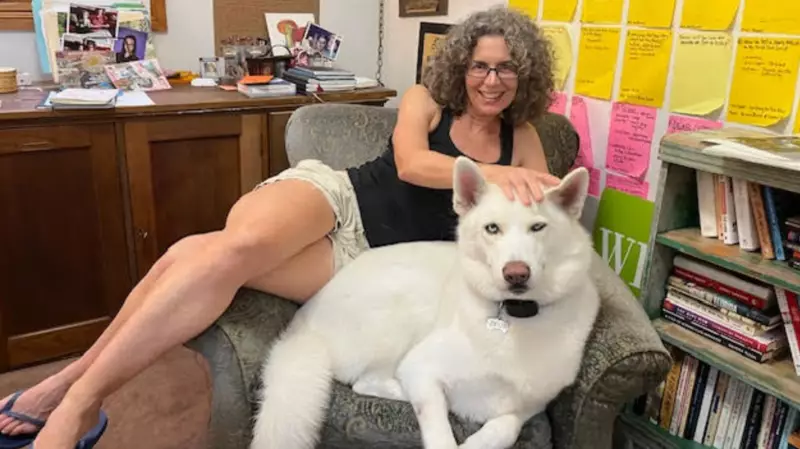
In a peaceful town celebrated more for its lush Royal Poinciana trees and historic Spanish architecture than for violence, a single afternoon shattered the quiet for one family. The incident began not with a person, but with a beloved pet: a 75-pound husky named Zeus.
The Chase That Changed Everything
Zeus, a powerful and energetic dog adopted two years prior from a college student, bolted from his garage after someone left a gate open. He charged directly to the neighbouring property owned by a man named Gus, a known sanctuary for six or seven cats who lounged in the front yard. The dog's owner gave frantic chase, yelling for Zeus to stop, but the husky was singularly focused.
The cats scattered in terror. Moments later, Zeus reappeared with a gray, striped tabby cat held gently in his mouth. He dropped the cat at his owner's feet with a look that seemed to say, "Look what I found." The injured feline scrambled up a tree, left panting and visibly shaken with a tuft of Zeus's white hair stuck to her chin.

The owner, finding Gus not at home, immediately called the fire department. In a scene straight out of community lore, firefighters arrived to rescue the cat from the tree. The owner then rushed the injured animal to a veterinary emergency clinic, pleading with staff to do everything possible to save her. He left a detailed note on Gus's door, explaining the terrible accident.
Grief, Guilt, and a Growing Threat
Hours later, a distraught Gus appeared at the family's front door. The news was devastating: the cat, named Connie after Gus's mother, had suffered a broken shoulder and severe internal injuries. She could not be saved. Gus described trembling uncontrollably as Connie was euthanized. "Connie was my family," he told the husky's owner, who was overwhelmed with remorse.
Gus returned to talk over the following days, cycling through grief, gratitude, and anger. He confided about the deaths of his parents and the deep bond with his cats. Then, his tone shifted dramatically. His eyes darted, his face flushed. "You gotta put that murderous animal down. He killed Connie," he demanded.
The family, who had lived in their cherished 100-year-old home for 15 years—where their children grew from toddlers to teenagers, leaving height marks on a pantry wall—scrambled for solutions. They installed an electric collar and an invisible fence to add a second barrier. They posted bilingual warnings on the gate. Yet, service workers frequently left it open, oblivious to the danger.
The tension reached a breaking point a week later during a sidewalk encounter. Gus, after more personal confidences, delivered a chilling ultimatum: "I have to tell you this because I know you're a good person. I don't know what'll happen if your murderous animal comes on my property again. I have a temper problem ... and a gun."
A Fractured Foundation and a Radical Solution
The husky's owner walked home shaken, the threat echoing in his mind. He proposed finding a new home for Zeus, a suggestion that caused his wife, Vicky, to weep as if he were suggesting rehoming one of their children. The dispute created a deep rift in their 17-year marriage, reducing conversations to a painful debate of his daily fear versus her profound heartbreak over the dog.
The crisis culminated when Zeus escaped again, this time with the couple's 15-year-old son, Sebastian, in frantic pursuit. As the boy and dog raced toward Gus's property, the father screamed for Sebastian not to enter the neighbour's yard, terrified of the potential confrontation. Sebastian ultimately tackled and dragged Zeus home, averting another tragedy.
That night, the conversation between husband and wife changed. He affirmed his love for Zeus, and she softened. Then, Vicky offered the unexpected solution: "Let's move." It was a staggering notion—to uproot their entire lives, their home filled with memories of mango trees, original pine floors, and their children's growth charts, because of a dog.
Yet, they began house hunting. Six months ago, they made the difficult decision and relocated. The move was a logistical headache, involving countless boxes and address changes. The author misses the physical reminders of their old life—the growth chart, the magnet-covered refrigerator, the familiar TV room.

But in their new home, there is peace. There is a perfect, secure place for everything: the wedding quilt, the bookshelves made from old stadium seats, and, most importantly, for Zeus, who now enjoys a fully fenced backyard and front yard. The family is safe. Their marriage is safe. Gus and his remaining cats are safe.
Was it extreme to move for a dog? Perhaps. The story leaves the question of whether a pet is equivalent to a child unanswered, acknowledging it was true for Vicky and Gus. The author concludes with a newfound understanding of an old adage: Home is where the heart is. And their hearts, ultimately, were with keeping their family—every member of it—whole and safe.