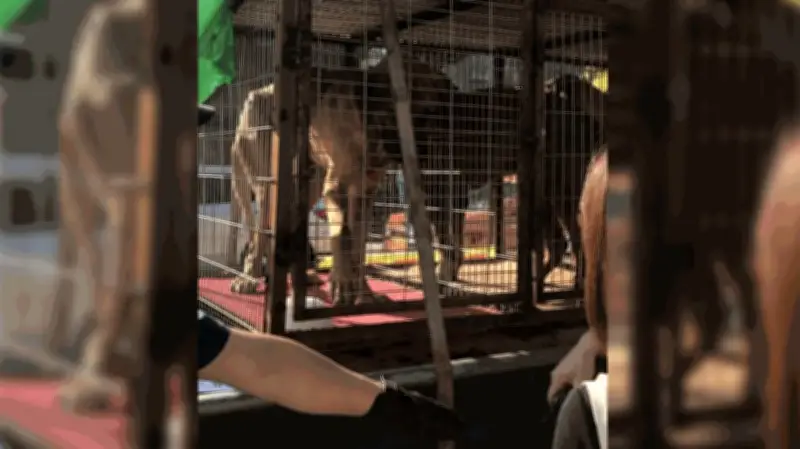
South Korean farmers say thousands of dogs have disappeared from their farms ahead of a nationwide ban on dog meat consumption set to take effect in 2027, sparking protests and accusations of theft by animal rights groups.
Farmers protest in Seoul
On June 26, 2026, farmers gathered in Seoul holding signs that read, 'These are dogs for human consumption, not pets,' displaying live dogs at a demonstration organized by the Korea Dog Meat Farmers Association. The protest aimed to draw attention to what they describe as a coordinated campaign to steal their livestock and destroy their livelihoods.
According to the association, approximately 2.5 million dogs are raised for meat annually in South Korea. However, since the National Assembly passed a law in January 2024 banning the slaughter, distribution, and sale of dog meat by 2027, farmers claim that thousands of dogs have gone missing, many allegedly taken by animal activists.

Government compensation and transition
The South Korean government has offered compensation packages to help farmers transition out of the industry, including subsidies to shut down farms and retrain workers. As of June 2026, about 70% of the country's estimated 1,500 dog meat farms have registered to close, according to the Ministry of Agriculture. However, farmers argue that compensation is insufficient and that the timeline is too short.
'We are being forced out of business without proper support,' said Park Sung-ho, a farmer from Gyeonggi Province, in an interview with local media. 'Our dogs are disappearing, and no one is investigating.'
Animal rights groups deny involvement
Animal rights organizations, including Humane Society International and local groups, deny any involvement in the disappearances. They have urged farmers to cooperate with the transition and accept government compensation. 'The ban is a historic step for animal welfare,' said Lee Ji-yeon, a spokesperson for a Korean animal protection group. 'We condemn any illegal activity and encourage farmers to work within the law.'
The government has pledged to investigate the missing dogs and has called for calm. 'We will ensure a fair and orderly transition,' said a Ministry of Agriculture official. 'Those who break the law will be held accountable.'
Impact on the industry
The dog meat industry in South Korea has been in decline for years, driven by changing attitudes, especially among younger generations. A 2023 Gallup Korea poll found that 64% of respondents opposed dog meat consumption, up from 44% in 2015. The ban has accelerated the industry's collapse, leaving farmers struggling to adapt.
Some farmers have turned to alternative livelihoods, such as raising livestock or opening pet-related businesses. But many face financial hardship, with some reporting debts and depression. 'I've raised dogs for 30 years,' said Kim Min-ho, a farmer in Chungcheong Province. 'I don't know what else to do.'
The controversy highlights the tensions between tradition and modernization in South Korea, as the country balances animal welfare concerns with the rights of those whose livelihoods depend on the trade. The government has promised continued support, but farmers remain skeptical.