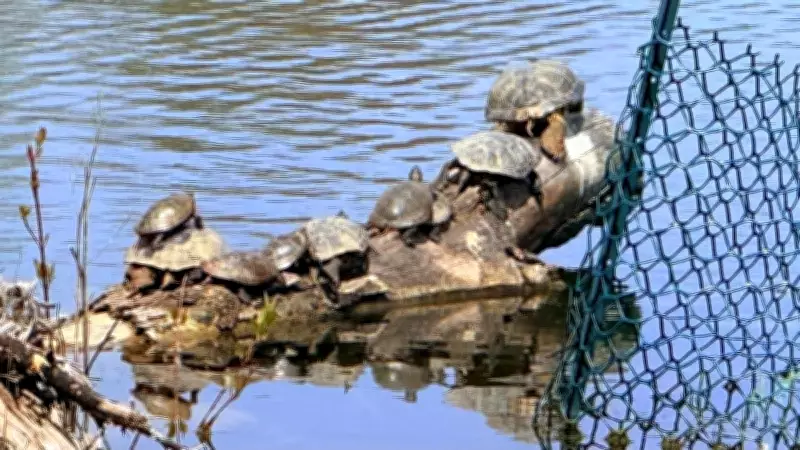
World Turtle Day, celebrated annually on May 23, serves as a reminder of the responsibilities that come with owning a pet turtle. Unfortunately, many pet turtles are abandoned outdoors when their owners can no longer care for them, causing significant harm to both the animals and the environment.
The Problem with Abandoning Pet Turtles
Unlike Canada's eight native turtle species, most pet turtles originate from warmer climates in the southern United States or Mexico. The red-eared slider, one of the most popular pet turtles, is now an invasive species in many Canadian wetlands. Lori Leckie, co-founder of the Heart Lake Turtle Troopers in Peel Region, notes that many of these turtles have been living in local wetlands for decades. "Some of them look to be close to 50 years old," she says. "They've been there for decades."
Releasing a pet turtle into the wild is not an act of kindness. "There is not any good reason to do so," Leckie emphasizes. Invasive turtles can introduce pathogens into native ecosystems, endangering both the pet and local wildlife. Conversely, pet turtles may lack immunity to naturally occurring viruses and bacteria in Canadian wetlands, potentially leading to their death.

Risks to Native Turtles
Non-native turtles compete with native species for food, basking areas, and nesting sites. They can also transmit diseases and attempt to breed with native turtles, producing non-viable eggs that waste the female's reproductive efforts. Julia Phillips, Resource Conservation Manager at Rouge National Urban Park, explains that pet turtles are not adapted to survive in the wild. "It's essentially cruel to drop turtles off in the wild," she says. "They pose a detriment to native species."
Smaller turtles are also vulnerable to predators such as raccoons, skunks, foxes, and coyotes.
What to Do Instead of Abandoning a Turtle
If you can no longer care for your pet turtle, contact a rescue organization like Little ResQ in Pefferlaw, Ontario. Shelter Manager Marc Ouellette has been rescuing pet turtles for 18 years. Little ResQ adopts out smaller turtles to new families and provides a sanctuary for non-native turtles that cannot be released. The sanctuary features contained ponds separated by sex, with oxygen supplied during winter and a greenhouse for food.
Families can also adopt turtles from Little ResQ, where they receive guidance on proper care. Ouellette notes that larger turtles are harder to adopt and often end up in the sanctuary.
Proper Turtle Care
Turtles require appropriate housing that grows with them, proper lighting, basking areas, and a varied diet of insects and plants. They can live for over 50 years, so long-term planning is essential. Veterinary care should be provided by an exotic animal specialist, such as Links Road Animal Clinic in Toronto.
Ouellette receives many calls from students moving away for university, highlighting the need for responsible pet ownership.
How to Help Turtles in the Wild
If you encounter a turtle nest or a non-native turtle in Rouge Park, call the Parks Canada Shell-Phone line at 416-938-3017. Report sightings of turtles in the wild using the iNaturalist app. For injured turtles, contact the Ontario Turtle Conservation Centre at 705-741-5000 for guidance.