In the bleak silence of a February, my world had shrunk. Just eight weeks earlier, I had said a final goodbye to Addie, my beautiful greater Swiss mountain dog. She was the last to go. My two sons were now freshmen in college, and Addie's sister had passed 18 months prior. The vibrant, noisy life that had filled my home for 18 years—the boisterous boys and their two hundred-pound canine shadows—was gone. The house was just an empty, quiet shell.
The Crushing Weight of Silence and a Fostering Pact
Friends suggested I should enjoy my newfound freedom. But the freedom felt like a prison. The refrigerator held food until it spoiled. The worn couches, once perpetually occupied by sleeping teenagers, just looked sad. The daily rhythm of single parenting, work, vet visits, and last-minute costume crises was over. I realized, with a pang, that I should have savored those chaotic moments more. Nobody had warned me how profoundly the silence would ache.
As a professional dog trainer and animal behaviorist of 30 years, I knew the depth of pet loss. "I am never getting another dog," I declared firmly to a colleague who ran a rescue. "I can't go through that pain again. But I'm going crazy alone. Send me a stopgap—something I won't keep."

She replied, "I have just the one."
Nellie: The 'Hideous' Beagle Who Was a Handful
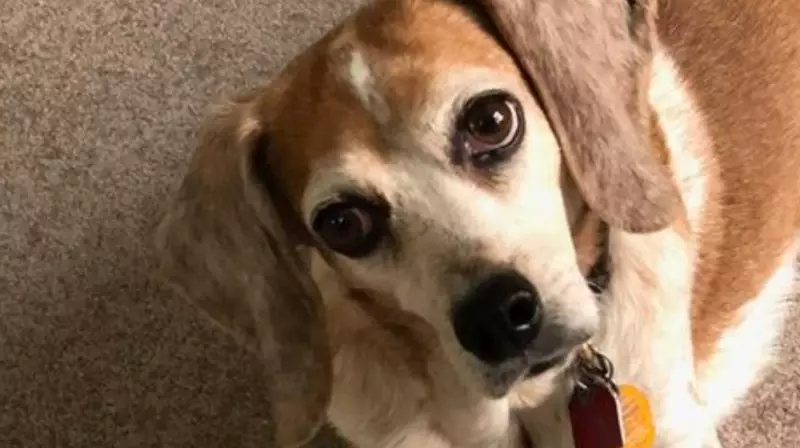
The creature that arrived was a semi-hairless, bulging-eyed beagle mix. Nellie's eyes seemed to look in two directions at once. She was a nightmare of behavioral issues. She resource-guarded food fiercely, growling and biting if a hand came near her bowl. She had severe separation anxiety, howling and destroying anything she could reach if left alone. She couldn't be crated without injuring herself. She even had a habit of wild, inappropriate humping, digging untrimmed nails into shins.
"See if you can fix her," my colleague said, "so we can place her." That was the plan. This was a temporary foster situation, a project. I was not keeping this dog.
We got to work. For weeks, we practiced trading objects, improving her leash manners, and managing her anxiety. I gave up on the crate. I treated her skin ailments, fed her well, and watched most of her fur grow back. She climbed onto my desk, so I learned to put everything away. I even invited a friend with many children over to help socialize her, using chicken as a peace offering. Slowly, she improved.
The Unplanned Bond and a New Chapter
When the first approved adopter came to take her, I cried a little. Three months of intensive beagle reform is significant. But Nellie was returned days later. "She's a beagle," I reasoned, "of course she howls." The second adopter brought her back too. The third backed out before even picking her up.
"I thought you weren't getting another dog," my colleague remarked when I finally admitted defeat.
"I'm not," I insisted. "Beagles aren't dogs. They're cat-raccoon-goat-chupacabra mixes. This is no dog."
But something had shifted. I was laughing again. I reached for her while I worked. I slept better. The stories returned—tales of her stealing tools from the Comcast technician, finding a chicken bone dropped by a squirrel, or pulling the Thanksgiving turkey off the table. My blog, Dear Goddamned Dog, had no shortage of material.
The National Institute on Aging links loneliness and social isolation to serious health risks. With my online job and my daily family and dog-walking community gone, I had been suffering from both. Nellie, unwittingly, became my antidote. She took up the space of two Swissies on the bed, was my copilot on drives, and greeted my sons with paroxysms of joy when they visited.
Our future seemed set. On a walk at the tip of Cape Cod, Massachusetts, we found a dilapidated but perfect dream house for my sudden retirement. "It'll be our writer's house, Beagz," I told her. I made an offer, and it was accepted. In my mind, we were already sitting in the bay window.
Nellie died the day before I signed the papers. She was old, and our seven years together had been a gift I never expected. That morning, she couldn't walk. The decision was clear in her tired eyes.
Once more, the silence returned. I put away her blankets, gave away her toys. "I can't believe I did it again," I told a friend. "I am never getting another dog."

"Think of all the things you can do now," she said, suggesting travel and spontaneity.
The freedom was back. I could go anywhere, and no one would know I was gone. Then, a Facebook message arrived: "There's someone I know with some really nice beagle puppies...."