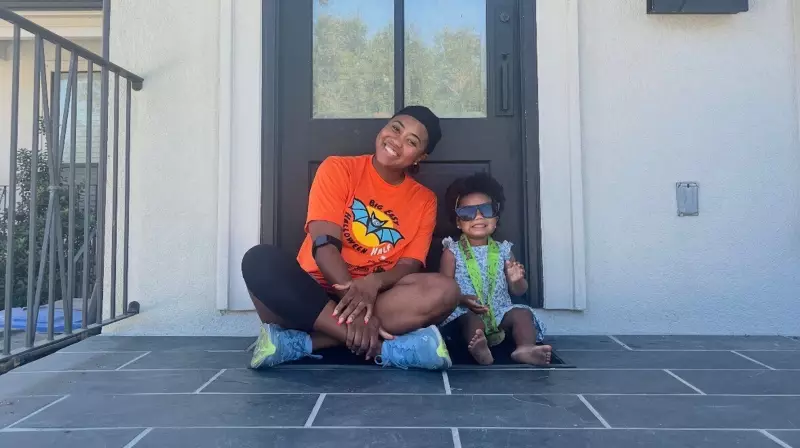
My daughter celebrated her third birthday in October. It's a magical age, but also the moment when friends, family, and even strangers feel entitled to ask the loaded question: "When will you have another?" My answer is a plea: please, stop asking.
A Frightening Policy Reversal
My anxiety about expanding our family was sharply heightened by news from the United States last Friday. The Centers for Disease Control and Prevention's vaccine advisory committee reversed a decades-old, scientifically proven recommendation. The committee, whose members were selected by Health and Human Services Secretary Robert F. Kennedy Jr., a known vaccine critic, voted to recommend the Hepatitis B vaccine only for newborns whose mothers test positive for the virus. This abandons the longstanding universal protocol.
This decision ignores the pervasive and stealthy nature of Hepatitis B. Over 2.4 million people in the U.S. live with the virus, and it is easily transmitted through shared toys, surfaces, or minute exchanges of bodily fluids. A toddler in daycare, like mine, could be exposed without any parent's knowledge. The potential consequences—liver disease, cancer, death—are unthinkable for any infant.

Rolling back such a critical medical safeguard does more than endanger babies; it forces prospective parents to recalculate immense life decisions. Family planning is already besieged by soaring childcare costs, inflation, and job instability. Now, we must add heightened, preventable health risks to the list of fears.
The Crushing Weight of "What If"
The journey to parenthood is inherently fraught with anxiety, especially for first-time mothers. I was a middle school teacher during my pregnancy, navigating nausea, hormonal swings, and classroom demands. Amid that chaos, one thing provided solace: trust in established medical science. I never doubted that our pediatrician would follow evidence-based vaccine schedules to protect my daughter. She received her Hepatitis B vaccine at birth, as recommended since 1991.
That vaccine has prevented an estimated 500,000 infections in children and saved 90,000 lives. I, like so many, took this progress for granted. My grandmother, who lived through the horrors of smallpox and lost siblings, warned me this could happen. "People forget," she said. "It's a privilege not to worry about smallpox, to know your children will grow up." That hard-won privilege is now eroding.
A Personal Crisis with National Implications
This policy shift creates tangible desperation for families. Earlier this year, my home province of Louisiana rolled back key childhood vaccine supports in alignment with federal changes. Instead of planning a joyful birthday party, I spent frantic days searching for free vaccine clinics at churches and community centers, terrified my toddler had lost guaranteed protection.
This is the real-world impact of decisions like last Friday's vote: fear, distress, and a scrambling for basic safety. It transforms a fundamental public health tool into a partisan bargaining chip, where flawed ideology is valued above infant lives.
So, to answer the question everyone seems so eager to ask: no. My husband and I are not planning to give our daughter a sibling. Not when our governments treat children's health as an experiment. Not when scientific consensus is so casually discarded.
So please, stop asking when I'll have another baby. The question itself is now a reminder of a world becoming less safe for the children we already cherish.