Helping Children Navigate Overwhelming Emotions: Expert-Recommended Tools
Intense feelings such as anger, grief, pain, and even excitement can be overwhelming for adults. For children, who lack the emotional and neurological development to fully understand or manage these experiences, such emotions can be particularly challenging. Many adults recall their own childhood struggles with powerful feelings, highlighting a universal aspect of growing up.
Parents bear the responsibility of guiding their children toward understanding emotions and recognizing that difficult feelings are temporary. However, even with the best intentions, knowing where to begin can be difficult. To provide guidance, we consulted therapists specializing in emotional regulation and trauma for their expert recommendations.
"Children's emotions are valid responses to their experiences," explained California-based associate marriage and family therapist Yara Mawad via email. Validating a child's feelings, especially when they feel overwhelmed, is crucial, regardless of how insignificant the situation might appear to an adult.

Based on their work with both children and adults, the experts recommended a variety of tools—from therapist-developed stuffed animals and books to blowing bubbles and journaling—to support a child's emotional journey. If a child seems to be struggling significantly, particularly with issues like grief or trauma, seeking help from a child therapist is advised.
Read on for detailed expert recommendations on items that can boost your child's social-emotional development. Note that the experts consulted do not necessarily endorse the specific products listed unless otherwise indicated.
1. The "A Little Spot" Book Series
Diane Alber's "A Little Spot" series helps children increase awareness of their emotions cognitively with words like 'scared, nervous, frustrated, and proud,' according to Yara Mawad. The series educates children about somatic clues—physical signs of emotions before reactions occur.
"Children are very concrete, and sometimes their first signal is not in the brain but in their body—such as tense shoulders, tightness in the chest, or a faster heart rate," Mawad explained. Developing an understanding of the mind-body connection gives children a sense of control and fosters self-compassion.
The "A Little Spot Of Emotion" box set includes eight books covering happiness, sadness, anger, and anxiety. Another set, "A Little Spot of Feelings," explores eight additional emotions like empathy and boredom.
2. A No-Spill Bubble Blowing Kit
Los Angeles-based licensed marriage and family therapist David Ibrahim recommends blowing bubbles as an easy emotional regulation activity. It teaches children how to take deep breaths. "If a kid's really upset, you can say, let's do some bubble breathing," Ibrahim suggested. This activity engages parents and children while elongating breath and increasing oxygen to the brain, promoting calmness.
Designed for ages 18 months and up, these bubbles come in a durable no-spill tumbler with a non-toxic formula, making them safe and practical for frequent use.
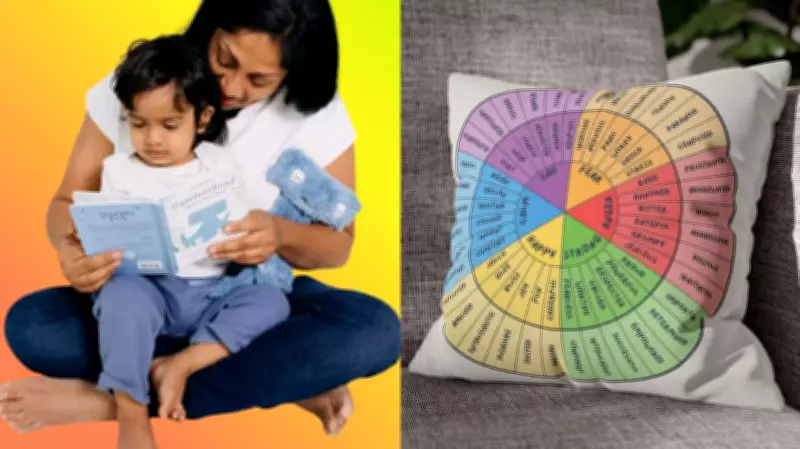
3. A Feelings Wheel Pillow
The feelings wheel is a valuable resource for helping kids identify emotions as they arise. Mawad recommends combining it with Dr. Dan Siegel's "Name It To Tame It" practice for older children. This exercise involves discussing or writing about emotionally charged situations, identifying three emotions from the wheel, and reflecting on needs like self-compassion or space.
Regular use of the feelings wheel can also aid adults in understanding their own emotions, thereby enhancing parental support. A cozy feelings wheel pillow from Etsy makes the tool accessible and normalizes emotional regulation within the home environment.
4. Slumberkins Stuffed Animals and Board Books
Sipan Nazaryan, a marriage and family associate therapist in Greater Los Angeles, recommends Slumberkins. Developed by a therapist, these stuffed animals come with matching storybooks that use therapeutic techniques to teach social-emotional skills, covering topics like anger, grief, and emotional courage.

"It's quite comprehensive," Nazaryan noted. The plush toys are exceptionally soft and machine-washable, making them ideal for cuddling. Slumberkins also offers free online resources and a show on Apple TV+.
5. The Big Life Journal
Both Ibrahim and Mawad recommend journaling, with Mawad specifically suggesting the "Big Life Journal" for kids. This interactive journal features colorful illustrations and guided prompts to build confidence and develop social-emotional skills in children aged 7-10. A version for teens and pre-teens is also available.
6. A Nintendo Switch
Ibrahim acknowledges that parents may use electronics to entertain kids after a long workday. While not the sole option, video games can facilitate connection. "The parent can connect at that level, get into the child's interests, and play the game with them," he said. This shared activity strengthens the parent-child relationship and supports emotional health by allowing playful interaction and mutual discipline.
The Nintendo Switch is a versatile console for solo or group play, with a portable display and screen projection capabilities. Games like Mario Party are excellent starting points.
7. "In My Heart: A Book Of Feelings"
Licensed Marriage and Family Therapist Niari Markarian recommends Jo Witek's "In My Heart: Book Of Feelings." This interactive book helps children explore different emotions by making them tangible and relatable, fostering emotional intelligence and resilience from a young age. It is available in hardcover and Kindle formats.
8. "The Color Monster" Illustrated Book
Markarian also recommends Anna Llenas's "The Color Monster" for ages 3–7. This picture book teaches kids about emotions intuitively by depicting feelings as colors—such as green for calm and red for anger. It comes in hardcover, paperback, board book, and Kindle versions.
9. A Washable Paint Set
Both Markarian and Ibrahim highlight art as a means for emotional expression, with Ibrahim specifically recommending painting for its tactile nature. Parents can join in to co-regulate and strengthen connections. A washable paint set from Amazon includes six bold, mixable colors that won't stain hands, clothes, or walls, paired with kid-friendly brushes and paper.
Tips for Parents on Regulating Their Child's Emotions
A key insight from the therapists is the significant impact of a parent's emotional intelligence and regulation on their child. To best support children, parents must work on themselves and model feeling their own emotions, according to David Ibrahim.
Ibrahim and Mawad praised child psychiatrist Dr. Dan Siegel's work as a resource for parents, and Mawad recommended Dr. Becky Kennedy's book, "Good Inside." Both experts also advocate for parenting classes, comparing them to hiring a coach for an athlete. Seeking support as a parent ultimately benefits both the child and the parent-child relationship.