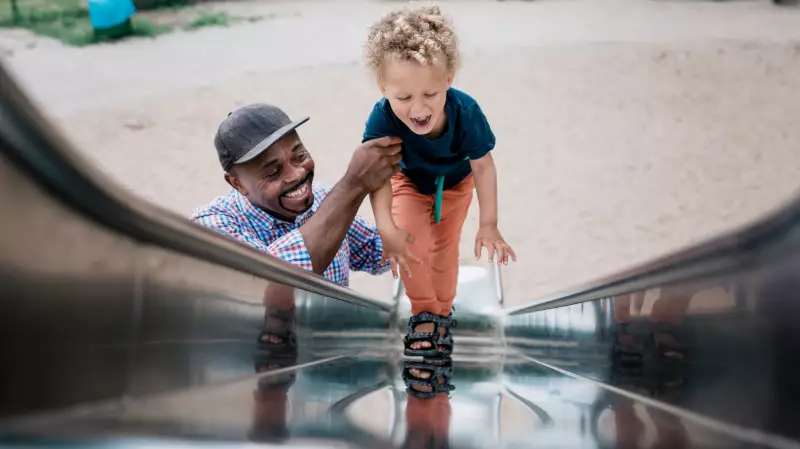
For Canadian families, playgrounds serve as essential community hubs where children can burn off energy and develop social skills while parents enjoy a brief respite. However, these public spaces depend on an unspoken social contract where all adults agree to similar codes of conduct. When one person violates these norms, the entire playground experience can turn sour for everyone involved.
Common Playground Etiquette Breaches
HuffPost Parents recently surveyed readers about the most frustrating behaviours they've witnessed at playgrounds across Canada and beyond. The responses revealed consistent patterns that disrupt the peaceful playground ecosystem.
Climbing up slides remains a contentious issue, with Jessica Baker from Oregon noting frequent collisions between children going down while others climb up. She established the clear rule of "go up the stairs and down the slide" with her own children to prevent accidents and ensure everyone can enjoy equipment as intended.

Off-leash dogs at children's parks generate significant concern. Michelle Krassan shared an experience where her two-year-old daughter was startled by a large, friendly dog that charged up the slide toward her. Despite being a dog owner herself, Krassan emphasizes that leashing pets in public spaces isn't just considerate—it's often the law.
Age and Ability Considerations
Playground equipment designed for specific age groups loses its purpose when used inappropriately. Jessica Baker, now with both older and younger children, ensures her "bigs" understand that toddler structures aren't meant for them. Becky Andrews Wright adds that when children outside suggested age ranges play on equipment, it either slows down younger children or intimidates them into avoiding certain areas entirely.
Adaptive equipment misuse presents particular challenges for families with disabled children. April Schellman expressed frustration at seeing able-bodied children using adaptive swings, sometimes nearly breaking them. For many disabled children, this specialized equipment represents their only opportunity to participate in playground activities.
Social Dynamics and Supervision
Turn-taking failures and parental overreach create additional tensions. Beth Pailthorpe Enz observes that many children refuse to wait in line or take proper turns, while Susan Gustfson notes the awkwardness of adults telling other people's children that their time on equipment has ended.
Unaddressed poor behaviour concerns multiple parents. Anna Marikar from the U.K. witnessed a child repeatedly telling her daughter that "girls suck" while the boy's mother stood nearby without intervention. Similarly, Lynett Croyle faced pressure to "let kids figure it out" when her speech-delayed child was pushed down hard.
Bigger children intimidating smaller ones creates another common flashpoint. Karissa Whitman described an experience where her autistic four-year-old was blocked from using a slide by an older boy who simply didn't want other children to play there. Amy Goodchild adds that unsupervised older children sometimes use offensive language or discuss inappropriate topics within earshot of younger kids.
Property Damage and Exclusion
Vandalism and exclusionary behaviour round out the list of playground frustrations. Melissa Bykofsky witnessed older children using markers and stickers to decorate equipment, creating cleanup costs for municipal parks departments. Courtney Haywood emphasizes the heartbreak of exclusion, noting that being left out fosters loneliness and resentment while undermining the inclusive community playgrounds should represent.
Sarah Crossley points to insufficient supervision as another issue, expressing frustration at parents who socialize while their children require assistance from other adults. Karen Swank-Fitch experienced unwelcome medical assessments when a stranger diagnosed her 20-month-old with speech delays based on incorrect age assumptions.

Moving Toward Understanding
Despite these challenges, some parents advocate for greater understanding. Robin Hilmantel of North Carolina admits her perspective changed as her children grew older. She now recognizes that families might be dealing with invisible struggles like special needs or sleep deprivation, and appreciates when others extend grace in challenging moments.
Ultimately, playground etiquette revolves around mutual respect and consideration. By establishing clear expectations, supervising appropriately, and intervening when necessary, Canadian parents can help ensure these community spaces remain welcoming for all families.