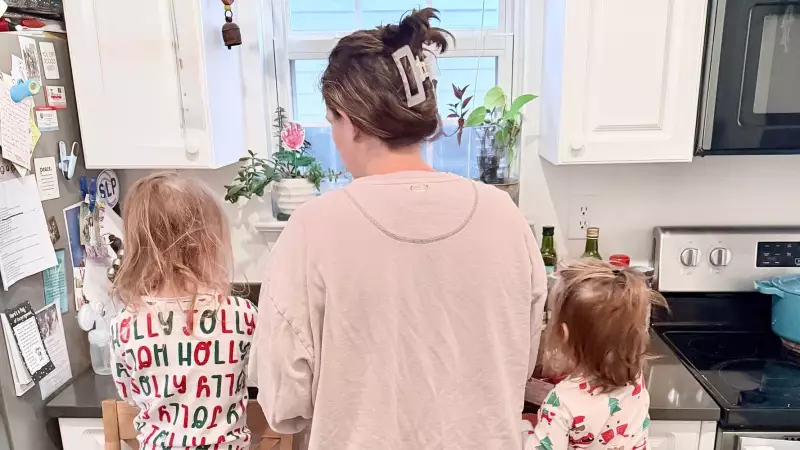
During a routine check-up, my pediatrician watched my 18-month-old daughter squirm from my arms onto the clinic floor. "I think 18 months is the hardest age," she observed with empathy. "They're mobile and opinionated but lack the language to express themselves, leading to frequent meltdowns." As a speech-language pathologist, I immediately understood. Communication forms the bedrock of all relationships, which is precisely why I entered my field.
Choosing Your Battles: A Strategy for Home and Holidays
The doctor offered two crucial pieces of wisdom. First, she advised me to choose my battles carefully. If I fought over every minor issue, life would become a constant struggle. This lesson extended far beyond toddlerhood. During holiday gatherings with extended family, I consciously let certain comments slide. I ignored passive-aggressive remarks about my child's manners to save my energy for more significant conflicts.
One such meaningful battle arose at the dinner table. My daughter began reciting a prayer, saying "God our Mother"—a phrasing I had taught her. When a relative corrected her, I intervened. I explained my belief in a genderless divinity, wanting my daughter to see the divine reflected in herself. As a woman shaped by patriarchal religious traditions, I aim to protect her from harmful ideas and encourage a personal, freeing connection with faith.

Similarly, when family insisted she clean her plate or offer physical affection, I reinforced that she is the boss of her own body. Teaching her to listen to her internal cues matters more than sparing an adult's feelings. I prioritize filtering the messages my children absorb through social and cultural interactions, making these the battles worth having.
The Power of a Consistent "No"
The pediatrician's second rule was to say "no" and mean it. Consistency is key for language learning and boundary setting. I admitted my early failures, often negotiating after a "no" to avoid a scene. "That's okay," she reassured. "It's a learning process for everyone."
I applied this with my three-year-old's bedtime routine. Despite her pleas, I enforced a strict three-book limit. Initially, it felt harsh—reading is beneficial, after all. But my inconsistent enforcement had taught her that "no" was an opening bid for negotiation, leading to begging for more TV or candy. When I became deliberate and unwavering, she learned to respect the boundary. This not only smoothed our evenings but strengthened our overall relationship.
Applying Parenting Wisdom to Adult Relationships
These principles proved equally valuable with adults. When I announced we wouldn't travel for the holidays, my family accepted my decision without pressure. Years of clear communication have helped them recognize my limits, reducing relational stress.
Parenting is a continuous journey of learning and evolution. Every interaction is a fresh start—a chance to choose a better word or clarify our values. Keeping peace during the holidays might mean biting my tongue about unsolicited parenting advice or accepting an unneeded gift. However, discerning when to stand my ground has profoundly benefited my connections with both children and adults. The pediatrician's simple advice became a guiding framework for nurturing healthier dynamics in every part of my life.
Lauren Salles Gumpert is a freelance writer, Speech-Language Therapist, and aspiring author based in Virginia Beach with her husband and three young children. You can find more of her writing on her Substack, "Live & Learn."