As winter tightens its grip across Canada, safety authorities are issuing a critical reminder about the hidden dangers lurking on frozen lakes and rivers. The key to survival, they stress, lies in understanding ice conditions and remembering a vital cold-water survival rule.
Decoding the Ice: What Colour Means Safety?
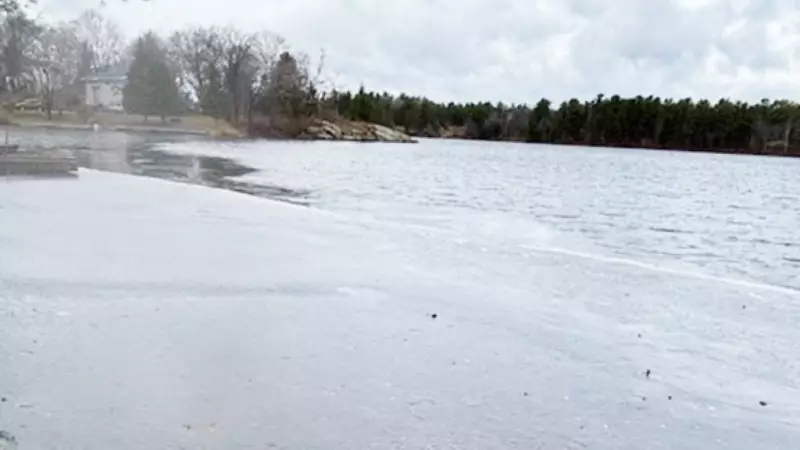
One of the most important visual cues for assessing ice safety is its colour. Clear, blue ice is generally the strongest and safest for activities. This indicates solid, dense ice. In contrast, white or opaque ice, often called "snow ice," is formed by wet snow freezing on top of existing ice and is only about half as strong as blue ice. The most dangerous ice is grey, which indicates the presence of water. Grey ice is unsafe and should always be avoided.
Experts warn that no ice is ever 100% safe. Thickness requirements vary: for walking alone, ice should be at least 15 centimetres (6 inches) thick. For snowmobiles or ATVs, a minimum of 20-30 centimetres (8-12 inches) is recommended. For cars or small trucks, the ice must be at least 30-40 centimetres (12-15 inches) thick. These are general guidelines, and conditions can change rapidly due to currents, springs, and shifting temperatures.

The Lifesaving '1-10-1' Cold Water Rule
If a person does fall through the ice, knowing the '1-10-1' rule can mean the difference between life and death. This simple mantra outlines the body's physiological response to sudden immersion in freezing water.
The first '1' stands for one minute of cold shock. During this initial minute, the body experiences an involuntary gasp reflex and hyperventilation. The critical action is to get your breathing under control. The '10' represents ten minutes of meaningful movement. In this window, you have the best chance of self-rescue, as your limbs and muscles are still functional enough to pull yourself out. The final '1' signifies one hour before losing consciousness due to hypothermia, provided you are wearing a life jacket or can keep your head above water.
Essential Safety Practices for Winter Waterways
Beyond understanding ice colour and the survival rule, safety officials advocate for a proactive approach. Always check local ice conditions with authorities before venturing out. Never go alone—use the buddy system. Essential safety gear should include ice picks (to help pull yourself out), a rope, a whistle, and a personal flotation device. It is also crucial to inform someone of your travel plans and expected return time.
If you witness someone falling through the ice, do not run to the hole. Call 911 immediately. Attempt a rescue from shore by throwing a rope or extending a long object like a branch or ladder toward the victim. If you must go on the ice, lie flat to distribute your weight and crawl toward the victim.
With winter recreation in full swing, from ice fishing to skating, these guidelines serve as a vital public safety message. By respecting the power of nature and being prepared, Canadians can enjoy the beauty of frozen landscapes while significantly reducing the risk of a tragic outcome.