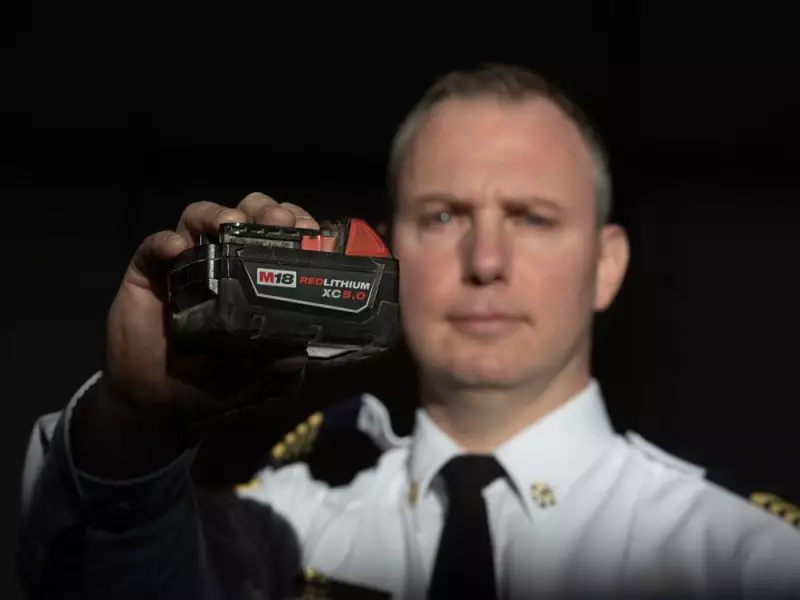
Edmonton Fire Rescue Services (EFRS) is sounding the alarm on the severe hazards posed by lithium-ion batteries, following two destructive fires in the past week, including one that forced 80 residents from a central Edmonton apartment building.
Recent Fires Prompt Urgent Safety Message
Fire officials held a news conference on Friday, January 16, 2026, to highlight the risks. The warning comes after a significant fire on Wednesday, January 14, at an apartment building located at 10020 115 Street. The blaze, sparked by an e-bike battery, resulted in two injuries and caused an estimated $500,000 in damage.
Assistant Deputy Chief Justin Lallemand emphasized that while the number of such incidents may seem low—eight were investigated in 2025—their potential for harm is immense. "These fires are extremely dangerous to people and property," Lallemand stated.

Challenges of Lithium-Ion Battery Fires
The Wednesday evening fire required a substantial response. Crews were dispatched at 5:49 p.m., with eight additional units called to assist by 6:15 p.m. The fire, which originated on the sixth floor, was brought under control by 6:33 p.m. and fully extinguished at 7:44 p.m.
All residents on the sixth floor and below were evacuated. Of the 80 people displaced, 20 required alternative housing arrangements. Assistant Deputy Chief Neil Robertson described the incident as a "significant" and "challenging" fire.
Robertson explained the unique dangers these batteries present. They can burn at temperatures exceeding 2,000 degrees Celsius, produce toxic smoke, and release battery vapour clouds. They also store nearly three times more energy than standard batteries. Firefighters must use large amounts of water and implement strict decontamination and safety zoning procedures during such blazes.
Crucial Safety Tips to Prevent Fires
Fire officials stress that these incidents are typically not spontaneous. "They’re just not igniting out of nowhere. There’s usually some form of improper handling or charging," Robertson noted. Common issues include using incorrect power cords, damaging batteries, or modifying them.
EFRS provided key safety recommendations for handling the lithium-ion batteries found in smartphones, laptops, vapes, power tools, and e-bikes:
- Avoid charging devices overnight or longer than necessary.
- Never charge electronic devices in entryways or exits, where a fire could block your escape route.
- Always use the manufacturer-approved charger and cable.
- Inspect batteries regularly for damage, such as swelling, leaking, or overheating.
- Follow proper disposal guidelines and do not throw batteries in regular household trash.
This warning serves as a critical reminder for all Edmonton residents as these powerful batteries become increasingly common in everyday devices.