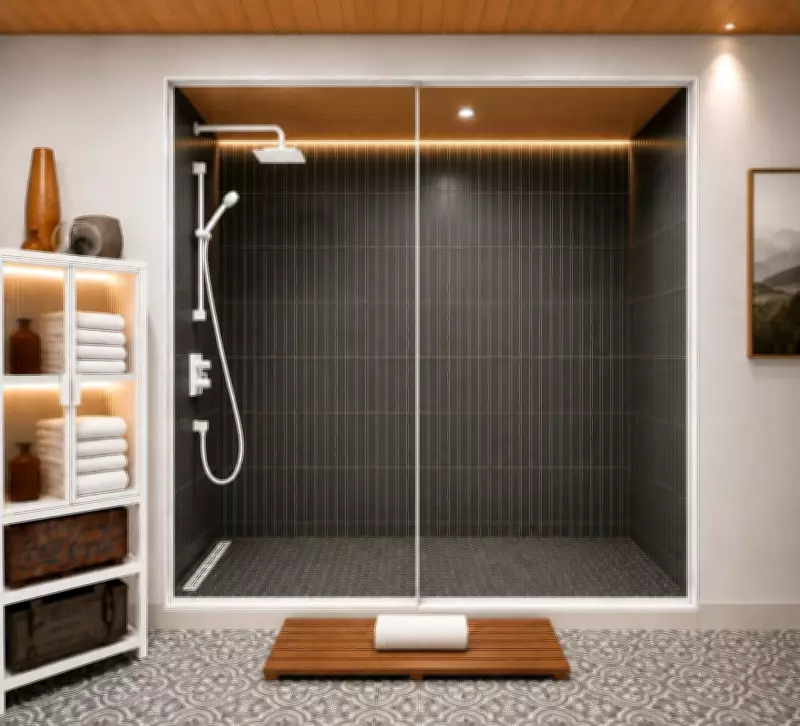
For the better part of a decade, the black faucet reigned supreme. Matte, moody, and endlessly Instagrammable, it swept through kitchens and bathrooms with a confidence that understood its photogenic chops. Black taps became shorthand for modernity: sharp against marble, dramatic against pale oak, and deliciously graphic against white tile.
Developers loved them. Designers, we included, specified them by the truckload. Homeowners embraced them because they looked expensive, architectural, and rebellious enough. But now, there is a new contender at the sink. White faucets and shower fittings – yes, white – are having a hot moment.
Why White?
At first glance, the trend can feel surprising, being that plumbing fixtures have traditionally leaned metallic: chrome, nickel, brass, bronze, and jet-toned. White, meanwhile, was often reserved for sanitary wares like toilets, tubs, and basins. Ancillary fixtures felt risky, perhaps even a little too futuristic. Yet, suddenly, they are emerging.

The rise of the white faucet speaks to a broader shift in interiors. After years of high-contrast spaces – black windows, charcoal kitchens, dark grout, and industrial detailing – homeowners once again crave softness. Design is transitioning from starkly outlined rooms towards those that feel quieter, tonal, and eminently more calming. White taps dissolve into space rather than announcing themselves with graphic intensity. It is precisely that subtlety that seems so rewardingly on point.
In the Kitchen
In kitchens, white faucets create seamless visual rhythm. Against pale quartz counters, creamy cabinetry, or cloud-soft plaster walls, they feel almost sculptural. Rather than becoming the star of the composition, they allow texture, daylight, and materials to lead the conversation. The overall effect feels lighter, cleaner, and a little more European.
In the Bathroom
Bathrooms benefit too. White shower fittings paired with warm limestone, travertine, or creamy porcelain tile suffuse a spa-like atmosphere that feels calm rather than confrontational. In a world that already feels sufficiently loud, many homeowners are choosing spaces that whisper.
Technological Appeal
There is also a distinctly technological appeal to the trend. White faucets are often served in matte powder-coated finishes that feel silky and contemporary. The newest iterations look engineered, almost as if borrowed from luxury automotive design or premium audio equipment. They feel precise, and importantly, they bounce brightness and soften visual clutter, which, especially in smaller spaces, can be transformative.
Practical Considerations
Of course, few design trends arrive without practical concerns. Some critics might argue that white faucets stain more easily, particularly in hard-water areas where mineral deposits can become visible. In the guest bathroom featured today, we specified Rubinet hardware. The Canadian brand’s products are hand-built and reliably high quality, so longevity is guaranteed. Insubstantial versions risk yellowing or chipping, so this is not a category where bargain-bin shopping pays off.
But the same could be said for black fixtures, which can show everything: toothpaste flecks, soap residue, fingerprints, and water spotting can become surprisingly visible, especially under strong lighting. Some finishes age beautifully; others scratch and fade in frustrating ways.
Black vs. White
Which is why the smartest designers do not treat white and black as enemies. Instead, they understand that both occupy permanent positions within the modern decorating vocabulary. Black faucets deliver undeniable drama. In the right setting – think moody powder rooms, masculine kitchens, or contemporary loft spaces – they remain sensational. They visually ground schemes and create architectural punctuation. Black hardware paired with walnut, smoked glass, or richly veined marble still feels deeply sophisticated.
White fixtures simply offer a different emotional register. Where black creates contrast, white creates continuity. Where black frames, white blends. One is bold and editorial; the other serene and atmospheric. In many ways, the shift reflects the broader overall direction in which interior design is heading.

The Great Softening
The era of hyper-minimalism is softening into an eminently more human form. Rooms are becoming warmer, more layered, and less rigidly styled. As we travel, we see creamy whites replacing stark gallery whites, natural wood replacing cold grey oak, and textural linen replacing one-dimensional fabric. And so the great softening continues. The white faucet fits perfectly into that evolution.
The real takeaway here is that the arrival of white plumbing fixtures does not signal the death of black. Instead, it expands the palette. It gives homeowners and designers another tool with which to shape mood and atmosphere. Because the best interiors were never about blindly obeying trends. They are about choosing the finish that tells the best story for the room. Sometimes that story is bold, graphic, and black. And sometimes – beautifully, with freshening verve – it is white.
Watch Small Town Escapes with Colin and Justin on HGTV. Discover the Colin+Justin Home Collection in Homesense and Winners. Follow them on Instagram and Facebook.