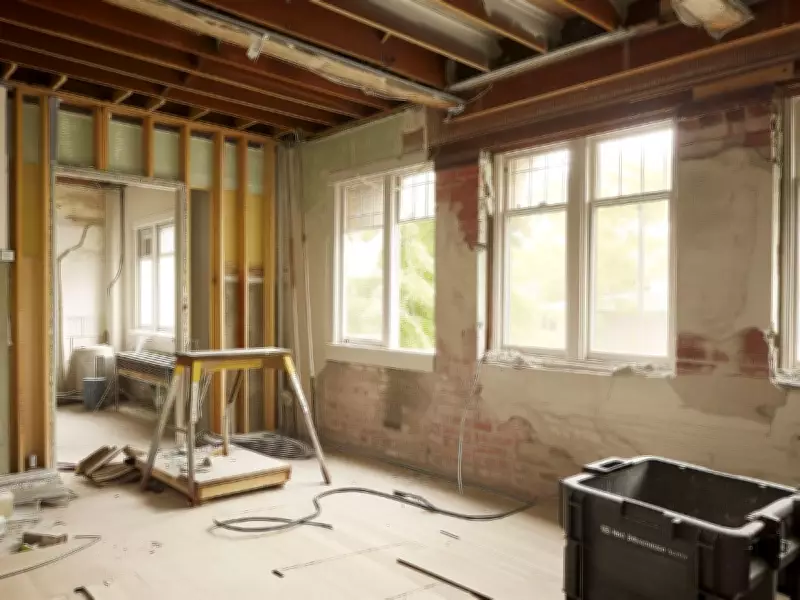
The Most Common Renovation Regret: Ignoring How Your Home Actually Works
When homeowners reflect on major renovation projects, you might expect to hear about financial overruns, contractor delays, or bureaucratic permitting headaches. However, across modest updates to luxury transformations, a far more prevalent disappointment emerges—one that has little to do with budget. The most frequent source of renovation regret stems from failing to understand how a house truly functions before making changes.
The Pattern of Post-Reno Disappointment
This pattern manifests with surprising consistency across Canadian homes. A kitchen receives a stunning makeover with beautiful finishes, yet the room remains somehow unwelcoming. A bathroom renovation appears flawless upon completion, only for hidden moisture problems to surface later. A major addition is finished, but it triggers unexpected issues with heating, airflow, or sound transmission in other parts of the house. The surfaces look perfect, and the craftsmanship is excellent, but the home may feel no better—or even worse—to live in. Why does this happen?
The core issue is a focus on aesthetics before addressing underlying systems. It is these foundational systems that ultimately determine a home's livability and comfort.

Understanding Home Dynamics
Homes are not static boxes; they are dynamic environments. The human experience within them is shaped by a complex interplay of factors:
- Airflow and ventilation
- Moisture movement and humidity control
- Heat transfer and energy efficiency
- Structural integrity and load paths
- Daily human movement patterns and routines
When renovations disregard these fundamental dynamics, they often solve a visual problem while quietly creating a functional one that may be difficult or impossible to repair later.
Regret Across All Budget Levels
This type of disappointment does not discriminate by project cost. In lower-budget renovations, it frequently appears as subtle discomfort:
- Rooms that never quite feel "right" or comfortable
- Storage solutions that don't align with actual household habits
- Floor plans that look efficient on paper but create daily friction in practice
In higher-end renovations, the regret often materializes as new hassles:
- Systems that prove more difficult and costly to maintain
- Finishes that demand constant, meticulous care
- Spaces that look impressive in photographs but see little actual use
The Root Cause: Appearance Over Understanding
In both scenarios, the fundamental problem remains identical. Decisions were driven by appearance, current design trends, or isolated goals rather than a comprehensive understanding of how the house operates as an integrated system. This trap is easy to fall into because avoiding it requires:
- Patience to observe how the home functions over time
- Careful observation of existing conditions and patterns
- Strategic thinking about how changes will affect the whole
- Imagination to visualize not just how spaces will look, but how they will work
While professional designers and contractors provide valuable expertise, they cannot fully compensate for a homeowner's lack of understanding about their own living patterns and the home's unique characteristics. A truly successful renovation requires far more than selecting finishes, paint colors, and cabinetry before writing checks.
The Subtler Source of Regret: Ignoring Actual Use
Another common but often overlooked source of renovation disappointment involves changing a house without first observing how people actually live in it. Many projects are driven by idealized notions of how a space "should" function rather than how it genuinely does function on a daily basis.
Common manifestations include:

- Adding storage where it looks most aesthetically pleasing rather than where it's most practically needed
- Removing walls to create open-concept spaces that inadvertently disrupt sound privacy and established daily routines
- Enlarging rooms without corresponding improvements in comfort or functionality
After the construction dust settles, homeowners frequently discover that their "improved" house now demands more from them—more cleaning, more maintenance, more adjustments to daily habits, and more careful attention to avoid damaging delicate, expensive features. The renovation that was meant to simplify life instead complicates it.
The path to renovation satisfaction begins long before selecting materials. It starts with understanding your home as a living system and your family as its inhabitants.