2026 Bathroom Design Trends: Personal Wellness Spaces Take Center Stage
Bathroom design is undergoing a significant transformation, moving beyond mere functionality to become deeply personal sanctuaries that reflect individual lifestyles and wellness priorities. According to the comprehensive 2026 Bath Trends Report from the National Kitchen & Bath Association (NKBA | KBIS), homeowners and designers are increasingly focusing on creating spaces that support personal rituals, self-care routines, and unique preferences rather than just considering resale value.
A Shift Toward Personal Expression
Bill Darcy, global president and CEO of NKBA | KBIS, emphasizes this evolution in design philosophy. "Beyond considerations like resale value, designers are focusing on how spaces support a homeowner's individual rituals, preferences and self-care routines," Darcy explains. "This perspective encourages creativity, niche trends and designs that truly reflect how people live today." The trade association represents nearly 55,000 kitchen and bath professionals across North America, giving their insights substantial industry weight.
The report's findings are based on extensive survey data collected from nearly 700 industry experts, including designers, manufacturers, remodelers, and architects. These professionals provided insights into current and emerging trends that will shape residential bathroom design through 2026 and beyond.

Colors and Materials: Warm, Tactile Aesthetics
The 2026 bathroom palette leans heavily toward warm, neutral tones that create calming environments. Survey data reveals that 96% of respondents identified neutrals as the most popular bath colors, with off-white, light brown/tan, and white significantly outpacing darker shades like dark brown, black, and dark grey/slate.
When it comes to accent colors, earthy greens are gaining traction. Brown-based greens such as sage and olive are expected to be popular choices, while bolder hues like teal/turquoise and emerald/juniper received considerably less attention from design professionals.
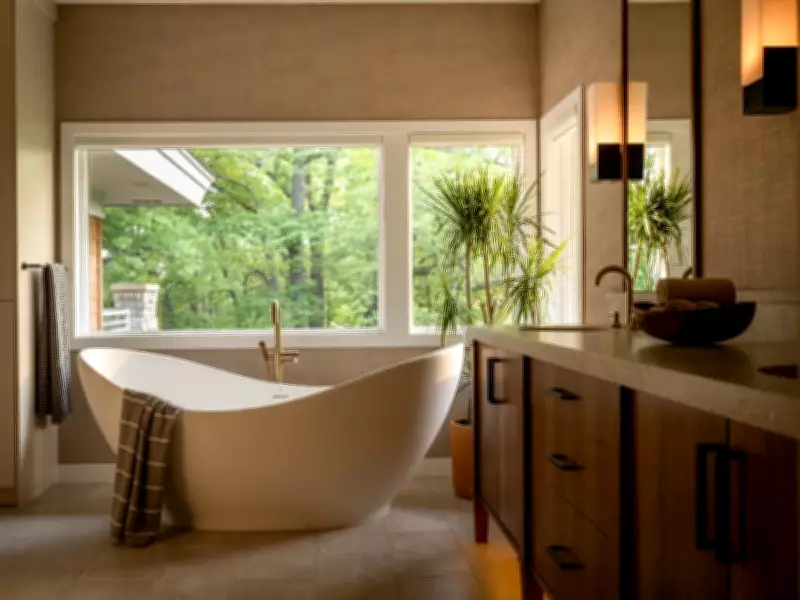
Golara Ghasemi, creative director and principal designer of Toronto-based Studio Golara Design, describes the emerging aesthetic. "In 2026, bathrooms are embracing a warmer, more tactile aesthetic, with earthy stones, textured tiles and finishes like limestone, tumbled marble, warm oak and brushed brass creating a lived-in feel," she notes. "High-gloss surfaces are giving way to matte, honed and satin finishes that convey understated luxury."
Design Styles and Material Preferences
The survey reveals clear preferences in design styles and material applications:
- Transitional/timeless design tops the list, with 70% of respondents naming it as a popular style for the next three years
- Organic/natural and contemporary/modern/minimalism designs follow closely behind
- Wood-faced vanities have overtaken painted options in popularity
- For faucets and fixtures, matte, brushed, and satin finishes are all more popular than polished finishes
- Homeowners are seeking smaller or no grout lines on floors, with 80% of respondents believing large format flooring will dominate
Ghasemi adds that bespoke vanities and furniture-like storage are elevating bathrooms into crafted, elegant spaces. "Layered, mood-driven lighting – from cove and wall-grazing illumination to soft, indirect glows – adds atmosphere and transforms these spaces into true retreats."
Larger Footprints for Wellness Features
Perhaps the most significant trend identified in the report is the expansion of bathroom footprints to accommodate wellness-centered features. According to the survey, 72% of respondents report that bathrooms are getting larger to make way for universal design considerations, efficient storage solutions, and enhanced wellness amenities.
This expansion is changing traditional bathroom layouts and priorities. The data shows that 55% of industry experts say a larger shower is more important than having a bathtub for today's homeowners. This shift allows for more spa-like features within shower spaces, including:

- Steam options and sauna capabilities
- Aromatherapy and chromotherapy systems
- Integrated seating and shelving for comfort and convenience
- Multiple shower heads and body sprays for luxurious experiences
The trend toward larger showers reflects a growing emphasis on daily wellness rituals rather than occasional bathing experiences. Freestanding tubs, when included, are increasingly treated as sculptural focal points rather than primary bathing fixtures.
As bathrooms continue to evolve from purely functional spaces to personalized wellness retreats, the 2026 trends highlighted in the NKBA report suggest a future where design prioritizes individual comfort, sensory experiences, and daily rejuvenation above all else.