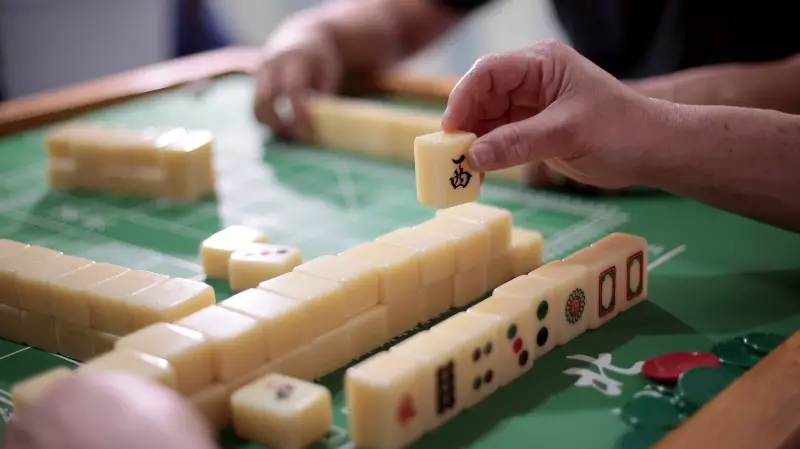
The Enduring Appeal of Mahjong: More Than Just a Game
In an era dominated by digital entertainment, a centuries-old tile game is experiencing a remarkable resurgence. Mahjong, with its intricate rules and rich cultural heritage, is capturing the attention of new generations while offering surprising benefits that extend far beyond simple recreation.
A Tale of Two Versions: Chinese Roots and American Adaptation
The game exists in two primary forms that reflect its fascinating cultural journey. The original Chinese version, which resembles gin rummy in its basic mechanics, challenges players to collect specific combinations of tiles. The objective involves creating pungs (sets of three identical tiles) or chows (three consecutive-numbered tiles in the same suit), along with a pair of matching tiles known as the "eyes" of a winning hand.
Meanwhile, the Americanized version, which developed Jewish cultural influences, incorporates additional elements like Joker tiles and season indicators. This adaptation features annually changing rules distributed by the National Mahjongg League, creating an evolving gameplay experience distinct from the consistent rules of its Chinese predecessor.

Choosing Your Mahjong Set: Options for Every Player
Classic Chinese Mahjong Set
For those seeking authenticity with accessibility, the traditional Chinese set offers 144 tiles marked with both Arabic numerals and English letters alongside Chinese characters. This thoughtful design makes the game approachable for beginners unfamiliar with Chinese symbols. The complete package includes three dice, scoring chips, a wind indicator, and comprehensive English instructions. While lacking the annual rule cards of American versions, its consistent rules provide a stable learning foundation that remains unchanged year after year.
American Mahjong Set with Cultural Integrity
American sets typically include additional tiles like Jokers and seasons, though they can still accommodate Chinese gameplay by setting aside these extra components. When selecting an American set, it's important to consider both price accessibility and cultural respect—quality sets honor the game's Chinese origins by including traditional characters and symbols. Many feature convenient carrying cases and slightly smaller tiles than their Chinese counterparts, with scoring chips often presented in uniform colors rather than the varied hues found in traditional sets.
Travel-Friendly American Set
For enthusiasts who want to play on the go, specialized travel sets offer remarkable portability. These compact versions feature significantly smaller tiles, reducing a complete 166-tile set to just over two pounds. They typically include all necessary American tiles along with dice and racks to support the thinner components, all packaged in protective, waterproof carrying cases. It's worth noting that these sets don't include the National Mahjongg League's annual rules cards, which must be purchased separately from official sources to ensure authenticity.
Budget-Friendly Card Alternative
For those testing their interest in mahjong without significant investment, card versions provide an economical entry point. While lacking the tactile satisfaction of traditional tile play—including the distinctive sound of "washing" or shuffling tiles—these 178-card sets can be used for either American or Chinese gameplay. They require players to source their own instructions and don't include accessories like dice or chips, but they effectively introduce the game's fundamental concepts and hand combinations at a fraction of the cost.
The Surprising Benefits of Regular Play
Recent research reveals that mahjong offers substantial cognitive advantages alongside its entertainment value. Scientific studies have demonstrated that regular play can:

- Improve executive function in older adults with mild cognitive impairment
- Enhance reaction times and self-coordination through frequent gameplay
- Create new neural pathways through problem-solving challenges, potentially helping combat dementia
- Increase social interaction through its inherently collaborative four-player structure
Beyond these measurable benefits, mahjong serves as a powerful tool for intergenerational connection and cultural exchange. The game creates natural opportunities for family members of different ages to engage meaningfully, often bringing people away from screens and into shared physical space. The ritual of gathering around a table for a "wind" or round of play fosters conversation, friendly competition, and cherished memories that transcend generations.
As this ancient game finds new relevance in modern society, it continues to demonstrate that some of the most valuable forms of connection and cognitive stimulation come not from digital innovations, but from time-honored traditions that bring people together face-to-face. Whether played in its traditional Chinese form or through its American adaptation, mahjong represents more than just entertainment—it's a bridge between cultures, generations, and minds.