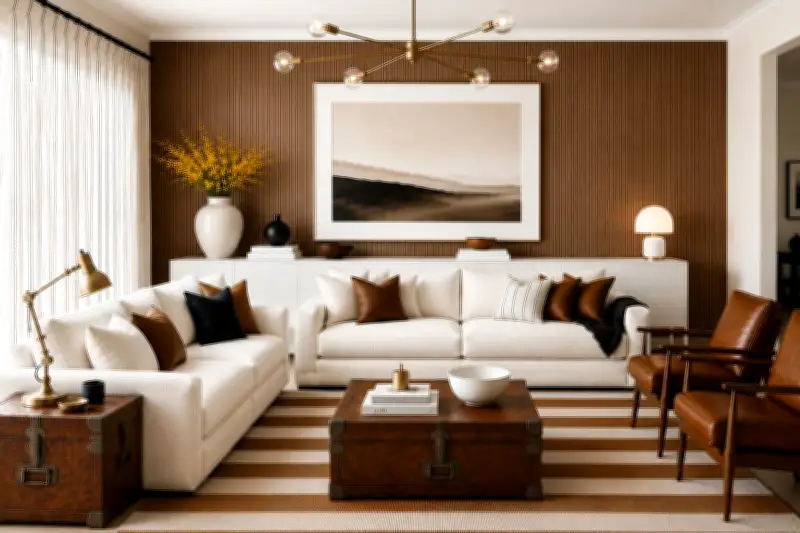
Stripes are a timeless decorating tool that can transform any room by altering proportions, creating rhythm, and adding sophistication. Interior designers Colin and Justin explain why stripes remain a versatile and enduring pattern in home decor.
How Stripes Transform Spaces
Stripes can stretch a room, widen a hallway, or lift a ceiling to introduce rhythm where none previously existed. According to Colin and Justin, few decorating devices work quite as hard. For a narrow hallway, laying a striped runner across the direction of travel creates the illusion of greater width. If a room feels short, stripes arranged lengthways draw the gaze forward, making the space appear longer.
Vertical stripes have been used to raise ceilings since Victorian times, from elegant London townhouses to grand Parisian apartments. Horizontal stripes broaden walls and create a greater sense of openness. At its simplest, a stripe is a repeated line, but it possesses an extraordinary ability to manipulate space and alter proportions.

Versatility in Application
Stripes can be applied via wallpaper, rugs, upholstery, flooring, or soft furnishings. Fine pinstripes recede, reading like texture and lending understated sophistication. Wider stripes feel architectural and create bolder statements. Broad bands suit generous rooms, while narrower stripes feel more comfortable in compact spaces.
Beyond changing proportions, stripes introduce rhythm. A plain room can feel static, but stripes make the eye travel naturally around the space. Like notes across a musical score, stripes create movement, linking furniture, architectural features, and decorative elements into a cohesive composition. This is especially useful in open-concept homes, where a striped rug can define a seating area without building walls.
Historical and Styling Context
History offers many examples of banded finishes: antique French ticking fabrics, classic Breton sailor shirts, old school deckchairs, English country-house wallpapers, and Ralph Lauren's cabana stripes. Stripes move comfortably between design genres, looking equally at home in historic manor houses, Scandinavian cabins, Mediterranean villas, or sleek contemporary penthouses.
Their longevity stems largely from versatility. Stripes play well with other patterns: paired with florals they introduce structure, combined with checks or plaids they layer sophistication, and set against plain fabrics they become an elegant focal point. Colour transforms their personality: navy and white feel timelessly nautical, black with ivory delivers metropolitan elegance, and terracotta with cream evokes Mediterranean warmth.
Practical Tips for Using Stripes
A striped rug introduces pattern with restrained commitment and hides everyday wear. Flooring can embrace the look through alternating timber tones, directional floorboards, or striped tile layouts. While conventional wisdom suggests limiting stripes to one or two applications per room, Colin and Justin disagree. Used with confidence, striped wallpaper, upholstery, and rugs can coexist beautifully by varying scale—letting one stripe dominate while others play supporting roles.
In a world obsessed with trends, stripes remain immune to fashion's whims. They stretch, slim, widen, heighten, and energize. They can whisper quietly or make a bold architectural statement. As Colin and Justin conclude, "Trends ebb and flow in waves. But stripes? They stay the course, proving that sometimes the smartest decorating move is simply keeping your eye on the line."