There was a time, centuries ago, when wine was little more than a mishmash of grapes dumped into clay amphorae, crushed and left to ferment thanks to the ambient yeast that lives all around us. Over time, we began to understand the character traits of various grapes, isolating the varietals to appreciate their distinct flavours, and then blending them to add yet more variety.
It wasn’t until the 1950s and ’60s that white grapes began to be used in stainless-steel tanks with minimal skin contact to preserve freshness and a lighter flavour profile. Regions like Friuli in Italy championed this style, and within a few years it became the accepted style around the world. If you wanted tannins and bold flavours, you drank red. If you wanted something lighter and refreshing, perhaps to accompany seafood, you drank white.
The Challenge to Convention
The thing about conventions is that sooner or later, they are going to be challenged. Ironically, natural winemakers in Italy, in the same regions that isolated whites from reds, started making whites with full-on skin contact, and they liked what they tasted. My guess is that they looked to Georgia — widely acknowledged as the birthplace of wine — where they never stopped making skin-contact whites. Two winemakers in particular — Josko Gravner and Stanko Radikon — considered pioneers in the natural wine movement, started getting attention for their wildly distinct wines, and others began to follow suit.

How Orange Wine Is Made
The colour in wines, except for a couple of grapes that have red flesh, is contained in the skins. Take a cabernet sauvignon grape and crush it between your fingers, and the juice runs clear. But then work the skin between your fingers, and it starts to turn purple; essentially, how red wine is made. Orange wines follow the same path, and winemakers determine the style based on how much they work the cap of skins and how long they leave the juice in contact with those skins. Most are made in a natural style, often including the spent yeast (lees) and other sediment in the bottle, which tends to add a little funk to the final product.
Orange wine will often include something you rarely encounter in whites, and that’s tannins — naturally occurring polyphenols found in grape skins, seeds, and stems. They contribute the healthy antioxidant properties attributed to wine, and, as such, red wines are considered beneficial in this regard. The downside is that those same tannins can cause a histamine reaction that typically manifests in the form of headaches and stuffiness the next day. Red wine, especially dark-skinned varietals such as cabernet sauvignon and syrah, can contain up to 3800 micrograms per litre, whereas whites clock in at around half that or much less.
Getting Started with Orange Wine
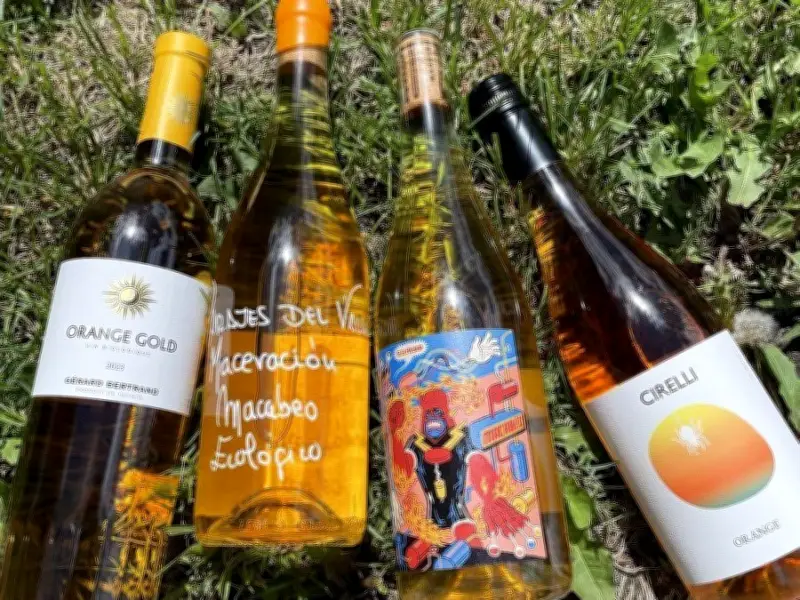
If you want to dip your tongue into the orange waters, you may want to start with something like Gerard Bertrand’s Orange Gold, a certified organic blend of chardonnay, grenache blanc and viognier (mainly), from the south of France. The classic orange wine notes of stone fruits, ginger, almonds and tea tannins are there, minus the floaty bits and sediments found in the more natural versions.
The next step would be something like Parajes delle Valle Maceration, produced from the macabeo grape in Spain’s Manchuela region. There are exotic notes of quince and jasmine along with some more traditional flavours that include marmalade and stone fruits. It’s a natural wine with just a hint of funk.
Next up could be Cirreli’s Orange, produced in Abruzzo, Italy, by Francesco and Michela Cirelli. It’s made from trebbiano and offers a potpourri of floral and stone fruit notes along with almonds and citrus.
From Chile, there’s Longavi Glup, a range of wines that includes their Naranjo, an orange wine made from muscatel. This also falls into the beginner category with its combination of spices, white flowers and citrus. The juice spends six months in contact with its skins in concrete tanks, followed by four months in old French oak barrels.