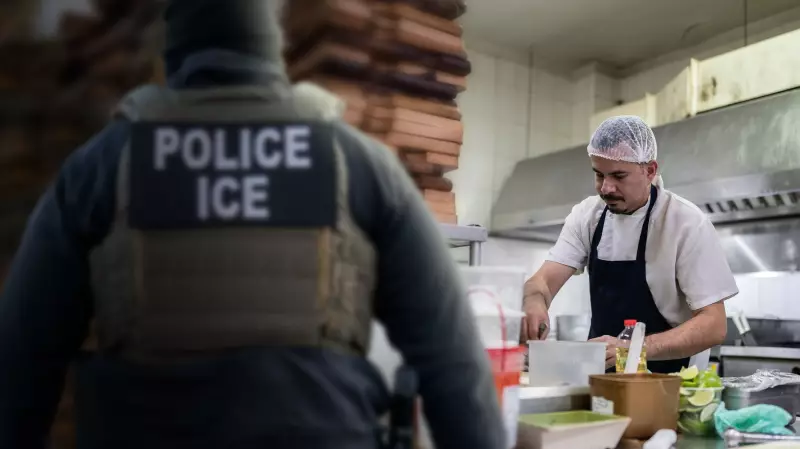
ICE Enforcement Actions at Mexican Restaurants Ignite National Conversation
Mexican cuisine has become an integral component of American culinary culture since the mid-20th century, with tortilla chips, birria, and other traditional dishes now available nationwide. Mexican immigrants have successfully translated their food traditions into cookbooks, restaurants, taco trucks, and supermarket staples, creating both economic opportunities and sources of cultural pride. However, recent immigration enforcement actions have raised difficult questions about who gets to enjoy these cultural contributions while supporting policies that target immigrant communities.
Willmar Incident Highlights Tensions
The conflict became particularly visible last week when Immigration and Customs Enforcement officers dined at El Tapatio, a family-run Mexican restaurant in Willmar, Minnesota, only to return hours later to detain three workers. According to witnesses, staff appeared frightened during the agents' lunch visit but maintained hospitality standards. As the restaurant was closing, the same officers returned and took employees into custody.
Bystanders reportedly blew whistles at the agents during the arrests, with one person shouting, "Would your mama be proud of you right now?" The incident quickly generated outrage online, with historian and podcaster Patrick Wyman commenting on Bluesky that such actions would have been considered grave violations of hospitality in ancient societies.

Broader Enforcement Context in Minnesota
This event occurred against a backdrop of intensified federal immigration enforcement across Minnesota, where approximately 2,000 ICE officers are currently stationed. The enforcement actions have sometimes involved entering homes without judicial search warrants. Earlier this week, President Donald Trump ordered about 1,500 active-duty soldiers to prepare for possible deployment to the state.
The situation has created widespread fear among immigrant communities, with some restaurants temporarily closing as workers stay home to avoid deportation risks. Signs appeared on a Mexican restaurant in Forest Lake, Minnesota, indicating temporary closure following ICE activity in the area.
Restaurant Owners Speak Out
Bruno, a Mexican restaurant owner in the Twin Cities who requested anonymity to protect his business, expressed shock at the cruelty displayed during the El Tapatio arrests. "You can imagine employees were in fear the entire time that the agents were there, but worked through it, and then their fears came to life," he told HuffPost. "The only analogy here is when the bad guys make you dig your grave before they put you in it."
Bruno has implemented security measures at his establishment, including keeping doors locked during service to prevent immediate ICE entry. His staff has consulted with lawyers about different types of warrants and developed protocols to allow minimal entry while asking agents to present warrants. "Then, we'd call friends to peacefully watch and put pressure on the situation outside," he explained.
Industry-Wide Concerns
The anxiety extends beyond Mexican restaurants, as immigrant workers represent significant portions of the restaurant industry workforce. Approximately 36% of restaurant owners and over 20% of sector workers are immigrants, making ethnic restaurants potential targets for enforcement actions.
Earlier this week, an ICE officer reportedly entered a Thai restaurant in St. Paul, Minnesota, with his handgun drawn while accusing the establishment of "hiding a kid," according to the restaurant's owners.
Cultural Consumption and Political Hypocrisy
Some commentators have questioned whether individuals who support aggressive immigration enforcement should enjoy the benefits of multiculturalism. In August, podcaster and former Bravo star Jennifer Welch suggested that Trump voters should be banned from ethnic restaurants and stick to chain establishments like Cracker Barrel.

Despite these sentiments, Bruno believes that serving all customers represents the most meaningful approach to changing perspectives. "By teaching them about our culture and showing them our hospitality, we believe we're doing the most meaningful thing to change their minds," he said. "We also truly believe in the idea that America is stronger because of our diversity. So when they go low, we will continue to go high."
National Implications and Economic Concerns
Caro, a Mexican restaurant owner in Washington, D.C., understands the anxiety experienced by Minneapolis restaurateurs. During peak enforcement activities in the fall, she lost five employees to ICE, none of whom had criminal records. She knows of another D.C. employer who lost four employees the same day.
One of Caro's long-term managers, a friend, was detained and reportedly not fed for three days in a makeshift jail. Facing extended wait times to contest his case, he ultimately self-deported to El Salvador, leaving his family behind in the United States.
Caro continues to serve all customers but acknowledges discomfort when serving individuals wearing Make America Great Again apparel or expressing anti-immigrant views. She recalled one customer who told bartenders he couldn't wait to "help sweep up immigrants" at the border and wouldn't hesitate to shoot anyone entering the country illegally. "It felt like a threat for him to come into a Mexican restaurant to let our staff know his intentions and plan, which involved violence," she said.
Looking forward, Caro warns that continued mass deportations could have severe economic consequences. "Our country runs on the backs of hard-working immigrants," she emphasized. "If the Trump administration continues to deport as many people as possible, the economy will eventually collapse."