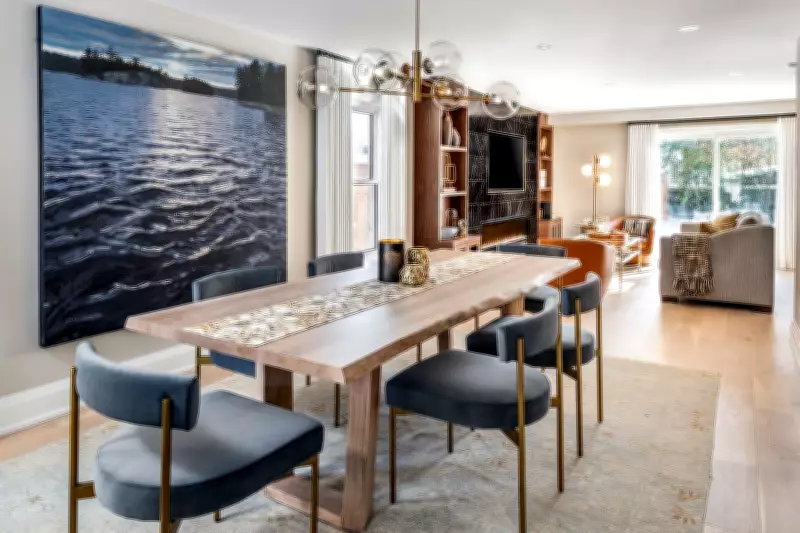
The dining room used to sit quietly between occasions. Now, it rarely gets a break. Breakfast table, workspace, homework hub, dinner setting, late-night conversation spot. Few rooms are working harder, and design is finally responding.
Today's dining spaces feel softer and far less formal. Designers are prioritizing comfort, texture, and versatility over rigid furniture sets and occasion-only styling. The result is a room that feels intentional without feeling untouchable.
Comfort and Versatility Take Center Stage
For designer Amy Dillon, Creative Director and Principal of Amy Dillon Interiors, the most successful spaces are the ones that feel effortless to live in. “I design dining spaces to feel lived in first, and ‘occasion-ready’ second,” she says. “The goal is a space that supports your life as it happens, not just how it looks in a moment.”

That thinking is reshaping the furniture itself. Matching suites are giving way to more layered combinations: upholstered seating paired with natural wood finishes, rounded tables that soften sightlines, and chairs comfortable enough to encourage lingering long after dinner. “Comfort is non-negotiable,” Dillon says. “If people don't want to sit, the space isn't working.”
Double Duty Spaces
Principal designer Jane Lockhart of Jane Lockhart Design is seeing the same shift toward adaptability. “Having multiple different pieces in the dining room may be unconventional from what was once done, but it makes the space much more versatile,” she says. Built-in bookcases with integrated counters can double as storage and serving areas, while pieces like upright pianos add personality without interrupting flow.
Remote work only accelerated the change. Dining rooms are no longer reserved for occasional entertaining. In many homes, they have become the natural extension of daily life. “With more people working from home at least once a week, the tabletop in dining rooms does more than host dinner,” says Lockhart. She often recommends felt table toppers to protect surfaces while creating a more practical workspace for laptops, paperwork, or children's projects. Expandable tables remain popular because they transition easily from everyday use to larger gatherings.
Storage has also become increasingly important. Concealed cabinetry and multifunctional pieces help homeowners clear away work materials quickly, allowing the room to feel calm again by evening.
All About Lighting
Lighting plays a major role in that transition. Rather than relying on a single overhead fixture, designers are layering illumination to support different moods throughout the day. Task lighting improves functionality, while dimmers and softer ambient sources create a more relaxed atmosphere after dark.
“Lighting. Always,” Dillon says when asked what instantly updates a dining room. “Swapping a traditional chandelier for something with a softer, more modern presence can completely shift the feeling of a room.”
Fixtures themselves are becoming quieter and more architectural. Ornate chandeliers are being replaced with sculptural forms, cleaner lines, and finishes that feel integrated rather than overly decorative.
Texture and Materials
Texture matters just as much. High-polish surfaces and rigid matching sets are giving way to materials that feel warmer and more forgiving over time. Dillon gravitates toward natural woods, linen, velvet, and finishes that reveal subtle imperfections rather than conceal them. “There's something about a slightly imperfect surface that makes a space feel more human,” she says.
Lockhart is also seeing homeowners move away from glossy finishes. “Smooth, matte finishes or wood tops with obvious grain texture are far more popular because they are much easier to care for and can withstand more daily wear,” she says. Moody paint colours, wallpaper, and layered textiles are helping dining spaces feel connected to the rest of the home instead of separated as formal showpieces.
Even styling feels more relaxed. Perfect symmetry is no longer the goal. Designers are mixing frame styles in gallery walls, incorporating varied seating silhouettes, and favouring pieces that feel personal rather than overly coordinated. “The goal is always to create a space that feels collected, not constructed,” Dillon says.

That balance between beauty and function is ultimately what defines the modern dining room. The space still feels intentional, but it's no longer waiting for a special occasion to be used. Instead, it's designed to move effortlessly through everyday life, adapting alongside the people who gather there.