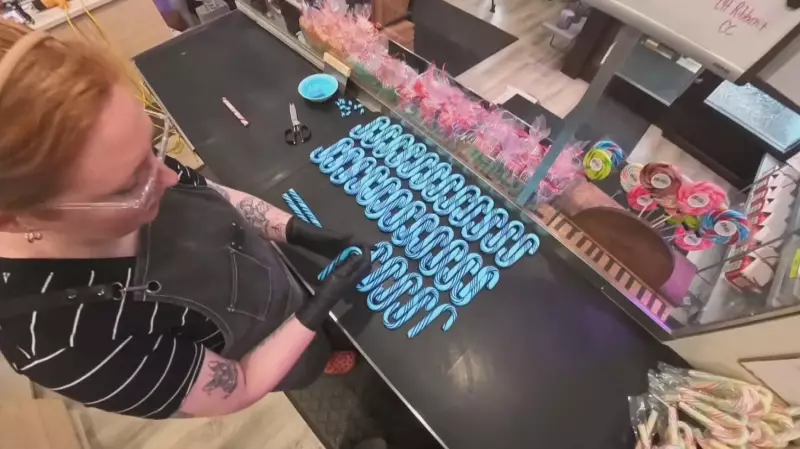
The iconic red-and-white striped candy cane is a staple of the holiday season, but few know the precise science and artistry required to create it. A Calgary business owner is pulling back the curtain on this festive craft, revealing how minute adjustments can make or break the perfect peppermint treat.
The Science Behind the Stripes
Sarah Sullivan, the owner of Calgary's Volios Confectionary, explains that crafting candy canes is a delicate operation dependent on exact conditions. The flavour, colour, and signature glossy shine of a candy cane are all influenced by tiny, controlled changes during the production process. Unlike simple candy making, this involves a specific alchemy of temperature, timing, and technique.
"It's a precise dance," Sullivan might say, emphasizing that the environment must be just right. The boiling sugar must reach an exact temperature to achieve the correct consistency for pulling and shaping. Even the humidity in the room can affect the final product's texture and how the colours set.

More Than Just Peppermint
While the classic peppermint flavour reigns supreme, the art of the candy cane allows for creativity within its rigid form. The process of incorporating colour and flavour is where a confectioner's skill truly shines. Adding colouring or oil-based flavourings at the wrong moment or temperature can result in a streaky, dull, or unevenly flavoured cane.
The iconic stripe is itself a feat of confectionery engineering. It involves layering and twisting coloured sugar logs before they are stretched, cut, and hooked into the familiar shape. This step requires the sugar to be at a perfect plasticity—too warm and it will lose definition, too cool and it will crack.
A Calgary Holiday Tradition
For Sullivan and Volios Confectionary, located in the heart of Calgary, sharing this process is part of celebrating local craftsmanship during the holidays. It highlights the often-overlooked skill involved in producing items that many take for granted as simple holiday decor or sweets.
The revelation underscores that these festive symbols are not just mass-produced commodities but the result of careful, learned artistry. In an age of automated manufacturing, the handmade candy cane represents a tangible link to traditional food crafts, preserved by artisans like those in Calgary's own confectionery scene.
As families across Canada hang candy canes on their trees or stir them into hot cocoa this season, they can now appreciate the intricate balance of science and tradition that goes into creating each one. The next time you unwrap a candy cane, you might just see it not merely as a sweet, but as a carefully engineered piece of edible holiday art, perfected by confectioners like Sarah Sullivan in Calgary.