Windsor's Engineering Hub Poised to Capitalize on U.S. Research Cuts Under Trump Administration
As the United States under President Donald Trump implements significant reductions in technology research funding and maintains aggressive trade tariffs, Canadian manufacturing and research centers like Windsor are discovering new avenues for growth and investment. This strategic shift comes at a time when America's approach to clean energy and technological innovation appears to be diverging from global trends, creating potential advantages for neighboring regions.
Trade Realignments and Research Opportunities
Canada is actively pursuing new trade agreements and development partnerships beyond North America as Trump continues his trade war and eliminates crucial research expenditures. A recent controversial agreement by the Canadian government to reduce tariffs on Chinese-made electric vehicles has sparked concerns about foreign competition but is simultaneously anticipated to stimulate Chinese joint investment within Canada.
Auto industry consultant Stephen Beatty, a retired Toyota Canada vice-president, emphasized the potential for leveraging Canadian expertise in innovative ways. "There are all sorts of possibilities here to leverage Canadian talent in ways that aren't necessarily about shipping metal across the border at a time when you're facing high tariffs," Beatty explained. "It's design and engineering, software, cybersecurity tools, certain aspects of powertrain. So I would hope that in entering into an agreement with China, the references to joint ventures that were in the prime minister's press release are serious, and there are going to be some performance requirements for investment on the ground in Canada."

Impact of U.S. Clean Energy Cuts
The Trump administration's extensive assaults on clean energy and climate initiatives have included blocking offshore wind farm construction, terminating tax credits and grants, cancelling solar projects, rolling back vehicle emission standards, and dismantling the National Center for Atmospheric Research. In October, the administration announced the cessation of $7.6-billion in grants for hundreds of clean energy projects, predominantly in states that supported Democratic election rival Kamala Harris.
These funding cuts effectively terminated 315 projects focused on electric vehicles, hydrogen technology, electric grid upgrades, carbon-capture efforts, and various other technological pursuits. This withdrawal of support creates a vacuum that research-intensive regions like Windsor are well-positioned to fill.
Windsor's Strategic Advantages in Automotive Research
Peter Frise, a professor of mechanical and automotive engineering at the University of Windsor and former head of UWindsor's Centre for Automotive Research and Education, noted that the cessation of research in the U.S. does not diminish its necessity. "Nobody does research just for the fun of doing research — too bad, but it's true," Frise stated. "Companies do research because it's important for their products and their regulatory requirements and so on and so forth."
Frise highlighted Windsor's geographical and expertise-based advantages for automotive research. "To the extent that they need to do that kind of work anywhere, I would guess they prefer to do it closer to home. And if they're based in Detroit, this is about as close as you can get. The other key thing is that we're very good at that kind of work, and they know it."
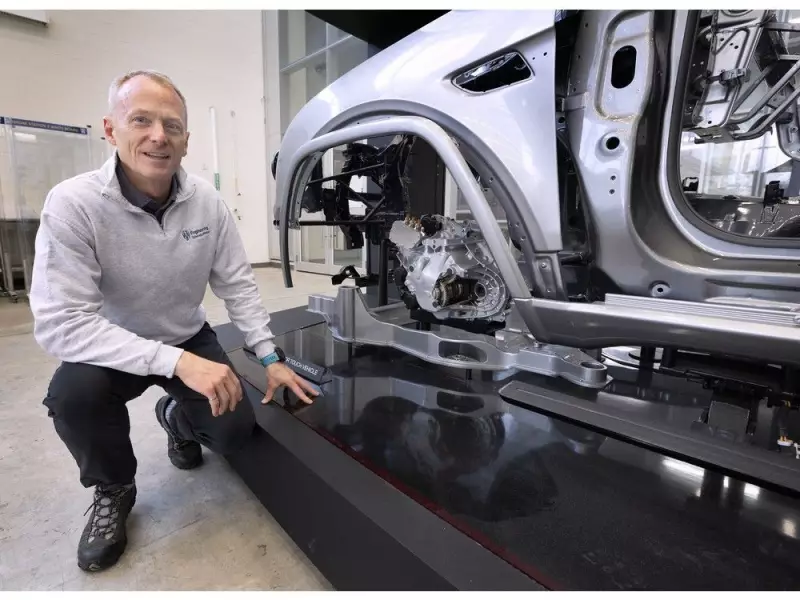
Bill Van Heyst, dean of the Faculty of Engineering at the University of Windsor, has been actively promoting the region's capabilities, including showcasing advanced technologies like cross-sectioned electric vehicles at the university. This visibility underscores Windsor's readiness to absorb research activities that may be displaced from the United States.
Broader Implications for Canadian Innovation
The evolving situation presents a broader narrative about the redistribution of technological research and development in North America. As U.S. policies create barriers and reduce funding, Canadian hubs are not merely passive beneficiaries but are actively structuring their academic, industrial, and governmental frameworks to attract investment and talent.

The focus on electric vehicles, cybersecurity, software development, and powertrain technologies aligns with global shifts toward sustainable transportation and digital integration in automotive design. Windsor's established infrastructure in automotive engineering, combined with its proximity to major U.S. automotive centers, positions it as a logical alternative for companies seeking stable research environments.
This transition could lead to increased joint ventures, enhanced local employment in high-tech sectors, and strengthened international partnerships, particularly with Asian markets like China. The outcome may redefine Windsor's economic landscape, transforming it from a traditional manufacturing base into a leading hub for cutting-edge automotive and technological research.