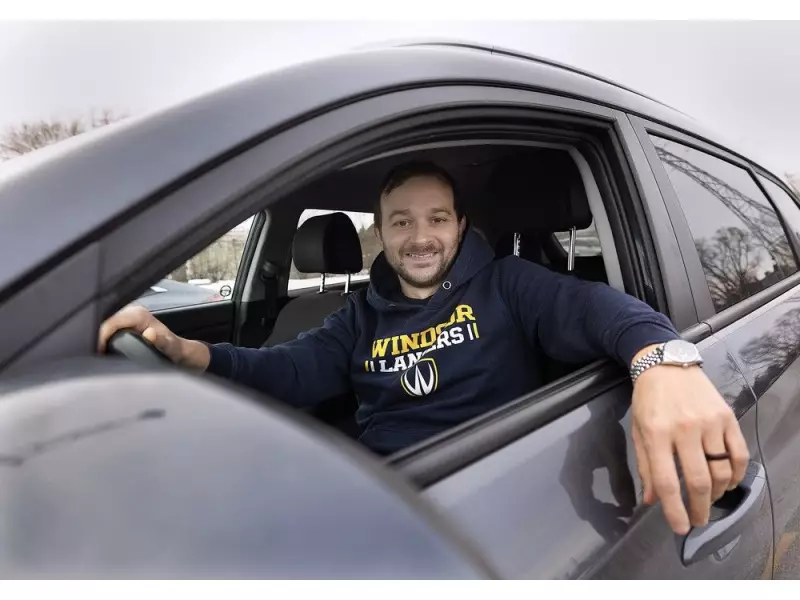
That compelling ping from a smartphone is a siren call many drivers in Windsor-Essex find impossible to ignore, leading to what local researchers and police are calling a dangerous epidemic on the roads. New data reveals a shocking increase in distracted driving incidents, with vulnerable areas like school zones being particularly affected.
A Startling Surge in Charges and Concerning Observations
Official police statistics paint a grim picture of the region's driving habits. The Essex County OPP has recorded a staggering 644 per cent increase in distracted driving charges so far in 2025 compared to previous periods. Meanwhile, Windsor police consistently issue several hundred tickets for the offence every single year.
The problem appears even more widespread than tickets suggest. During a recent research partnership with Windsor police, University of Windsor investigators discovered that at least 20 per cent of drivers were engaged in distracted or aggressive driving in selected areas, which included school zones. The lead researcher believes the true number is likely much higher.

The "Bad Mix" in School Zones
"It is very concerning, considering the areas that we selected were school zones," said University of Windsor kinesiology professor Francesco Biondi, who led the study. He noted that the presence of researchers in bright vests likely caused many drivers to correct their behaviour upon being seen, skewing the data downward.
"It was just a bad mix because you had little children walking around and many of the drivers were distracted," Biondi explained, highlighting the severe potential consequences. "If a collision were to occur due to driver distraction, the consequences are a lot bigger due to the nature of pedestrians and vulnerable road users being in those areas."
What Legally Counts as Distracted Driving?
Ontario's laws on distracted driving are strict and broadly defined. If you touch your phone or any other hand-held communication or entertainment device while behind the wheel, you are committing an offence. This applies even if the device is mounted on the dashboard and even when stopped at a red light.
Common illegal activities include:
- Texting or emailing
- Holding a phone to your ear for a call
- Manually programming a GPS
- Using a phone on speakerphone while still holding it
The only explicit exception to this rule is calling 911 in an emergency. The law permits the use of hands-free devices with Bluetooth or earpieces, provided they are activated by voice commands only. However, authorities warn that this does not eliminate risk.
The Cognitive Danger of "Hands-Free"
Windsor police emphasize that a legal hands-free call is not necessarily a safe one. Inspector Robert Wilson of the Patrol Support division points to the inherent cognitive distraction. "The problem with many modern vehicles, with monster dash screens and apps, is drivers mistakenly assume hands-free means risk-free," said Wilson.
"But the cognitive distraction is still a distraction. And it is concerning because collisions caused by distraction are 100 per cent preventable," he stated, urging drivers to prioritize their full attention on the road at all times. The combination of ubiquitous technology and the compulsion to stay connected has created a perfect storm for road safety, one that communities like Windsor-Essex are now urgently working to address.