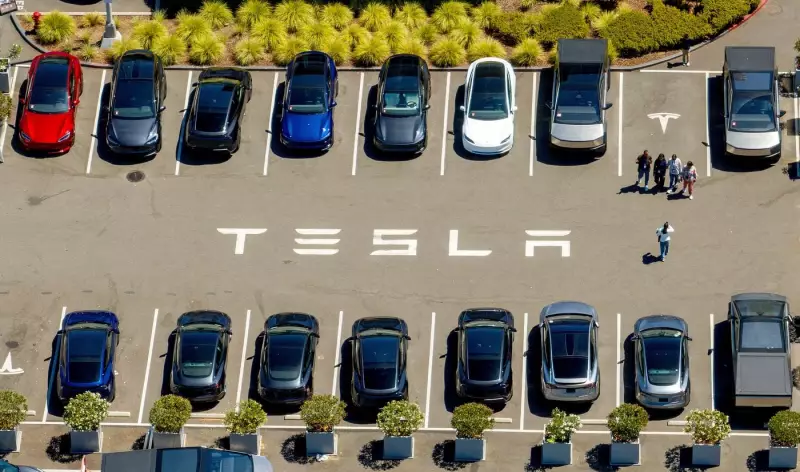
The United States has launched a safety investigation into Tesla Inc. following reports that the doors on its electric vehicles can be difficult or impossible to unlock after a crash. This probe raises significant concerns about occupant safety and emergency responder access in the critical moments following an accident.
Details of the Federal Safety Probe
The investigation, confirmed on December 24, 2025, is being conducted by the U.S. National Highway Traffic Safety Administration (NHTSA). The agency is examining potential flaws in Tesla's door release systems that may prevent them from functioning as intended during a collision. This issue could trap passengers inside a damaged vehicle, complicating rescue efforts and potentially exacerbating injuries.
While the exact scope and number of incidents under review have not been fully disclosed, the probe underscores the heightened scrutiny on automotive safety in the electric vehicle era. Tesla, a leader in the EV market, has previously faced investigations related to its Autopilot driver-assistance system and other components, but this inquiry specifically targets a fundamental mechanical and electronic safety feature.

Implications for Vehicle Safety and Emergency Response
The ability to quickly exit a vehicle after a crash is paramount for safety. First responders also rely on functional doors to extract injured occupants efficiently. A failure in the door release mechanism, whether electronic or mechanical, poses a direct risk. Modern vehicles, especially those with advanced electronic systems like Teslas, often use electronic door releases alongside mechanical backups.
The investigation will seek to determine if there is a systemic defect, whether related to software, power loss in an accident, or hardware design. The findings could lead to a safety recall affecting potentially hundreds of thousands of vehicles, depending on the model years involved. For Canadian Tesla owners and regulators, this U.S. probe is a development of keen interest, as many of the same models are on Canadian roads.
Broader Context for the Automotive Industry
This investigation arrives at a time when the automotive industry is rapidly electrifying and integrating more complex software. It highlights the critical challenge of ensuring that advanced electronic features do not compromise basic, life-saving functions. Safety advocates have long emphasized the need for robust, redundant systems in vehicles, particularly for essential operations like door releases.
The outcome of this probe will be closely watched by other automakers, regulators worldwide, and consumers. It may influence future safety standards for all vehicles, particularly those with electronic door systems. For now, the NHTSA's work is ongoing, and no conclusions have been drawn regarding the existence of a defect.
As the investigation proceeds, Tesla will be required to cooperate with federal authorities, providing data and technical analysis. The company has not yet issued a formal public statement in response to the opening of this specific probe. Vehicle safety remains a top priority for regulators as technology continues to transform how we drive.