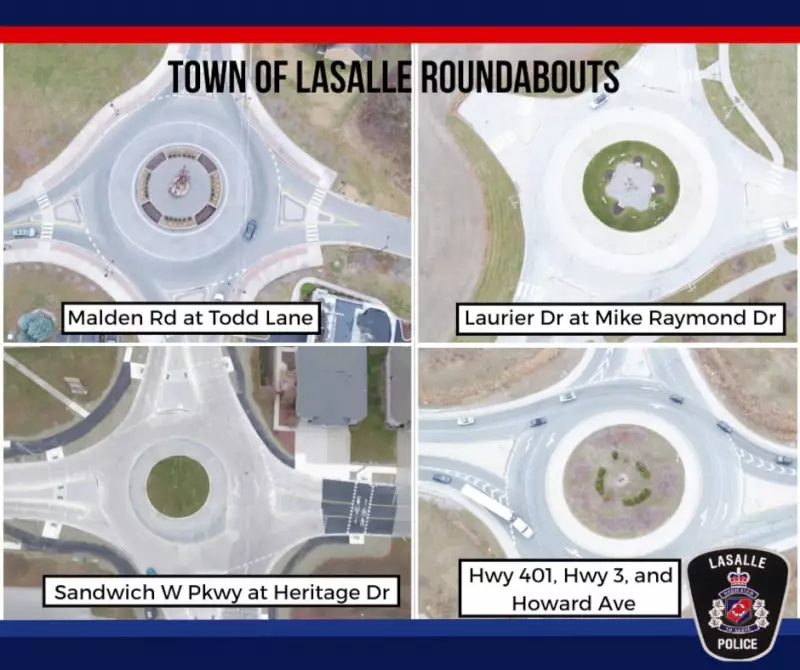
With roundabouts becoming an increasingly common feature on Canadian roads, local police are stepping in to ensure drivers know how to use them correctly. The LaSalle Police Service has issued a timely refresher on the rules and etiquette for navigating these circular intersections, aiming to enhance safety and traffic flow in the Windsor-Essex region.
The Core Rules of Roundabout Navigation
Understanding the fundamental principles is key to safely using a roundabout. The primary rule, emphasized by LaSalle police, is that vehicles already inside the roundabout have the right-of-way. Drivers approaching the yield line must wait for a safe gap in traffic before entering the circular flow. This is the most critical step to preventing collisions at these intersections.
Proper lane use is another essential component. Drivers should choose their lane based on their intended exit. Generally, use the right lane to turn right or go straight, and the left lane to go straight, turn left, or make a U-turn. It is crucial to signal your intentions: use your right-turn signal just before you exit the roundabout to alert other drivers.

Common Mistakes and Safety Tips
Police often observe common errors that can lead to confusion or accidents. One major mistake is stopping while inside the roundabout, except to avoid a collision. The design is meant for continuous, slow-moving traffic. Another frequent issue is drivers failing to yield to traffic already circulating, which disrupts the flow and creates dangerous situations.
LaSalle police also remind drivers to be especially mindful of vulnerable road users like cyclists and pedestrians. Pedestrians should only cross at designated crosswalks, and drivers must yield to them before entering or exiting the roundabout. Cyclists may choose to ride through the roundabout as a vehicle or use the sidewalk as a pedestrian, so drivers must stay alert.
Why Roundabouts Are Used
Municipalities are installing more roundabouts because they offer significant safety and efficiency benefits over traditional signalized intersections. Studies consistently show that roundabouts reduce severe crashes by eliminating high-speed, right-angle collisions. They also keep traffic moving during power outages, cut down on idling and emissions, and require less long-term maintenance than traffic lights.
The refresher from LaSalle police serves as an important public safety reminder for both new and experienced drivers. As these intersections proliferate across Ontario and Canada, taking the time to understand and practice proper roundabout navigation contributes to safer roads for everyone.