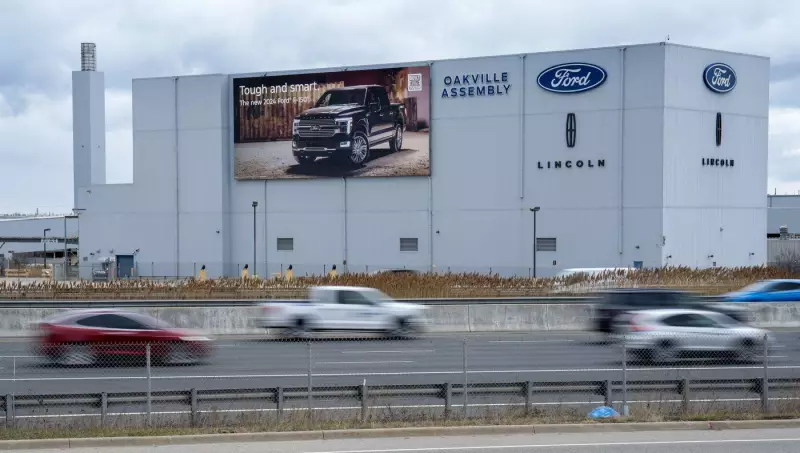
The Canadian electric vehicle sector is facing significant headwinds, as highlighted by recent financial losses reported by automotive giant Ford. This development reflects broader challenges impacting the industry across the nation, particularly in the manufacturing hub of Ontario.
Policy Shifts and Market Realities
Flavio Volpe, president of the Automotive Parts Manufacturers' Association, recently appeared on BNN Bloomberg to discuss the situation. The conversation centered on Ford's strategic retreat from certain electric vehicle initiatives, a move influenced by evolving policies under the U.S. administration led by Donald Trump. These policy changes are creating uncertainty and affecting investment decisions on both sides of the border.
The discussion aired on December 18, 2025, pinpointing a critical moment for the auto industry. Volpe's insights shed light on how global political decisions directly impact local manufacturing and supply chains in provinces like Ontario, where the automotive sector is a cornerstone of the economy.

Broader Implications for Canadian Manufacturing
Ford's financial performance is more than an isolated corporate report; it serves as a barometer for the health of Canada's EV ambitions. The company's losses suggest that the transition to electric mobility is encountering unexpected hurdles, including supply chain complexities, consumer adoption rates, and now, significant policy volatility.
This comes at a time when governments and companies have invested heavily in positioning Canada as a leader in the future of transportation. The ripple effects are felt deeply by the Automotive Parts Manufacturers' Association and its members, who rely on stable demand and clear regulatory pathways to plan their operations and workforce.
What's Next for the EV Transition?
The path forward for Canada's electric vehicle sector appears increasingly complex. While the long-term trend toward electrification seems inevitable, the short-to-medium term is marked by adjustment and recalibration. Industry leaders like Volpe are now tasked with navigating this period of uncertainty, advocating for policies that support both innovation and the stability of the existing industrial base.
The situation underscores a critical juncture for Ontario's auto manufacturing and for Canada's broader economic strategy. The ability to adapt to rapid policy changes while maintaining competitive advantage will be a key test for the industry in the months and years ahead.