Chinese EV Imports to Canada: Assessing the Real Impact on Domestic Industry
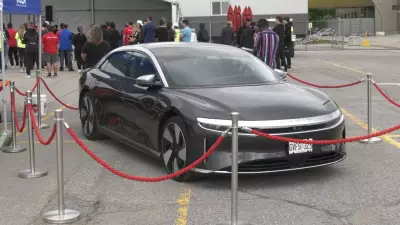
The recent discussions surrounding Chinese electric vehicle manufacturers entering the Canadian market have generated significant attention, but a closer examination reveals a more nuanced picture. According to analysis by Patrick Leblond and Liam Ibbott, the limited number of EV models imported from China does not represent a substantial threat to Canada's automotive industry in the short and medium term.
The Trade Agreement Framework
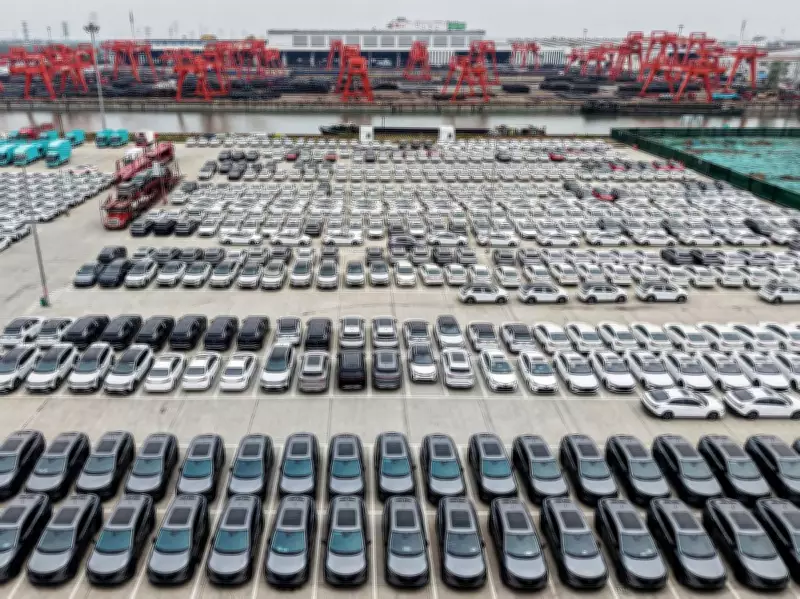
This conversation began with a preliminary agreement-in-principle between Canada and China during Prime Minister Mark Carney's visit to Beijing in mid-January. Under this arrangement, Canada plans to permit up to 49,000 electric vehicles to be imported from China at a tariff rate of 6.1 percent, with this quota increasing to 70,000 over a five-year period. In exchange, China has agreed to reduce its tariff levels on key Canadian exports including canola seeds, peas, lobsters, and crabs.
This new tariff rate on Chinese EVs represents a return to the same rate Canada applied before implementing a 100 percent tariff on Chinese-made EVs in October 2024, a move made in response to pressure from the United States.

Consumer Benefits and Industry Concerns
The federal government anticipates that more than half of the imported EVs from China will cost less than $35,000 within five years. This development could benefit Canadian consumers who struggle with affordability, especially considering the average price of a new car in Canada has reached $63,665.
However, industry and labor leaders, along with Ontario Premier Doug Ford, have expressed concerns that this agreement could lead to job losses by undercutting domestically produced cars and parts. These worries are compounded by renewed U.S. protectionism under the current administration.
Policy Shifts and Strategic Direction
In a significant policy development last week, Prime Minister Carney announced that his government will scrap the EV sales mandate, which required 60 percent of all new cars in Canada to be zero-emission vehicles by 2030 and 100 percent by 2035. Instead, the government will implement more stringent emissions standards for vehicles and reintroduce purchase incentives for ZEVs, but only for those built in Canada or in countries with which Canada has free-trade agreements, thereby excluding imports from China.
This new strategy, which includes tax incentives, anticipates significant investments by automotive manufacturers, including Chinese companies, to produce zero-emission vehicles within Canada itself.
Assessing the Actual Impact
When examining the numbers, the immediate impact appears limited. The initial quota of 49,000 vehicles represents only about three percent of total vehicles sold in Canada. Furthermore, it remains uncertain whether this quota will be rapidly filled, especially considering that in the year before Canada imposed the 100 percent tariff on Chinese EVs (October 2023 to September 2024), the country imported 31,658 EVs from China, and this occurred before the federal government paused its incentive program.
Consumer preferences also play a crucial role in this equation. Canadian buyers have been increasingly abandoning passenger cars in favor of SUVs, light trucks, and minivans, which are the vehicles predominantly assembled in Canada. Between 2018 and 2024, passenger car sales declined by more than half, suggesting that market dynamics may naturally limit the impact of imported Chinese EVs.
Balancing Perspectives
The central question remains: Is the federal government correct in viewing Chinese EV manufacturers as strategic partners, or are critics justified in seeing competition from China as detrimental to Canada's auto industry? The evidence suggests that in the immediate future, the agreement with China carries limited significance for the domestic automotive sector. The relatively small import quotas, combined with shifting consumer preferences and new policy frameworks, indicate that Canadian automotive manufacturers face more substantial challenges from other market forces than from Chinese EV imports at this time.