Canadian Auto Industry Frustrated by Carney's Chinese EV Import Plans
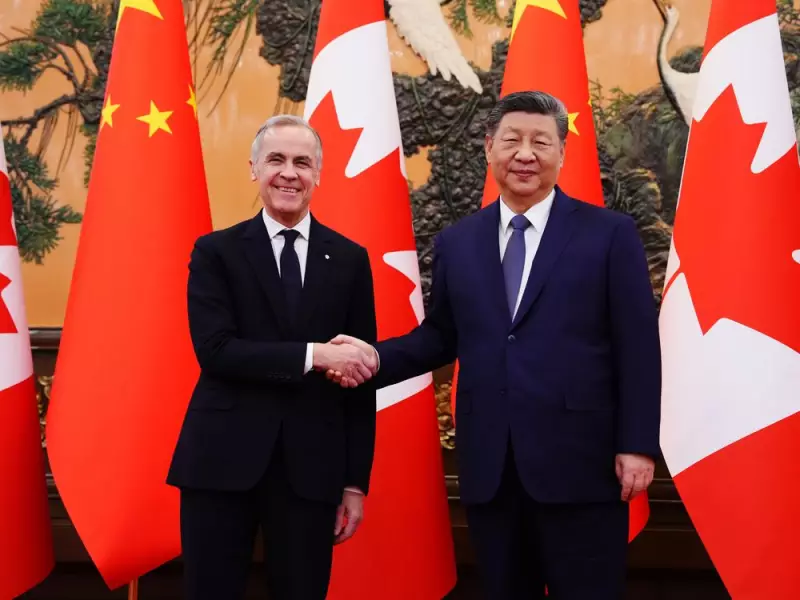
Prime Minister Mark Carney's recent announcement of a strategic partnership with China has sent shockwaves through Canada's automotive sector, with industry leaders expressing frustration over the lack of consultation and details surrounding the agreement. The deal, which allows Chinese electric vehicles to enter the Canadian market under significantly reduced tariffs, has created what one executive called "a wrench in the gears" for automakers already navigating complex trade challenges.
Details of the New Import Agreement
According to information obtained from sources speaking on condition of anonymity, the Prime Minister's Office has agreed to permit China to export 49,000 electric vehicles to Canada annually at a duty rate of just 6.1 percent, a dramatic reduction from the current 106.1 percent tariff. The agreement includes an annual escalation clause that increases the quota by approximately six percent each year, though the exact terms remain unclear to industry stakeholders.
David Adams, chief executive of the Global Automakers of Canada, expressed the sector's collective confusion, stating, "The larger reality is we don't know anything about it. This announcement just throws a wrench in the gears. Nobody knows anything. Nobody can tell you anything, not even the minister's office."

Industry Concerns and Market Impact
The automotive industry's frustration stems from multiple factors, including the complete lack of consultation before the announcement and the absence of crucial details about implementation. Key questions remain unanswered, including which specific vehicle brands and models will qualify for the reduced tariff rate and who will make those determinations.
This uncertainty arrives at a particularly challenging time for Canadian automakers, who are already grappling with the economic impact of tariffs implemented by the United States, their primary export market. The new policy creates additional complexity in an already volatile trade environment.
Understanding the Numbers and Market Share
While the federal government has framed the 49,000-vehicle quota as relatively small—representing less than three percent of Canada's annual new vehicle sales of approximately 1.9 million—the impact on the electric vehicle market is substantially more significant. This quota represents at least 25 percent of total EV sales in Canada, where electric vehicles accounted for approximately nine to ten percent of the overall market last year.
Notably, the 49,000-vehicle figure corresponds closely with the annual number of EVs that Tesla, Volvo, and Polestar—all manufactured in China—were exporting to Canada before policymakers implemented 100 percent tariffs on Chinese electric vehicles in late 2024.
Policy Structure and Implementation Questions
On the surface, the new arrangement resembles a tariff-rate quota, a commonly used trade policy that limits the number of products that can be imported at a lower duty rate while allowing unlimited imports at higher rates. However, four anonymous sources familiar with the agreement indicate that this policy functions as a hard quota, meaning China will not be permitted to export more than 49,000 vehicles to Canada at any duty rate.
The agreement may differ from similar arrangements with other trading partners due to China's unique economic structure. The Chinese government maintains significant control over its economy, including ownership stakes in numerous electric vehicle companies. Additionally, China determines which companies receive export licenses, giving it substantial influence over which brands and models can be shipped to Canada.
While the Canadian government will need to issue import licenses for Chinese electric vehicles, potentially providing some leverage in determining which models enter the country, the exact terms of this arrangement remain undisclosed. The Prime Minister's Office declined to provide comment on the specifics of the agreement or address industry concerns.

The automotive sector now faces a period of uncertainty as it attempts to understand the full implications of this policy shift and prepare for potential market disruptions. Industry leaders emphasize the need for greater transparency and consultation as Canada navigates the complex transition toward electric vehicle adoption while balancing domestic manufacturing interests with international trade relationships.