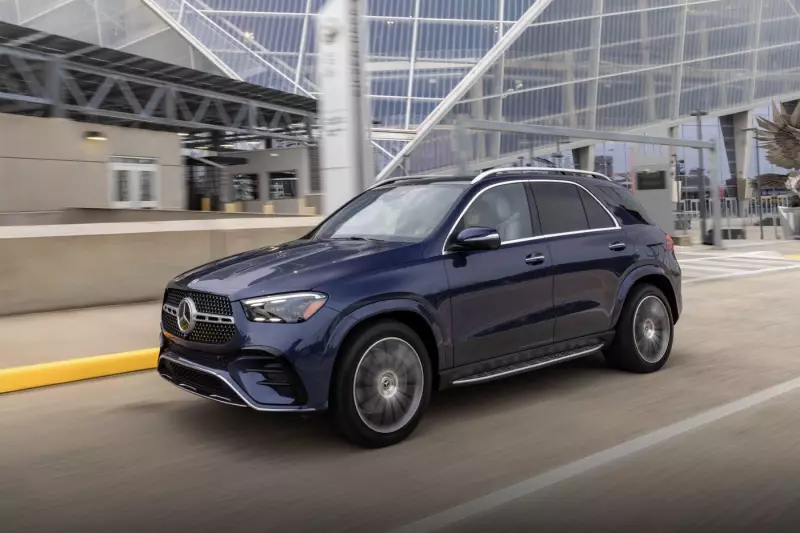
Edmunds Tests BMW X5 Against Mercedes GLE in Luxury Plug-In SUV Face-Off
In the competitive arena of luxury sport utility vehicles, the plug-in hybrid segment has become a critical battleground for automakers seeking to combine premium amenities with electric efficiency. Automotive experts at Edmunds have undertaken a comprehensive comparative analysis, pitting two of the most prominent contenders against each other: the 2026 BMW X5 and the 2026 Mercedes-Benz GLE 450e. This head-to-head evaluation aims to determine which German-engineered luxury plug-in SUV delivers the more compelling overall package for discerning Canadian drivers.
Performance and Powertrain Dynamics Under Scrutiny
The core of this comparison lies in the sophisticated plug-in hybrid systems employed by both vehicles. Edmunds' testing regimen meticulously assesses the balance between electric-only driving range, combined horsepower output from gasoline and electric motors, and the seamless transition between power sources. Reviewers pay close attention to real-world driving characteristics, including acceleration, handling precision, and overall refinement. The integration of regenerative braking and the efficiency of the charging systems are also key factors in determining which SUV provides a more satisfying and technologically advanced driving experience.
Luxury, Technology, and Interior Amenities Compared
Beyond pure performance, the definition of a luxury SUV encompasses cabin comfort, material quality, and onboard technology. Edmunds' evaluation delves into the interior design philosophy of both the BMW X5 and the Mercedes GLE. This includes a detailed analysis of:

- Infotainment Systems: The usability, responsiveness, and feature sets of the respective digital interfaces and connectivity suites.
- Passenger Comfort: The quality of seating materials, rear-seat space, cargo versatility, and noise insulation.
- Driver-Assistance Technology: The suite of advanced safety features and semi-autonomous driving aids available on each model.
The goal is to identify which vehicle better marries cutting-edge tech with traditional luxury, creating a cabin environment that feels both futuristic and supremely comfortable.
Value Proposition and Real-World Ownership Considerations
For potential buyers, the final decision often hinges on value. Edmunds' review extends to the practical aspects of ownership, critically examining the manufacturer's suggested retail price (MSRP), potential government incentives for plug-in vehicles in Canada, and projected long-term costs. Factors such as warranty coverage, standard equipment levels, and the cost of optional packages are weighed to ascertain which SUV offers a more rational financial proposition without compromising on the expected luxury pedigree.
The comprehensive testing by Edmunds provides crucial insights for consumers navigating the premium plug-in hybrid market. As automotive technology rapidly evolves, such direct comparisons are invaluable for highlighting the strengths and potential compromises inherent in each vehicle's design philosophy. The verdict from this showdown will help clarify whether BMW's driving-focused approach or Mercedes-Benz's emphasis on comfort and tech innovation reigns supreme in the highly competitive luxury plug-in SUV segment.