My Decade-Long Battle With Rosacea and the Products That Finally Helped
Back in the mid-2000s, I received a diagnosis of rosacea subtype 2, specifically the papulopustular variety characterized by acne-like bumps. This condition has presented an ongoing challenge to identify products that don't exacerbate my symptoms. In my determined quest to pinpoint specific triggers for flare-ups, I've consulted numerous dermatologists, undergone antibiotic treatments, experimented with supplements, utilized prescription topical medications, and maintained an exhaustive spreadsheet documenting every product and ingredient applied to my face over ten years. Certain ingredients like niacinamide or salicylic acid reliably cause breakouts for me.
The Frustrating Reality of Rosacea Management
One particularly aggravating aspect of this condition is the complete absence of universal solutions. Even products frequently recommended for rosacea sufferers—including mineral sunscreens, CeraVe formulations, and redness-relieving creams—can provoke significant irritation in my case. The medical community continues to debate potential causes of rosacea, with theories ranging from gut health and immune system dysfunction to microscopic skin mites, which doesn't simplify personal management strategies.
Triggers can be remarkably diverse: physical, topical, emotional, weather-related, dietary, and beyond. Numerous elements contact our facial skin daily, from skincare products to laundry detergent residues on pillowcases. Dr. Julie C. Harper, founder of the Dermatology and Skin Care Center of Birmingham in Alabama and a National Rosacea Society medical advisory board member, confirms this variability: "Tolerability of products and triggers of rosacea are very individualized. What aggravates rosacea in one person does not predictably aggravate rosacea in everyone. It is probably most important that individuals keep a log or journal of what predictably triggers their rosacea and then avoid that."

The Breakthrough: Lightweight, Breathable Formulations
I've finally reached a point where visible rosacea is minimal most days, if present at all. A crucial discovery has been that my skin responds best to lightweight, non-occlusive products. For lack of a more precise term, my complexion prefers "breathable," water-based formulations rather than those typically suggested for compromised skin barriers.
"If a product or an ingredient seems to trigger a rosacea flare, then avoid it," Harper advises. "There are lots of good skin care products to choose from." While my successful products may not work for every rosacea or sensitive skin sufferer, reading about others' experiences guided me toward fruitful paths in my own trigger-elimination and face-soothing journey. Below are the select few products currently permitted to touch my skin. My complexion is clearer than at any point since developing rosacea, and perhaps something here might help improve yours as well.
Experts consulted for this story do not necessarily endorse the products mentioned. The original version appeared on HuffPost previously.
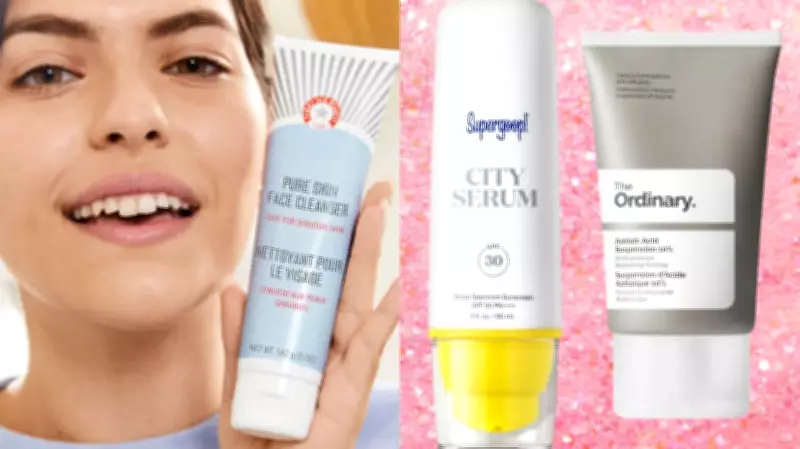
1. First Aid Beauty Pure Skin Face Cleanser
After switching to this creamy whipped cleanser years ago, my skin became less oily, less irritated, and never uncomfortably tight post-wash. While extra-emollient options like Cetaphil left my face feeling unclean, this effectively removes makeup and sunscreen without causing suffering. Every attempted switch to another cleanser results in immediate regret and return to this formula.
It's beautifully fragrance-free, eliminating unnecessary irritation potential from a rinse-off product that doesn't require pleasant scents. Beyond aloe and glycerin, it contains typically rosacea-friendly ingredients including allantoin, feverfew, green tea, licorice root extract, and vitamin E. While their efficacy in wash-off products remains debatable, I know they're preferable to alternative ingredients, given how other cleansers have definitely irritated my rosacea.
Best of all, the brand offers one-ounce and two-ounce travel sizes, preventing risks with random hotel soaps or friends' bathroom products.

2. Supergoop City Serum SPF 30
Having tried hundreds of facial sunscreens throughout my rosacea experience, this remains by far the best daily version for me. It's lightweight, hydrating, non-greasy, and truly disappears into my skin texture-wise, yet its broad-spectrum formula clearly works since usual cheek redness has nearly vanished despite living under Miami's constantly blazing sun.
It contains gentle antioxidants like vitamins E and B5, plus helpful components like allantoin, without lengthy lists of potentially irritating unnecessary ingredients. For me, it represents the optimal combination of effectiveness and minimalism.
3. The Ordinary Azelaic Acid Suspension 10%
Fifteen percent azelaic acid concentrations have been commonly prescribed rosacea topicals for years, with clinical research demonstrating effectiveness against bumps and swelling. I've used prescription versions previously and found them helpful; now that breakouts are better controlled, I use this 10% formulation from The Ordinary for extra irritation clearance or daily maintenance.
While other over-the-counter azelaic acid products exist, I prefer this one because it avoids other potentially irritating actives or multitasking attempts—the formula primarily contains just azelaic acid, some enhancing and preserving ingredients, and minimal vitamin E. Best of all, it costs just $12.
4. E.L.F. Holy Hydration Hydrating Serum
This hydrating serum proves super gentle and effective as a moisture-boosting layer in my lightweight skincare routine. The formula features a thoughtfully spare, targeted mix of jojoba, aloe, vitamin E, grape seed oil, chamomile, and shea butter. Although excessive oils can trigger irritation for me, this formulation is perfectly balanced for my combination face.
5. Coola Organic Dew Good Illuminating Probiotic Serum with SPF 30
Sunscreens are critical for me living in Florida, and essential for everyone. When desiring added visual enhancement, I use this illuminating serum formula from Coola. It's not glittery but glow-y and primer-like, maintaining slight grip after drying, making an excellent SPF base for makeup. Since I work at a laptop daily, I appreciate Coola's claim of blue light protection too.
Aloe and glycerin appear among initial ingredients alongside sunscreen actives, and while I don't wear it consecutively often, it causes no irritation with occasional use.
6. Neocutis Lumière Firm Illuminating and Tightening Eye Cream
Although rosacea doesn't affect my eye area currently, most eye creams cause lash line dryness and peeling, with some sliding onto cheeks and aggravating rosacea. This rich moisturizing cream, discovered on sale months ago, avoids these issues—a small dot suffices, so my first bottle continues strong.
It contains human growth factors, proteins naturally produced by skin cells (decreasing with age), which may promote collagen and elastin formation, potentially improving fine lines and wrinkles. HGFs work better with peptides, which this formula includes alongside caffeine for puffiness, bisabolol for soothing, and glycyrrhetinic acid for brightening. Surprisingly, I noticed immediate under-eye brightness improvement.
7. La Roche Posay Anthelios AOX Daily Antioxidant Serum SPF 50
On higher SPF requirement days, I choose this oil-free serum-style fluid from La Roche-Posay. Some vitamin C forms and concentrations prove too strong for my rosacea, but this formula uses ascorbyl glucoside, especially stable and thankfully water-soluble, remaining non-irritating so far. Fellow antioxidant vitamin E appears fourth after active sunscreen filters.
This formula isn't designed as daily moisture like the Supergoop sunscreen, but maintains serum-type weight and non-greasy texture, wearing easily over skincare routines without adding shine or slime. I appreciate included antioxidants enhancing sun damage defense without overcomplication.
Rosacea Tips and Professional Insights
I asked Harper why I prefer lighter formulas over occlusive ones, seemingly contradicting common "rosacean" advice. "It may be the circumstances that prompt you to use the occlusive agents that are actually the trigger," she explained. "For example, people frequently attribute a flare of rosacea to sunscreen but it is more likely that the trigger is sunlight itself or even heat."
She continued, "We are also more likely to reach for occlusive agents when our skin feels dry or when we are dealing with cold temperatures and low humidity. Cold, dry air is tough on the skin, disturbing the skin barrier, which is a known trigger for rosacea. Lastly, occlusive agents and thicker products, like sunscreens with a lot of zinc oxide, can be harder to remove from the skin. People may be more likely to use a more aggressive cleanser or skin care product to try to get the skin to feel clean. This can also disrupt the skin barrier and trigger a flare of rosacea."
Essentially, more investigation awaits, but this provides helpful understanding about why my skin remains calmer with certain products. I've learned to select light formulas focusing on aloe or green tea with relatively minimal ingredient lists—after all, more components increase potential trigger inclusion likelihood.