Recent observations from within Iran have sparked international debate and speculation: have the country's authorities begun to relax their stringent enforcement of the mandatory hijab law for women? This question arises amid reports of a noticeable decrease in the presence of morality police on the streets and a more lenient approach to women not fully adhering to the Islamic dress code in public.
A Decades-Old Policy Under Scrutiny
The law requiring women to cover their hair and wear loose-fitting clothing has been a cornerstone of Iran's Islamic Republic since the 1979 revolution. Enforcement has historically been carried out by dedicated morality police, known as Gasht-e Ershad. Their presence has led to countless arrests, fines, and public confrontations over the decades.
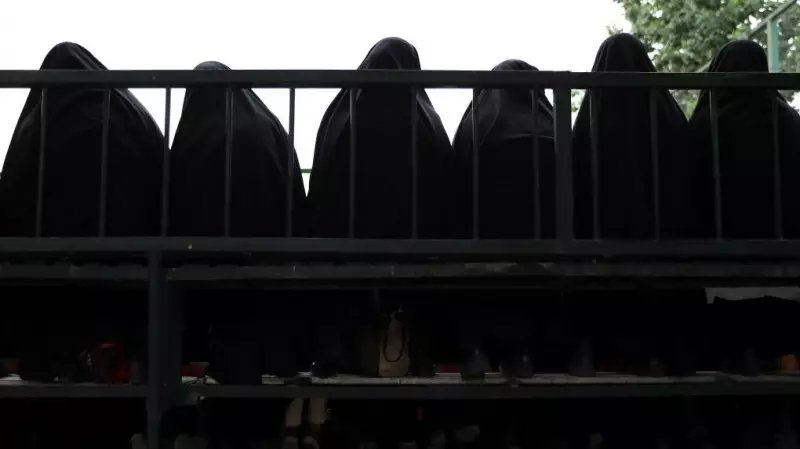
The Associated Press file photo from July 11, 2019, depicts veiled Iranian women at a state-sponsored ceremony supporting the strict dress code, highlighting the official stance that has prevailed for years. However, the landscape appears to be changing, albeit without any formal announcement from the government in Tehran.

Signs of a Changing Approach on the Ground
Analysts and citizens report that the overt patrols by morality police have become less frequent in major cities like Tehran. Furthermore, there seems to be a new, unofficial tolerance for women who let their headscarves slip back, revealing their hair. This perceived shift follows widespread protests that erupted in 2022 following the death of Mahsa Amini, a young woman detained by the morality police for allegedly violating the dress code.
The "Woman, Life, Freedom" movement that followed presented one of the most significant challenges to the regime in years, with women at the forefront. The government responded with a severe crackdown, but the persistent civil disobedience regarding the hijab has continued. The current apparent pullback on enforcement is viewed by many experts not as a surrender of principles, but as a tactical recalibration to reduce visible social friction and avoid sparking new large-scale protests.
Between Official Rhetoric and Street-Level Reality
It is crucial to note that the mandatory hijab law remains officially on the books and unchanged. Senior officials continue to make statements reinforcing the importance of hijab as a fundamental Islamic and revolutionary value. The shift, therefore, is not in the law itself but in the vigor of its day-to-day enforcement by certain state bodies.
Some observers suggest this could be a strategic pause, allowing tensions to cool before potentially introducing a new, more technologically driven method of enforcement, such as digital surveillance and automated fines. Others see it as a tacit acknowledgment that the cost of enforcing the law through direct confrontation has become too high for the state's stability.
For Iranian women, the change is palpable but precarious. Many continue to push the boundaries of the dress code in public, testing the limits of this new tolerance, yet they do so with the understanding that the state's apparatus of control could be reactivated at any moment. The situation remains in flux, with the long-term direction of Iran's social policies still uncertain.